
Introduction: A New Era of Learning Innovation
We are entering a defining era where education technology (EdTech) is reshaping how knowledge is delivered, consumed, and applied. The future of education technology is not incremental; it is transformational, driven by artificial intelligence, data-driven personalization, immersive digital environments, and global connectivity. Learning is no longer confined to classrooms or rigid curricula. Instead, it is becoming adaptive, inclusive, scalable, and lifelong.
As institutions, educators, and learners embrace digital transformation, education technology is evolving into a strategic pillar of social and economic development. This article explores the future of education technology in depth, examining the innovations, systems, and pedagogical shifts that are redefining modern learning ecosystems.
Artificial Intelligence in Education: Intelligent and Personalized Learning
Artificial intelligence is at the core of the future of education technology. AI-powered systems are enabling hyper-personalized learning experiences by analyzing student behavior, performance, and engagement patterns in real time.
Adaptive learning platforms adjust lesson difficulty, pacing, and content delivery based on individual learner needs. Intelligent tutoring systems provide instant feedback, automated assessments, and targeted recommendations, ensuring no learner is left behind. AI-driven analytics empower educators to identify learning gaps early, optimize instructional strategies, and improve academic outcomes at scale.
Beyond personalization, AI is streamlining administrative processes such as grading, enrollment management, and curriculum planning, allowing educators to focus on high-impact teaching and mentorship.
Immersive Learning Through Virtual and Augmented Reality
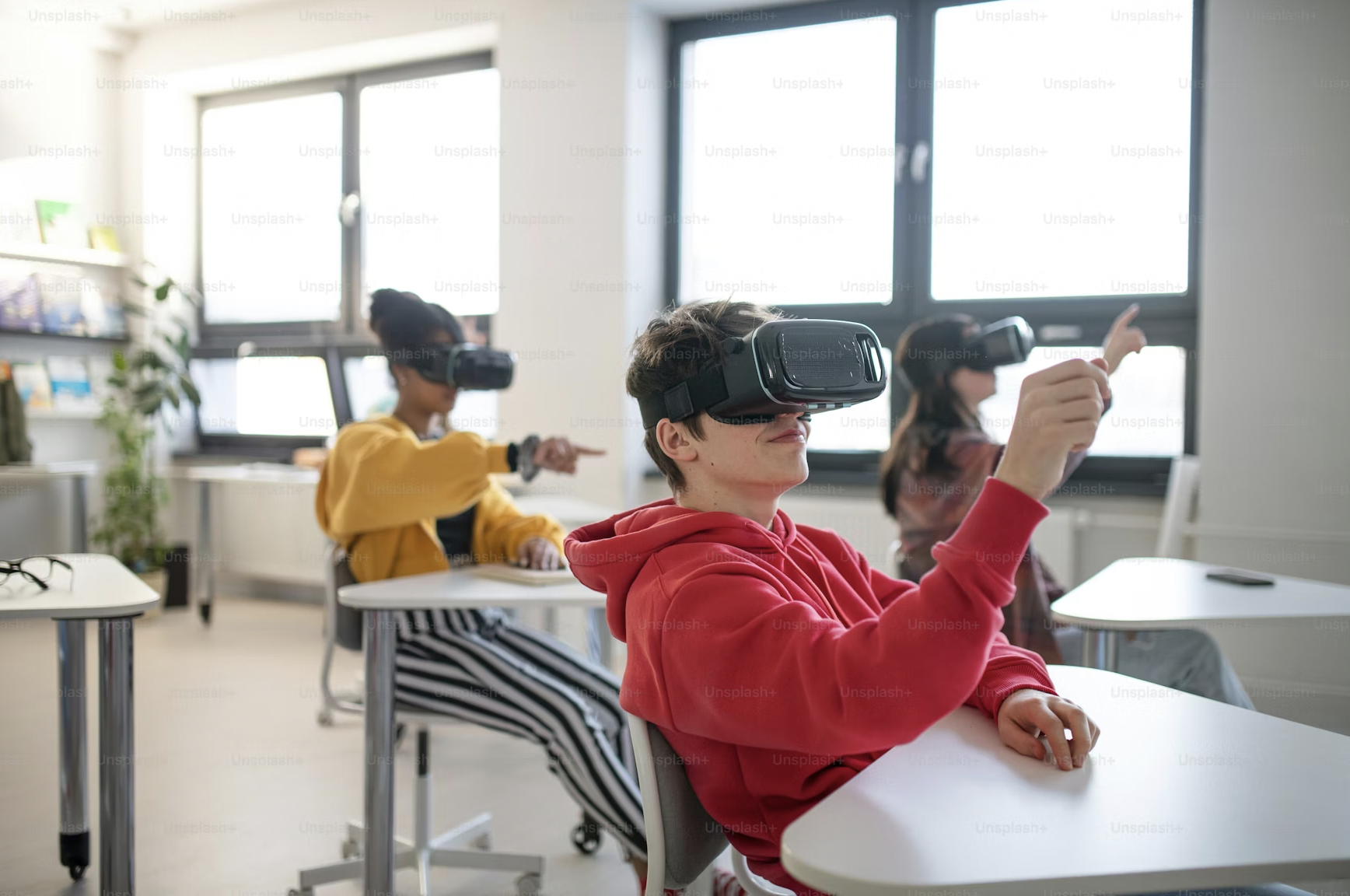
Virtual reality (VR) and augmented reality (AR) are revolutionizing experiential learning. These technologies create immersive, interactive environments that enhance comprehension, retention, and skill acquisition.
Students can explore historical civilizations, conduct virtual science experiments, or simulate complex engineering scenarios in a safe, controlled digital space. Medical and technical education, in particular, benefit from VR-based simulations that replicate real-world challenges with precision.
As hardware becomes more affordable and software more sophisticated, immersive learning will become a standard component of future education systems, bridging the gap between theory and practice.
Online and Hybrid Learning Models: Redefining Accessibility
The future of education technology is inherently flexible and learner-centric. Online and hybrid learning models are expanding access to quality education across geographical, economic, and social boundaries.
Cloud-based learning management systems (LMS) enable seamless content delivery, collaboration, and assessment. Hybrid classrooms combine in-person instruction with digital tools, offering learners greater autonomy while maintaining academic rigor.
This shift supports working professionals, remote learners, and underserved communities, making education more inclusive and globally interconnected.
Data-Driven Education: Learning Analytics and Predictive Insights
Data is becoming the backbone of modern education technology. Learning analytics platforms collect and interpret vast amounts of educational data to generate actionable insights.
Predictive analytics identify students at risk of falling behind, enabling timely interventions. Performance dashboards provide educators with real-time visibility into engagement, comprehension, and progress. Institutions leverage data to optimize curriculum design, resource allocation, and policy decisions.
The future of education technology lies in evidence-based learning ecosystems where continuous improvement is driven by intelligent data utilization.
Gamification and Interactive Learning Experiences
Gamification is redefining learner motivation and engagement. By integrating game mechanics such as points, leaderboards, challenges, and rewards, education technology transforms passive learning into active participation.
Interactive platforms encourage problem-solving, collaboration, and critical thinking while maintaining high levels of engagement. Game-based learning environments foster resilience, creativity, and intrinsic motivation, particularly among younger learners.
As cognitive science and educational psychology continue to influence EdTech design, gamification will play an increasingly strategic role in future learning models.
Blockchain Technology and Secure Digital Credentials
Blockchain is emerging as a powerful innovation in education technology, particularly in credentialing and academic verification. Decentralized digital records enable secure, transparent, and tamper-proof certification of degrees, diplomas, and professional credentials.
Learners gain lifelong ownership of their academic achievements, while employers and institutions benefit from instant, reliable verification. Blockchain also supports micro-credentials and modular learning pathways, aligning education with evolving workforce demands.
This technology strengthens trust, portability, and accountability across global education systems.
Lifelong Learning and Workforce-Oriented Education
The future of education technology extends beyond formal schooling into continuous, lifelong learning. Rapid technological advancement is reshaping labor markets, requiring ongoing upskilling and reskilling.
EdTech platforms are responding with flexible, competency-based learning models tailored to industry needs. Microlearning modules, professional certifications, and AI-guided career pathways enable learners to remain competitive in a dynamic economy.
Education is no longer a one-time phase of life; it is a continuous process supported by adaptive digital ecosystems.
Global Collaboration and Cross-Border Learning
Education technology is dissolving geographical barriers, enabling global collaboration and cultural exchange. Virtual classrooms connect students and educators across continents, fostering diverse perspectives and shared knowledge creation.
International partnerships, open educational resources, and multilingual platforms are promoting equity and innovation at a global scale. The future of education technology is collaborative, interconnected, and globally inclusive.
Cybersecurity and Ethical Technology Integration
As education becomes increasingly digital, cybersecurity and ethical considerations are paramount. Protecting student data, ensuring privacy, and maintaining system integrity are critical responsibilities.
Future-ready education technology prioritizes secure infrastructure, ethical AI deployment, and transparent governance frameworks. Trust and accountability will define successful digital learning environments.
The Road Ahead: Building Sustainable Education Ecosystems
The future of education technology is not defined by a single innovation but by the integration of intelligent systems, human-centered design, and strategic vision. Sustainable EdTech ecosystems balance technological advancement with pedagogical integrity, equity, and long-term impact.
By embracing innovation responsibly, we are building education systems that empower learners, support educators, and drive societal progress. The transformation underway is profound, permanent, and full of opportunity.