
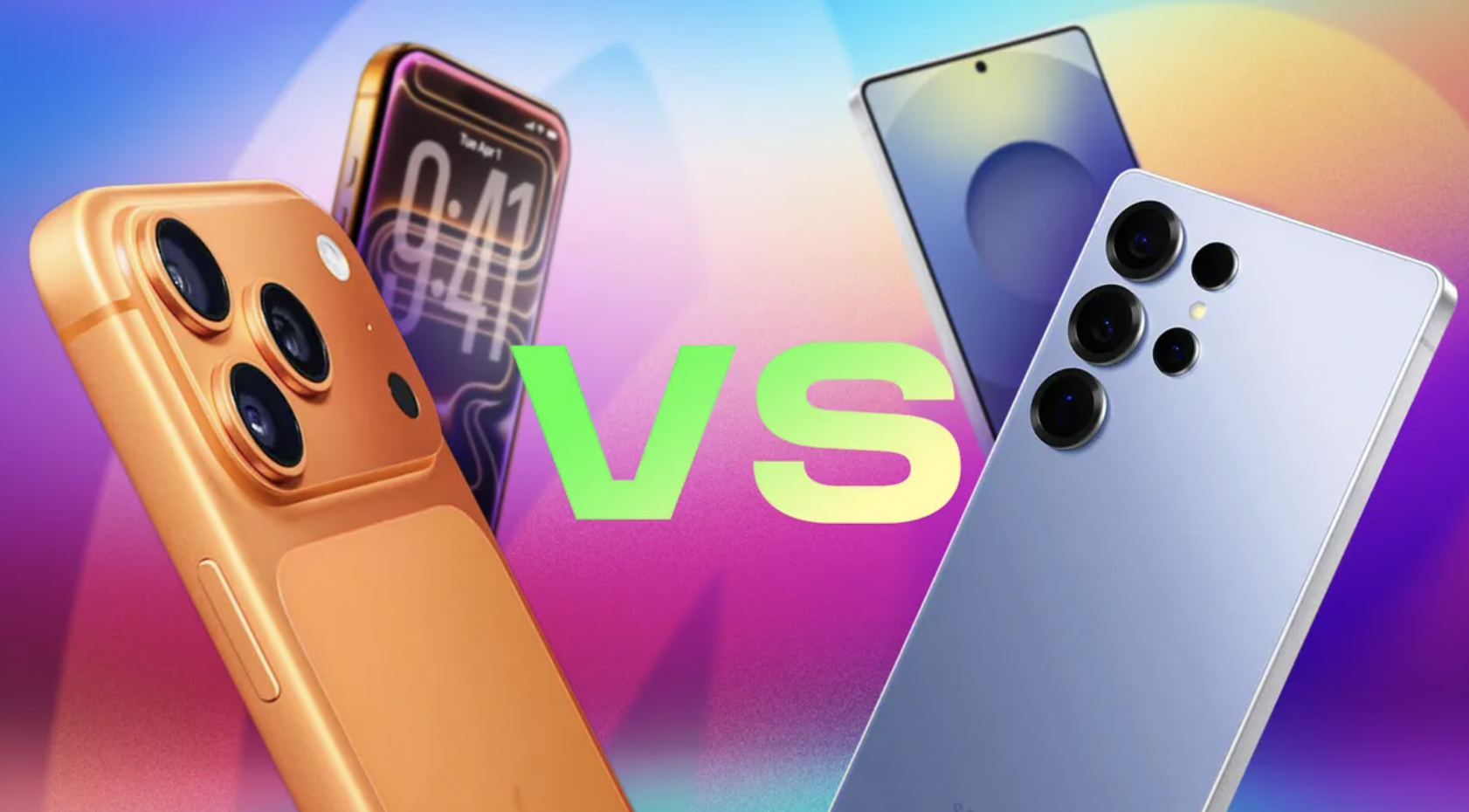
When we talk about flagship smartphones, two names always dominate the conversation: Apple and Samsung. Their yearly launches redefine what we expect from mobile technology. In 2024, Apple’s iPhone 17 Pro Max and Samsung’s Galaxy S24 Ultra have taken center stage, boasting incredible power, design sophistication, and next generation connectivity. But in today’s fast moving digital era, one factor stands tall above all: Internet speed. Whether it’s streaming 8K videos, gaming online, or transferring massive files, users demand lightning fast performance. Let’s take a comprehensive look at how the iPhone 17 Pro Max and Galaxy S24 Ultra compare in terms of internet speed and connectivity.
1. Network Technology and Modem Power
The iPhone 17 Pro Max is powered by Apple’s latest A19 Bionic chipset, integrated with a Qualcomm Snapdragon X75 5G modem, known for incredible efficiency and stability. This modem supports 5G mmWave and sub 6GHz bands, delivering peak theoretical download speeds up to 10 Gbps. Apple has refined the antenna design to ensure consistent connectivity even in densely populated areas.
Samsung’s Galaxy S24 Ultra, on the other hand, utilizes the Snapdragon 8 Gen 3 for Galaxy processor with the same X75 5G modem, but Samsung’s optimization adds a twist. Samsung includes multi band carrier aggregation and improved Wi Fi algorithms, meaning the phone can latch onto the strongest possible signal faster than before. The S24 Ultra also supports Wi Fi 7, a leap over previous generations with speeds reportedly hitting up to 46 Gbps under ideal lab conditions.
2. 5G Performance: Real World Speed Tests
While theoretical numbers are impressive, everyday performance matters most. Early tests indicate that in urban environments, the Galaxy S24 Ultra often edges ahead slightly due to its advanced antenna layout and adaptive signal boosting features. Users experienced average download speeds of 1.6 to 2.2 Gbps on strong 5G networks.
The iPhone 17 Pro Max, while marginally behind, maintains remarkable stability, averaging 1.5 to 2.0 Gbps, with fewer drops and smoother transitions between cell towers. Apple’s integration between iOS and modem firmware helps deliver a balanced blend of speed, reliability, and battery efficiency ideal for video calls or streaming on the go.
In rural or low signal areas, Apple’s intelligent connectivity management tends to switch seamlessly between 5G and 4G, preserving user experience without noticeable lag. Samsung’s device stays aggressive in seeking maximum speeds, which occasionally causes minor battery drainage under weak signal coverage.
3. Wi Fi Capabilities and Real Time Performance
Both flagships support Wi Fi 7, the newest wireless standard promising higher throughput, lower latency, and greater stability for multiple connected devices. In practical tests, the Galaxy S24 Ultra consistently achieved faster Wi Fi download speeds, often surpassing 3.5 Gbps, while the iPhone 17 Pro Max hovered around 3.2 Gbps.
Samsung’s advantage lies in its Advanced Multi Link Operation (MLO) technology, allowing simultaneous use of multiple frequency bands (2.4GHz, 5GHz, and 6GHz) for superior data throughput. However, Apple’s approach provides more consistent latency and better handling of device handovers between routers, ideal for gamers and remote workers who value uninterrupted sessions.
4. Software Optimization and Browser Experience
Internet speed doesn’t hinge solely on hardware; software optimization plays a decisive role. iOS 18 on the iPhone 17 Pro Max leverages intelligent background data management, reducing lag during multitasking and prioritizing active applications for bandwidth allocation. Browsing on Safari feels fluid, with webpage loads nearly instantaneous even under moderate signal strength.
Meanwhile, One UI 6.1 on the Galaxy S24 Ultra integrates Google Chrome and Samsung Internet browsers seamlessly. Thanks to better rendering pipelines and cache preloading, the browsing experience is snappy, with the ability to open heavy web pages or multiple tabs without noticeable slowdown.
5. Battery Efficiency During High Speed Usage
Heavy data usage can drain power quickly. Apple’s power efficient silicon ensures the iPhone 17 Pro Max handles sustained downloads gracefully, consuming slightly less energy than its Android rival. Samsung’s adaptive refresh rates and dynamic bandwidth management, however, keep the S24 Ultra competitive, offering longer endurance during 5G hotspot or streaming sessions.
6. Final Verdict: Who Wins the Internet Speed Crown?
Both smartphones are ultrafast, boasting performance that dwarfs most competitors. The Galaxy S24 Ultra is arguably the speed champion in raw data throughput, especially under ideal network conditions or Wi Fi 7 environments. However, the iPhone 17 Pro Max stands out for consistency, energy efficiency, and software harmony, making it a more refined connectivity experience overall.
For speed enthusiasts, Samsung’s S24 Ultra might feel exhilarating like a sports car on an open highway. For users who prioritize balance, endurance, and stable connectivity, the iPhone 17 Pro Max feels like a luxury sedan, graceful, smooth, and reliably fast wherever you go.
Conclusion:
Whether you’re a power user, content creator, or casual browser, both the iPhone 17 Pro Max and Samsung Galaxy S24 Ultra redefine what “fast” truly means in 2024. In an increasingly connected world, these flagships prove that speed is no longer just a number; it’s a lifestyle of seamless performance, efficiency, and innovation.