
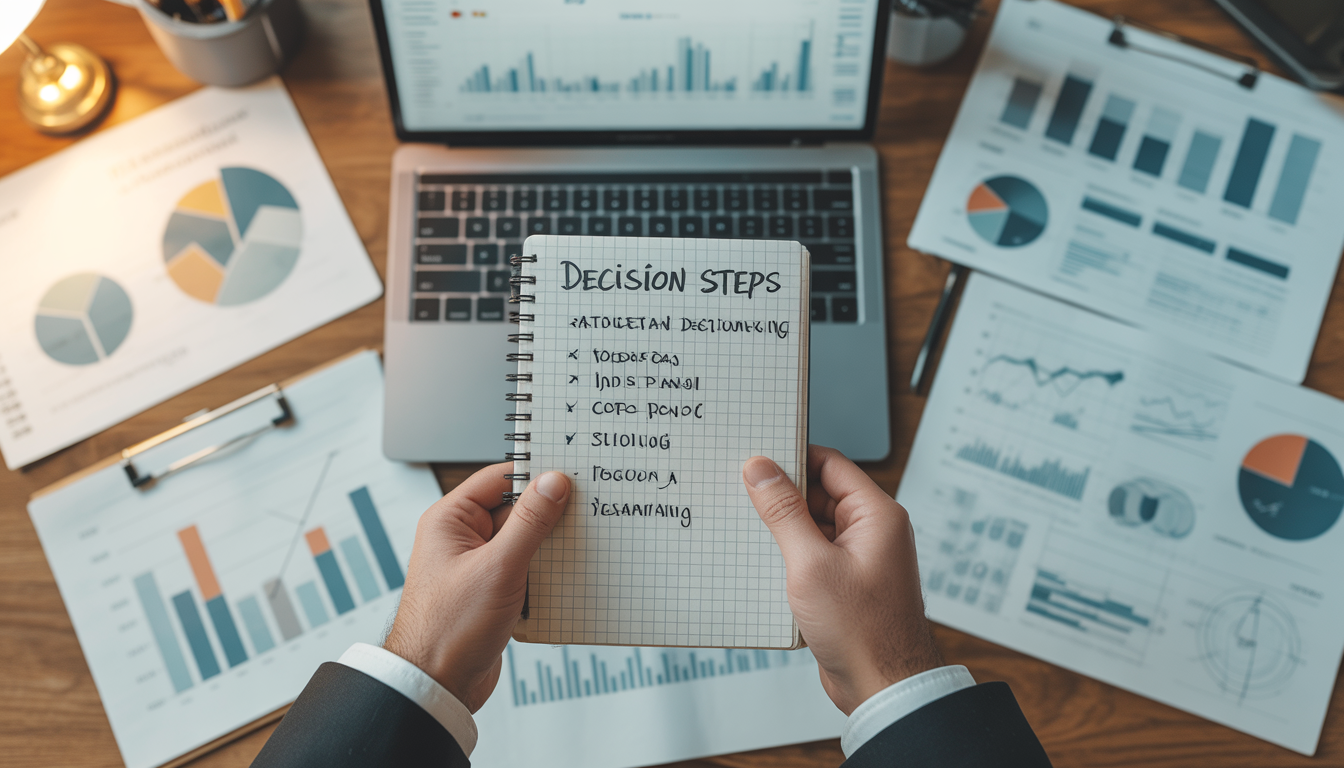
Understanding Decision Making
Decision making is choosing the best option from several possibilities. It affects both personal and professional life. Each choice has consequences, so careful planning is necessary. Many people struggle due to uncertainty or insufficient information. Using clear strategies improves the quality of decisions.
Types of Decision Making
Strategic Decisions
Strategic decisions shape long term goals and future outcomes. They require careful thought and often involve significant consequences.
Tactical Decisions
Tactical decisions focus on medium-term actions. They help implement strategies and keep progress on track.
Operational Decisions
Operational decisions manage day to day activities. They ensure efficiency and smooth functioning in personal and professional tasks.
Importance of Critical Thinking
Critical thinking strengthens decision making. It requires analyzing facts and evaluating potential outcomes. Questioning assumptions prevents bias. Logical reasoning should guide decisions rather than emotions. This ensures choices are informed and effective.
Models for Decision Making
Rational Model
The rational model evaluates options systematically. Decisions are based on logic and measurable evidence.
Intuitive Model
The intuitive model uses experience and instincts. It is effective when quick decisions are required or when data is limited.
Pros and Cons Analysis
This method weighs the advantages and disadvantages of each option. It helps identify the most practical choice.
SWOT Analysis
SWOT analysis examines strengths, weaknesses, opportunities, and threats. It provides a structured view of all factors affecting decisions.
Steps to Make Better Decisions
-
Clearly define the problem. Understanding the issue is the first step.
-
Collect relevant information. Accurate data reduces errors.
-
List all possible alternatives. Consider multiple solutions.
-
Analyze pros and cons. Compare each option carefully.
-
Select the best option. Ensure it aligns with goals.
-
Implement the decision. Act confidently and promptly.
-
Review results. Learn from successes and mistakes.
Common Obstacles
Uncertainty, lack of information, and emotional bias can hinder decisions. Overthinking delays action, while impulsive choices may fail. Awareness of these obstacles allows better handling.
Role of Emotional Intelligence
Emotional intelligence improves decision making. It helps manage emotions, reduce stress, and understand others. Leaders with high emotional intelligence make fair, balanced decisions. Emotional awareness also fosters collaboration and reduces conflict.
Decision-Making in Business
Businesses rely on effective decision making to succeed. Market research, analytics, and trend forecasting guide choices. Quick, well informed decisions give a competitive advantage. Balancing speed and accuracy is essential.
Technology and Decision Making
AI and data analysis support decisions by predicting trends and reducing mistakes. Technology helps in risk assessment and scenario planning. Human judgment is still crucial for final decisions.
Making Personal Decisions
Personal decisions improve with reflection and alignment to goals. Prioritize choices that match values and long term plans. Seek advice when needed, but take responsibility for outcomes.
Conclusion
Effective decision making combines critical thinking, structured methods, and emotional intelligence. Practicing decision making and learning from outcomes strengthens confidence. Strong decision skills turn challenges into opportunities and drive success.