For years, “the future of technology” meant faster phones and thinner laptops. That era is ending. The next decade will be shaped by a different kind of change: computers that surround us, move through the physical world, and even connect to our brains.
Four areas are driving this shift: augmented/virtual reality (AR/VR), robotics, quantum computing, and brain, machine interfaces. Alone, each is powerful. Together, they’ll quietly rewrite how we work, learn, travel, and stay healthy.
AR/VR and Spatial Computing: Computing Steps Into the Real World
Right now, we mostly experience the digital world through flat screens. Spatial computing aims to replace that with digital content that lives in 3D space.
AR overlays virtual objects on top of the physical world, while VR immerses you in a fully digital environment. Both are evolving fast:
- Today:
- VR headsets enhance gaming and training.
- AR happens mostly on phones, filters, maps, and simple overlays.
- Soon:
- Lightweight glasses that show you apps, messages, and information right in front of your eyes, without needing a phone screen.
- Where this shows up in everyday life:
- At work:
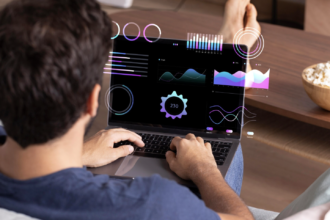
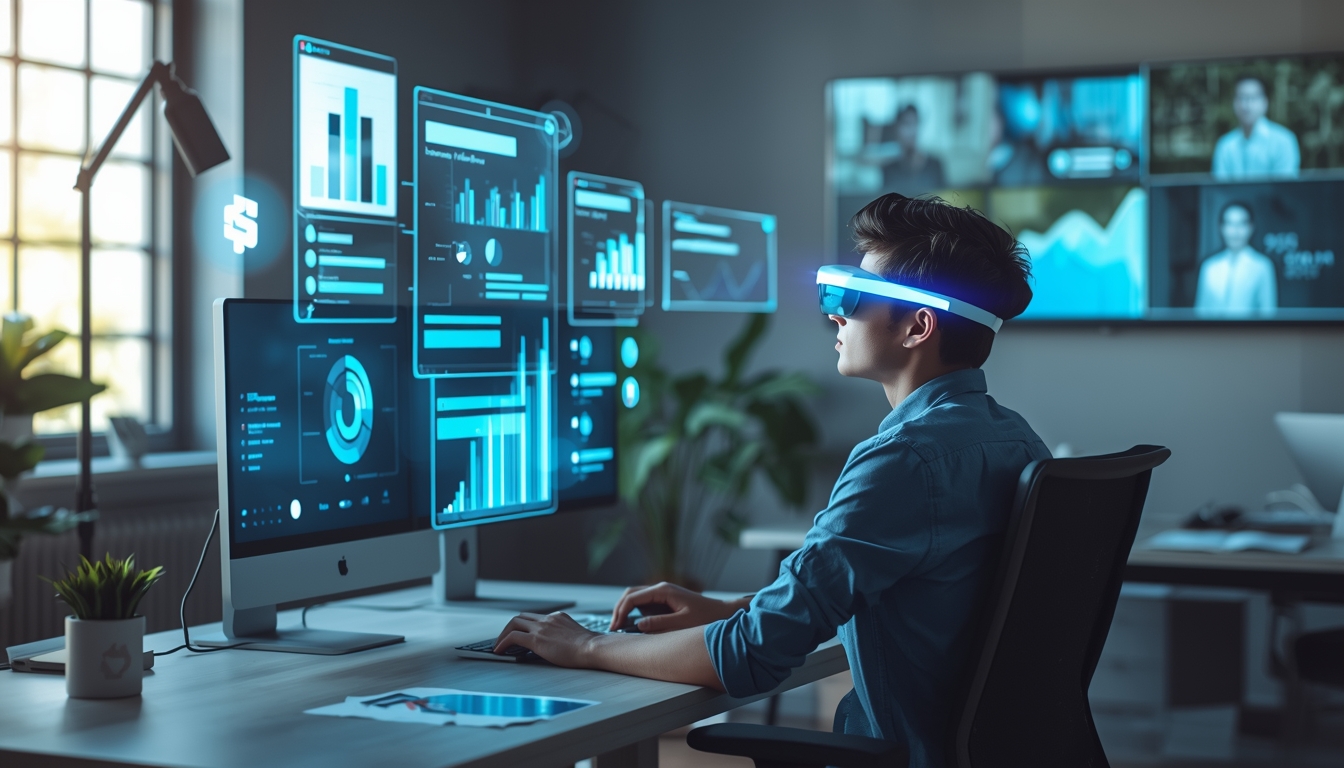
- Virtual screens floating in your field of view instead of multiple monitors.
- Remote meetings where your team appears as life-sized avatars in your living room or office.
- At home and in stores:
- Previewing furniture, paint colors, or decor in your own space before buying.
- Virtual “try-on” for clothes, glasses, and accessories.
- In the classroom:
- History lessons that let students walk through ancient cities.
The big shift is that “using a computer” won’t necessarily mean sitting down at a desk. Digital and physical will blend, and that raises new questions about privacy, advertising, and who controls the digital layer sitting on top of reality.
Robotics: Smart Machines as Co‑Workers and Helpers
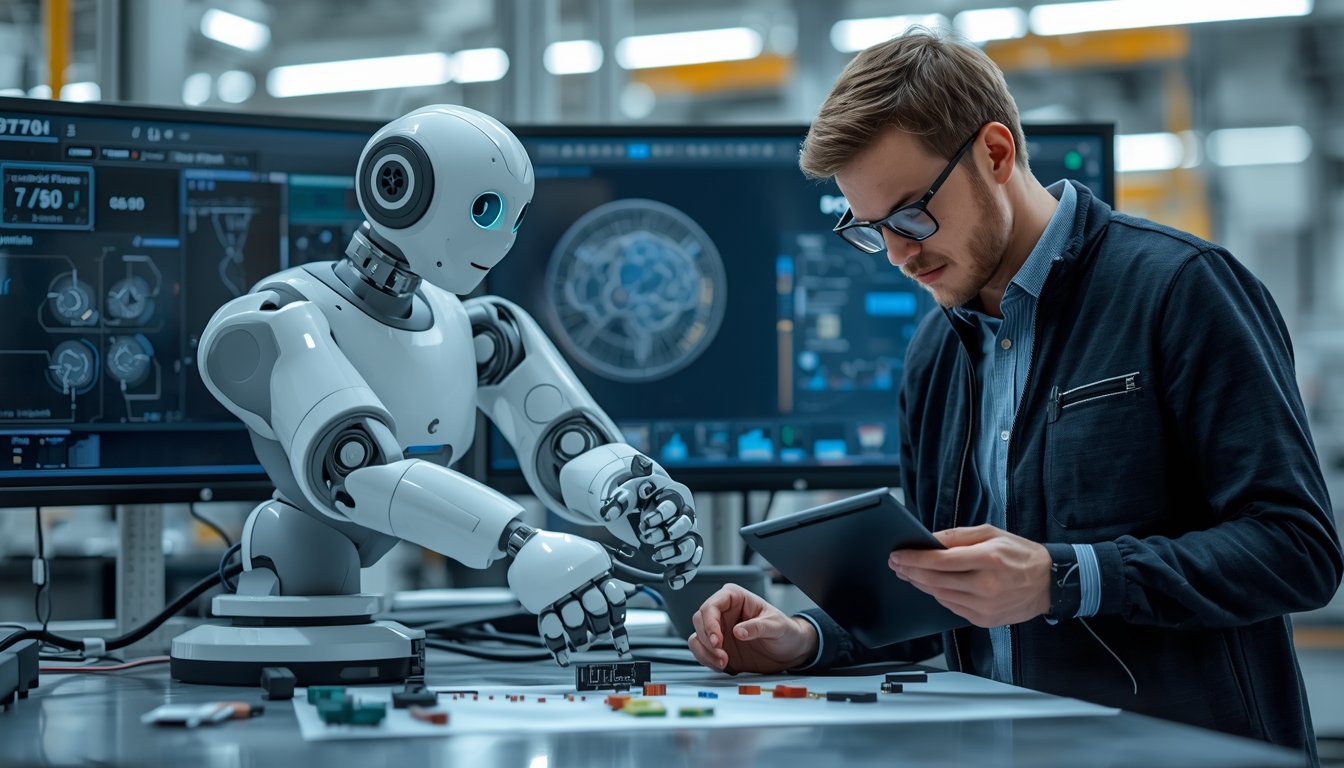
Robots used to be huge, dangerous machines locked inside factories, doing the same motion thousands of times a day. Now they’re becoming more like co‑workers and assistants.
Three trends are driving this:
- Better vision: Cameras and AI allow robots to recognize objects, people, and obstacles.
- Cheaper, safer hardware: Smaller robots with softer, safer designs can operate close to humans.
- Smarter control systems: Robots can be trained by demonstration instead of only through complex coding.
- In practice, that means:
- In workplaces:
- Collaborative robots (“cobots”) that share workbenches with humans, handling tedious or heavy tasks.
- Warehouses where robots move shelves and packages while people focus on quality control and problem-solving.
- In homes and care settings:
- Robots that go beyond vacuuming, helping with lifting, mobility, and basic chores.
- Assistive devices that help older adults live independently longer by monitoring safety and providing reminders.
Rather than “replacing all jobs,” robotics is more likely to reshape jobs. Repetitive and hazardous tasks will be automated first, pushing humans toward roles that require judgment, empathy, and creativity. The challenge will be helping workers transition through training, education, and new career paths.
Quantum Computing: Solving Problems Classical Computers Struggle With
Quantum computing doesn’t compete with your laptop; it tackles a different class of problems.
Instead of bits (0 or 1), quantum computers use qubits, which can be in multiple states at once and can be entangled with each other. This makes them potentially powerful for specialized tasks:
- Optimization:
- Finding the best routes for fleets of trucks or drones.
- Improving supply chains, energy distribution, and traffic flow.
- Chemistry and materials:
- Simulating molecules to discover new medicines.
- Designing better batteries, catalysts, and advanced materials.
- Security:
- Threatening some current encryption methods.
- Accelerating the switch to “post-quantum” cryptography that’s safe against quantum attacks.
You probably won’t interact with a quantum computer directly. Instead, companies and researchers will access them through the cloud for specific tasks. The results could show up as:
- Faster drug development and more tailored treatments.
- Cheaper clean energy technologies.
- More efficient logistics and smart-city infrastructure.
At the same time, governments and businesses are already working to protect sensitive data from future quantum decryption, a long-term security race that’s starting now.
Brain, Machine Interfaces: Direct Links Between Minds and Machines
Brain-machine interfaces (BMIs) connect neural activity to digital systems. Some sit outside the head (like EEG headsets), while others are implanted directly in the brain.
Today’s real-world uses include:
- Allowing people with paralysis to control robotic arms, cursors, or keyboards using their thoughts.
- Deep brain stimulation to treat conditions such as Parkinson’s disease and severe depression.
Over the coming years, we may see:
- More advanced assistive devices:
- Better control of prosthetic limbs, wheelchairs, and communication tools.
- New ways to restore hearing, vision, or movement in certain conditions.
- Early cognitive tools:
- Neurofeedback systems that help people track and train focus, stress levels, or sleep quality.
- Research into stimulation patterns that might support learning or memory (with many ethical caveats).
Unlike other technologies, neurotech touches our sense of identity and autonomy. That raises tough questions: Who owns brain data? How should it be protected? Where is the line between therapy and enhancement? These are debates society will have to take seriously.
When Technologies Converge
Individually, AR, robotics, quantum computing, and neurotech are impressive. But their real power appears when they intersect:
- AR interfaces that let you see and command fleets of robots in real time.
- Quantum-designed materials that make robots lighter, more efficient, and longer lasting.
- Brain, machine interfaces that use AR as a feedback channel, allowing people with disabilities to control devices more naturally.
- AI systems that sit in the middle, learning from all this data and coordinating complex systems behind the scenes.
The result won’t feel like one big “tech revolution.” It will feel like a steady shift: more of your environment becomes responsive, more decisions get optimized, and more of your digital life blends seamlessly into the physical world.