Japan has sent a spacecraft toward the two small moons of Mars, and if all goes to plan it will carry a piece of one of them back to Earth. The launch matters to ordinary readers because it starts a journey of roughly five years that no space agency has completed, and because the answers could change how we think about the rocky planets.
In this article we will explore what launched, what the probe will do, how the timeline works, who is involved, and how you can follow along.
Launch Day at Tanegashima
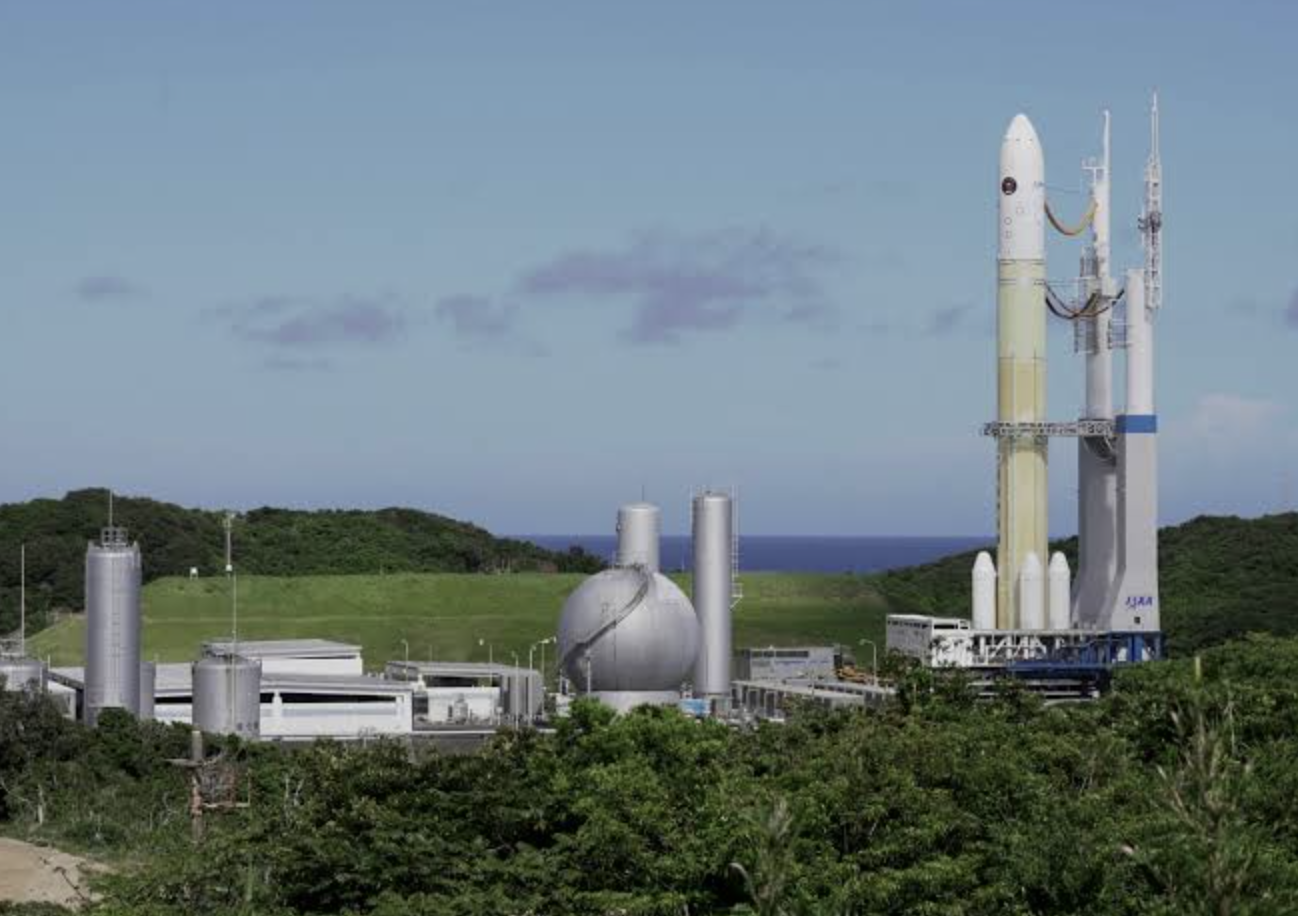
The Japan Aerospace Exploration Agency, known as JAXA, launched an H3 rocket carrying the Martian Moons eXploration probe, usually shortened to MMX, at 4:41 a.m. Japan time on Tuesday, 20 October 2026. The rocket lifted off from the Tanegashima Space Center in southern Japan. For readers in other time zones the date can look wrong, so it helps to convert: SpacePolicyOnline gives the moment as 3:41 p.m. Eastern time on 19 October, while ESA, the European Space Agency, lists it as 20:41 British Summer Time on 19 October. Everyone is describing the same liftoff.
According to nippon.com, the probe reached its planned orbit about 1 hour 11 minutes after launch. That is the first checkpoint any deep-space mission has to pass, and it only tells you that the rocket did its job. The spacecraft itself still has to unfold, switch on, point its antennas and begin the long coast toward Mars. Yasuhiro Kawakatsu, the JAXA mission leader, said the probe “is in a stable condition,” which is the sort of plain, unexciting sentence that mission teams are happiest to say in the first hours of a flight.
What the Rocket’s Record Says
This was the tenth flight of the H3, Japan’s current main launch vehicle. Nippon.com reported that it was the H3’s third consecutive success, which lifted the rocket’s record to an 80 percent success rate. Those two facts need to be read together. A rocket that has now flown cleanly three times in a row is building a reliable reputation, but a record of 80 percent over ten flights still means that two flights did not go as planned, and every new payload is a fresh test of the whole system.
Makoto Arita, the H3 project manager, said he was delighted to have opened “the first chapter of the historic MMX mission.” The word chapter is a fair choice. A launch is the shortest part of a mission like this one, lasting minutes, while the interplanetary cruise, the arrival, the landing and the return trip together stretch across years.
Why the Launch Date Is the News
Interplanetary launches are tied to the calendar in a way that airline flights are not. Earth and Mars circle the Sun at different speeds, so the two planets line up well for an efficient transfer only once in a while. Mission planners talk about launch windows, and for Mars those windows come roughly every 26 months. Miss one and the next opportunity is more than two years away, which is why agencies treat the weeks around a window as precious and why a clean launch on the first attempt is worth celebrating.
What Happens in the First Weeks
After separation from the rocket, a probe like this goes through a routine of checkouts. Controllers confirm that power is flowing, that the solar panels are positioned correctly, that the temperature is within limits, and that the radio link to the ground is healthy.
Only then do they begin testing the scientific instruments. Most of these steps are invisible to the public, which is why agencies often go quiet for a while after a successful launch. Silence in the first weeks is normal and should not be read as bad news. The next headline-worthy moments are likely to be small ones, such as a status update or a first test image, and the large events come much later.
Round Trip to the Martian System
The headline goal is easy to state. MMX is meant to study Phobos and Deimos, the two moons of Mars, land on Phobos, collect samples from its surface and return them to Earth. According to nippon.com, success would make this the first sample return from a Martian moon and the first round trip to the Martian system. SpacePolicyOnline adds that it is JAXA’s third sample-return mission, following earlier Japanese missions that brought back material from asteroids. The agency is therefore not starting from zero. It has done the delicate work of touching a small body and getting a capsule home before, although a moon of Mars is a different and harder target.
ESA frames the mission as a series of firsts. The spacecraft plans to be the first to orbit Phobos, the first to collect samples from its surface and the first to return to Earth from the Mars system. Taken one at a time, each of those goals is demanding. Taken together, they make MMX one of the more ambitious robotic missions currently under way.
Orbiting Phobos
Before the probe can touch anything, it has to learn the neighborhood. Phobos is a small, irregular body sitting very close to Mars, so the spacecraft must manage the gravity of the planet and the tiny pull of the moon at the same time. Orbiting a body this small is closer to hovering near a boulder than circling a world. Mission teams normally spend a long period measuring the shape, the surface texture and the motion of such a target before they commit to any landing.
That survey phase has a practical purpose. Engineers need to find a landing zone that is safe, reachable and scientifically useful, and those three requirements often point to different places. A flat patch may be safe but dull, while a boulder-strewn region may be fascinating but dangerous.
Landing and Collecting
The landing itself is the most delicate part of the plan. Because the gravity on a small moon is extremely weak, a spacecraft does not simply fall onto it the way a lander falls toward a larger world. It has to approach slowly, touch down gently and avoid bouncing away again. Sampling adds a further complication, since any tool that pushes into the surface also pushes the spacecraft away.
To reduce risk, the CNES and DLR Idefix rover will be released before landing to scout the site. CNES is the French space agency and DLR is the German aerospace center. A small scout that can look at the ground ahead of the main probe is a sensible way to catch surprises, such as a surface that is softer or rougher than expected, before the main spacecraft commits.
Coming Home
The last stage is the one the public tends to remember, because it ends with a capsule arriving on Earth. According to SpacePolicyOnline, the return is planned for 2031 with a landing in Australia. Wide, sparsely populated terrain makes sense for the return of a sample capsule, since it gives recovery teams room to track the descent and reach the container quickly.
Nothing in the reports says how much material will be collected, and it would be wrong to guess. Sample masses on past missions have been modest, and scientists have still learned a great deal from them.
A Shared International Effort
MMX is led by JAXA, but it is an international effort. ESA describes it as a Mission of Opportunity in its Science Programme, meaning that Europe contributes to a mission led by another agency rather than building the whole thing. NASA, CNES and DLR are also partners, and the roles are summarized below.
| Partner | Reported contribution |
| JAXA | Mission lead, H3 launch, spacecraft |
| ESA | Deep-space communication equipment, Estrack ground stations, European scientists on the science team |
| NASA | MEGANE instrument (Johns Hopkins Applied Physics Laboratory) and P-Sampler (Honeybee Robotics, part of Blue Origin) |
| CNES and DLR | Idefix rover, released before landing to scout the site |
Europe’s Role
According to ESA, it supplied deep-space communication equipment, and its Estrack ground stations will support commands and data. Ground stations spread around the globe matter because a spacecraft far from Earth can only be reached when an antenna is facing it. Using stations in different places stretches the time during which controllers can talk to the probe and receive its measurements. European scientists also sit on the science team and will study the returned samples, so Europe has a stake at both ends of the project.
Two Instruments From NASA
Two NASA instruments are aboard. One is MEGANE, supplied through the Johns Hopkins Applied Physics Laboratory. The other is the P-Sampler, supplied by Honeybee Robotics, which is part of Blue Origin. The sources name the instruments but do not describe their science in detail, so this article will not either. What the pairing does show is how mission contributions work in practice: an agency, a university-linked lab and a commercial company can each build a piece, and the pieces are then integrated into a single spacecraft.
Timeline From Arrival to the Landing in Australia
The dates reported so far are summarized below. Treat them as the current plan rather than a promise, because spaceflight schedules move for many reasons.
| Milestone | Reported timing | Who reported it |
| Launch from Tanegashima | 20 October 2026, Japan time | nippon.com, ESA, SpacePolicyOnline |
| Arrival at Mars | August 2027 | SpacePolicyOnline |
| Arrival, described by ESA | “Next summer” (2027) | ESA |
| Sampling on Phobos | No earlier than December 2028 | SpacePolicyOnline |
| Return to Earth | 2031, landing in Australia | SpacePolicyOnline |
Two details in that table deserve a closer look. First, the phrase “no earlier than” attached to the sampling date means exactly what it says: December 2028 is the earliest the team expects to try, not a fixed appointment. Second, the sources do not give an exact landing date, so any specific day you might see quoted elsewhere should be treated with caution until JAXA publishes one.
Why the Trip Takes so Long
Simple arithmetic shows that the journey from launch in October 2026 to arrival in August 2027 takes about ten months. That might seem slow for a spacecraft that left Earth at high speed, but the path is not a straight line. The probe travels along a long curve around the Sun, timed so that Mars is at the right place when the spacecraft arrives. Using that kind of trajectory saves a great deal of fuel compared with a faster, more direct route, and fuel is the scarcest resource on any spacecraft.
Why Sampling Comes Later Than Arrival
Arrival in August 2027 and sampling no earlier than December 2028 leaves a gap of well over a year. This is not wasted time. Once a spacecraft is in the Martian system it has to settle into its working orbits, check its instruments and observe both moons. Teams use that period to map the surface, pick candidate sites and rehearse the descent. Rushing a landing on a body this small would risk the whole investment, so building in slack is a feature of the plan rather than a flaw.
Why the Return Trip Is a Separate Puzzle
The way home has its own timing constraints. The spacecraft cannot leave Mars whenever it likes, because the planets must again be in a favorable arrangement for a return transfer. That is why the schedule jumps from the sampling period to a landing in 2031. Reading the whole timeline, you can see the same orbital rhythm at work three times: once on the way out, once around the Martian system, and once on the way back.
Competing Explanations for the Moons’ Origin
Part of the reason scientists care about Phobos and Deimos is that nobody is certain where they came from. Two main ideas have been argued for years, and the mission is meant to help settle the question. This is a good example of a space mission that is built around a clear scientific puzzle rather than around destination bragging rights.
The Captured Asteroid Idea
In the first theory, the moons are asteroids that wandered close to Mars long ago and were captured by its gravity. Both moons are small, dark and irregular in shape, and their appearance resembles that of some asteroids. If this idea is right, a sample from Phobos would contain material that formed somewhere else in the solar system and drifted in, which would make it a kind of free delivery of ancient asteroid rock to the doorstep of Mars.
The Giant Impact Idea
In the second theory, the moons formed from debris thrown into orbit when a large object struck Mars in the distant past. The material then gathered into moons. A strong point in favor of this idea is that the moons orbit in a fairly tidy way near the planet’s equator, which is hard to explain for captured objects, though researchers have proposed ways around it. If this idea is right, a sample from Phobos would contain material that originally came from Mars itself, mixed with material from the impactor.
Neither theory is simple to prove from a distance. Each one explains some observations and strains against others, which is exactly why the debate has lasted so long. That kind of balanced uncertainty makes a good case for sending a spacecraft: when remote measurements stop narrowing the options, the next step is to go and collect the evidence in person.
Why a Sample Could Settle the Argument
Telescopes and flybys can measure shape, brightness, and some surface properties, but they cannot reveal the detailed makeup of the rock in the way a laboratory can. Bring a piece home, and scientists can examine it with equipment that is far too large and sensitive to send into space.
The chemistry and mineral content of the material could tell researchers whether it looks like asteroid rock, Martian rock or a blend of the two. Even then, nature may be messy, and the answer may turn out to be more complicated than either theory suggests. Part of the value of a sample is that it lets researchers test ideas that nobody has thought of yet.
Risks Hidden Inside a Sample Return
A smooth launch is encouraging, but every later stage carries its own risk, and honest coverage should say so. Space agencies do not hide this. They design missions with backups and rehearsals precisely because each phase can fail in a different way.
The Long Cruise
For the next ten months or so, the spacecraft must keep itself healthy in deep space. Radiation, temperature swings and small hardware faults are all possible, and each can require controllers to fix problems from millions of miles away with a delay in every message. Mission teams practice for such events, and having communications support from multiple ground stations helps.
Arrival and Orbit
Reaching the Martian system means firing engines at the right moment to slow down, so the spacecraft can be captured rather than flying past. If that burn goes wrong, there is rarely a second chance. This is one reason mission updates around arrival tend to be tense, with teams waiting for confirmation that the maneuver worked.
Touching and Sampling
Landing on a tiny, low-gravity moon and extracting material is the part with the least precedent, above all for a world in the Mars system. The sources do not give a landing date or a sample mass, and it is better to stay with that uncertainty than to fill the gap with guesses. Readers should also note that sampling is scheduled no earlier than December 2028, so any fixed claims about it in the meantime are speculation.
Bringing It Home Safely
Getting the capsule through the atmosphere and onto the ground is a well-practiced step for Japan, which has already recovered capsules from asteroid missions. Even so, it needs precise targeting. After recovery the samples go to specialized laboratories where they are handled in carefully controlled conditions to avoid contamination, and so that scientists can be sure that what they measure came from Phobos rather than from Earth.
Mission planners also use redundancy to protect against the unexpected. Critical systems often have backups, software can be updated from the ground, and controllers rehearse failures long before they happen. None of that removes risk, but it explains why a mission team can sound calm even while it admits that the hardest tasks lie ahead.
A Practical Way to Keep up Through 2031
You do not need special equipment to follow MMX. The best sources are the agencies themselves: JAXA’s website for the mission lead, ESA’s science pages for the European angle, and NASA’s pages for its instruments. Independent outlets such as SpacePolicyOnline add useful context on schedules and policy. Official channels will usually post news of key events such as the confirmed arrival, the first images of Phobos and any change in the plan.
Reading Time Zones Correctly
Because the mission is run from Japan, many announcements will use Japan time, and the date in Tokyo can be a day ahead of the date in the Americas. When you see a key event described, check which time zone the agency used before telling friends it happened on a particular day. The launch is a good practice case: Tuesday, 20 October in Japan was still Monday, 19 October in the United States.
Reading Schedule Language Carefully
Words such as “no earlier than,” “planned” and “targeted” are chosen deliberately. They signal that a date can move if testing, weather or hardware readiness requires it. Slips are common in spaceflight and are not a sign of failure, because agencies prefer to delay rather than gamble with a mission this long. Be wary of any headline that treats a target date as a guarantee.
A Routine That Fits Real Life
A mission that lasts this long can be followed without turning it into a chore. Here is a sensible approach for a curious reader. First, note a few dates in your calendar: arrival in August 2027, the earliest sampling window of December 2028 and the return in 2031. Those are the moments when news will cluster. Second, pick one or two reliable sources, such as the JAXA and ESA mission pages, and check them when a milestone approaches rather than daily.
Third, if you have children or students in your life, use the mission as a way to talk about how science works. The origin of Phobos and Deimos is an open question with two competing explanations, which makes it a better teaching example than a topic where the answer is already printed in a textbook. Fourth, keep expectations realistic. The strongest results will probably arrive after the samples are in laboratories, so the most satisfying scientific news may come years after launch.
Finally, treat early claims with care. A spacecraft that is “in a stable condition” has cleared the first hurdle and nothing more. The real test will come in the Martian system, and the people who built the mission would be the first to say so.
Final Thoughts: What the Reports Have Not Said
It is worth listing what is missing, because gaps invite rumor. The sources reviewed for this article do not state how much material the mission hopes to collect, and they do not give a date for the Phobos landing beyond the earliest sampling window. They also do not describe the science instruments in detail.
If you see precise numbers for any of these items, look for the original agency statement before repeating them. Good science coverage is often a matter of saying clearly what is known, what is planned, and what is still open.
Read more about Ortud
Frequently Asked Questions
How Long Will the MMX Trip to Mars Take?
According to SpacePolicyOnline, the probe is due to arrive at Mars in August 2027. Counting from the 20 October 2026 launch, simple arithmetic gives about ten months. ESA describes the arrival as next summer.
When Will the Samples Come Back to Earth?
The return is planned for 2031, with a landing in Australia, according to SpacePolicyOnline. The reports do not give an exact day. Sampling on Phobos is expected no earlier than December 2028, and the return depends on that step going well.
Does the Probe Land on Mars Itself?
No. The target is Phobos, one of the two small moons of Mars. The mission plans to orbit Phobos, land on it, collect samples and bring them home.
Which Countries and Agencies Are Involved in the Mission?
JAXA leads the mission, with NASA, CNES and DLR as partners. ESA contributes through its Science Programme as a Mission of Opportunity. It supplied deep-space communication equipment and ground station support, and European scientists will help study the samples.
Is This the First Sample Return From Space?
No. SpacePolicyOnline reports that it is JAXA’s third sample-return mission, and earlier Japanese missions returned material from asteroids. What would be new is a sample from a moon of Mars and a round trip to the Martian system.
Why Is It Important to Find Out Where Phobos and Deimos Came From?
The moons may be captured asteroids or debris from an impact on Mars, and the mission is meant to help settle that question. The answer would say something about how Mars and its neighborhood formed. It could also shed light on how small bodies end up around planets.