
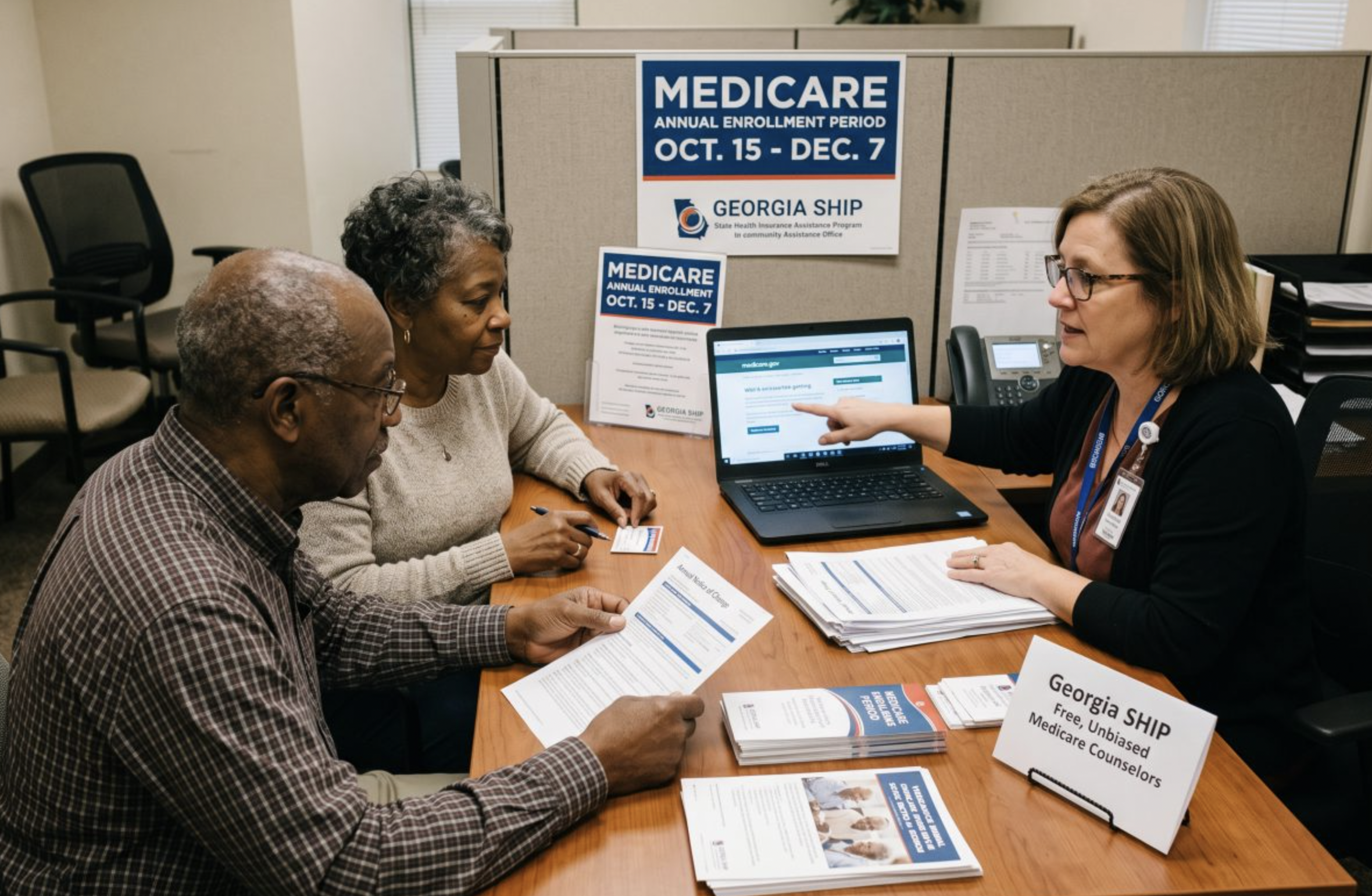
Every autumn, older and disabled Americans on Medicare get one main chance to rethink their Medicare coverage, and this year the stakes for prescription drug costs are higher than usual. The annual window closes on December 7, and plans change on January 1 whether or not you review them.
In this article we will discuss the new Part D numbers, what is happening with Medicare Advantage plans, which drug prices are changing, and a practical order for checking your own coverage.
The Calendar and What Changes on January 1
Dates to Circle
Medicare open enrollment runs from Thursday, October 15 to December 7, according to coverage by KPTV and the Honolulu Star-Advertiser, and any change you make takes effect on January 1, 2027. That gives you roughly a month from this writing, which is enough time to do a careful review but not enough to postpone it indefinitely. The deadline itself is fixed, and a choice made after it generally has to wait for a later window or a special circumstance.
This article covers the United States only. Medicare is a federal program, so the dates and rules are national, but the plans on offer, their prices and the free counseling available to you vary by state and sometimes by county. Readers outside the US will find that other countries run their public health systems very differently.
What the Window Allows
During open enrollment, a person with Medicare can generally switch from Original Medicare to a Medicare Advantage plan, move back the other way, change from one Advantage plan to another, or join, drop or change a standalone Part D prescription drug plan. Not everything is open to everyone. Some choices, such as buying a Medigap policy, follow different rules, and a separate period early in the year applies to people already in Advantage plans. Check the official Medicare website or a counselor about the details that apply to your situation.
The simplest way to think about the season is that it is a yearly audit. Juliette Cubanski of KFF put it this way in the coverage: open enrollment offers “an opportunity to evaluate the coverage they have.” That framing is useful because it removes the pressure to switch. For many people the audit ends with a decision to stay put, and that is a perfectly good result as long as the decision was made on purpose and not by default.
Nancy LeaMond of AARP gave the reason the audit matters in the same coverage: “higher healthcare costs are making it harder for older Americans to afford the care they need.” Whether or not you agree with every policy that produced that situation, the practical lesson holds. A plan that was a good value last year can be a poor one this year, because premiums, drug lists, pharmacy networks and benefits all reset on January 1.
Why does a fixed window exist at all? Insurers set prices and benefits for a calendar year and need to know who is in each plan, and a yearly decision point keeps people from joining only when they get sick. That design is why the review feels like homework: the program expects you to look again each year, even though most people would rather not.
A practical tip is to settle what you want to protect before opening any comparison tool. For some people it is a particular specialist, for others a costly medicine or a pharmacy close to home. Writing that short list down first keeps the review from turning into a hunt for the lowest premium, which is rarely the best measure of a plan.
Part D Gets a Higher Cap and a Higher Deductible
The $2,400 Out-of-Pocket Cap
The headline number for prescription drug coverage is the annual out-of-pocket cap, which rises to $2,400 from $2,100 in 2026. In simple terms, the cap is the most you should pay in a year for covered drugs through your Part D plan. Once your own spending on covered medicines reaches that limit, the plan generally pays the rest for the remainder of the year. Costs that do not count toward the cap, such as premiums and drugs the plan does not cover, still fall to you.
An increase of $300 may sound modest, and for someone who takes a single inexpensive generic it changes nothing, because they never come near the cap. It matters mostly for people on expensive specialty or brand-name medicines, who reach the limit early in the year. For them the cap is the most important protection in the system, and the new figure is the number to use when planning the year’s budget.
The $700 Deductible
The standard deductible rises to $700 from $615. The deductible is the amount you may pay before the plan starts sharing costs on many drugs, and the plan’s own design determines how it applies to different tiers of medicine. Many plans use less than the standard deductible, or none at all for lower-cost drugs, so the standard figure is a ceiling on what a plan may charge, not a promise about what yours does.
Readers with several regular prescriptions should take a moment to see how the cap interacts with their own pattern of spending. Someone who takes a few inexpensive generics will probably pay through the year in small amounts and never reach it. Someone with one very costly drug will reach it quickly, perhaps in the first months, and from then on pays little or nothing for covered drugs. As an illustration with invented round numbers, a medicine that costs a few hundred dollars a month in cost-sharing would reach a cap like this one well before the year ends. The two situations call for different plan choices, which is why the cap alone cannot tell you which plan is best.
This is why the numbers on a plan’s own paperwork matter more than the national averages. Two plans in your county can differ on deductible, premium and the drugs they favor, and the combination is what determines your real cost. The table below shows the national changes side by side, with the differences calculated as simple arithmetic.
| Part D measure | 2026 | 2027 | Change (simple arithmetic) |
| Annual out-of-pocket cap | $2,100 | $2,400 | Up $300 |
| Standard deductible | $615 | $700 | Up $85 |
The Expiring Premium Subsidy
A temporary federal Part D premium subsidy ends at the end of the year, according to the coverage. The Centers for Medicare and Medicaid Services projects only modest price increases for most people, but that is a projection about averages, and an average can hide a lot. If your plan’s premium is rising, the notice you receive from the plan should say so. Compare that figure against other plans before you accept it.
One option worth knowing about, in general terms, is the program that lets enrollees spread out-of-pocket drug costs across monthly payments instead of paying large amounts at the pharmacy counter. It does not lower what you owe in total, but it can make a costly month easier to manage. Ask your plan or a counselor how it works and whether it fits your situation, since details can change.
Medicare Advantage Plans Are Changing in Some Places
Service Areas and Benefits
Medicare Advantage replaces Original Medicare with a private plan that must cover at least what Original Medicare covers and often adds extras such as dental, vision or hearing benefits. The coverage describes two kinds of change for 2027. Some plans are leaving specific geographic areas, and some are cutting benefits such as dental coverage and may raise cost-sharing. This article has no counts of how many plans or enrollees are affected, so avoid any claim you see online that gives a precise national number without a source.
Cost-sharing means the copayments and coinsurance you pay when you use care. A plan can look attractive because of a low or zero monthly premium while charging more per visit, per hospital stay or per drug. For anyone who uses care often, those per-use charges can outweigh the premium savings, so look at the maximum amount the plan allows you to spend in a year, not just the monthly charge.
One way to size up a plan’s risk is to picture a bad year, not an average one. A hospital stay, a run of specialist visits or a new expensive prescription can turn a plan with a pleasant premium into a costly one. The yearly maximum is the figure that tells you how bad that year could get, and it deserves as much attention as the monthly charge.
Networks and the Fine Print
Most Advantage plans use networks of doctors, hospitals and pharmacies, and the network can change from one year to the next. A plan that includes your cardiologist today may not include them in January. Before you stay, call the doctor’s office and ask whether they will be in network for the plan you are considering, and do not rely only on the plan’s online directory, which can lag behind reality.
Remember also that plans change their extras more often than their core coverage. Gym memberships, over-the-counter allowances and transportation benefits come and go, and they are easy to overvalue if you have never used them. Count only the extras you will really use, and give less weight to the rest.
Dental is a good example of how fine print matters. A plan that still lists dental coverage might limit it to cleanings, restrict the dentists you can visit or cap the yearly dollar amount. The cut or the reduction can be buried in a long document, so the annual notice your plan sends is worth reading closely, even if it is dull.
If Your Plan Is Leaving Your Area
This is the case where doing nothing is most risky. If your plan is leaving your area, you will receive a notice from the plan. Leaving does not mean you lose Medicare. It means your coverage under that private plan ends, and you generally gain a special opportunity to choose a new plan or return to Original Medicare. Timing rules apply and differ by situation, so do not wait for December 31 and hope for the best. Contact the plan, the official Medicare helpline or a state counselor as soon as the notice arrives, and ask in writing, if possible, what your options and deadlines are.
Ask, too, whether the new plan you are considering covers the same medicines at the same pharmacies. People who lose a plan sometimes rush to the first alternative offered and find in January that a key drug requires approval or sits on a costlier tier. A quick check beforehand costs a few minutes and can prevent weeks of trouble at the pharmacy.
If you return to Original Medicare, you may also want a separate drug plan and a supplemental policy. These decisions interact, and a counselor can walk through them with you at no cost. More on that later in this article.
Negotiated Prices Arrive for 15 Drugs

New negotiated prices take effect in 2027 for 15 drugs, including Ozempic, Rybelsus and Wegovy. The Centers for Medicare and Medicaid Services expects this to lower Medicare prescription drug costs by $685 million in 2027. The reporting gives no per-drug prices and no estimates of what individual patients will pay, so treat any such figure you see elsewhere with caution.
The idea behind negotiation is that Medicare, instead of simply paying list prices, bargains with manufacturers over a price for selected high-spending medicines. The negotiated price is a price the program pays, and it does not translate one-for-one into your copay. What you owe depends on your plan’s drug list, which tier it places the medicine on, the deductible and the out-of-pocket cap described above. For many people on the affected drugs, the effect will show up as lower plan costs that may or may not reach the pharmacy counter in the same amount.
It also helps to remember that drug pricing news moves faster than plan paperwork. A headline can announce savings that reach your plan’s formulary on a different timeline, and plans have their own rules for tiers. When the plan’s documents and a news story disagree about your cost, the documents control what you pay.
That caution is important for a practical reason. Someone who takes one of the named drugs should not assume that every plan treats it equally. Look up the specific medicine in each plan you are comparing, check the tier and the cost-sharing, and ask whether any restrictions such as prior authorization apply. The same medicine can be easy to get on one plan and complicated on another.
Medications named in a news story are also not the whole story for your cabinet. A person with a different set of prescriptions may see no direct effect from the 15-drug list. For them, the Part D cap and deductible, plus the plan’s formulary, matter more. The price negotiation is better read as a gradual shift in the program’s economics, not as a guarantee of a lower bill next year.
Original Medicare Costs and the One-Time $90 Payment
Part B, which covers outpatient care, carries a monthly premium for most people. Medicare trustees project a $6.60 increase to $209.50 for 2027, according to the Star-Advertiser. That is a single-source projection, and the final figure is not part of the material this article relies on, so check the announced premium before you plan your budget. Social Security benefits are also adjusted for 2027, a separate story that affects how much of any premium increase you will feel, since the Part B premium is typically deducted from benefit checks.
A one-time $90 payment is going to people in traditional Medicare to help pay Part B premiums, arriving in October. The outlets differ on how many people receive it: KPTV says about 20 million enrollees and puts the cost at about $2 billion, while the Star-Advertiser says about 21 million. The difference is small in context and probably reflects rounding or timing, but it is a reminder not to quote one outlet’s number as settled. Medicare Advantage enrollees are not eligible, according to the coverage.
Cubanski, speaking about the payment in related coverage, said: “An extra $90 in the bank won’t hurt.” It is a small cushion, not a reason to avoid reviewing your plan, and it does not alter the January changes in any way.
Do not expect the payment to change the January picture. It is a one-time event tied to Part B premiums, and the premium for 2027 is a separate question. Budget for the premium you will be charged, and treat the $90 as a bonus that has already been paid or is on its way.
If you are unsure whether you received the payment, the safest step is to check your bank statements or the official Medicare resources rather than responding to any call, text or email. Which brings up a warning that belongs in every Medicare article, repeated here for good reason. Medicare will not call you out of the blue to sell you a plan. Anyone who does, who asks for your Medicare number to “verify” a payment, or who threatens to cancel your coverage unless you act today is not following the program’s rules. Hang up and call the number on your Medicare card or on the official website.
Where to Start This Week
Read the Notice Your Plan Sent
If you are in a Medicare Advantage or Part D plan, you should already have received an Annual Notice of Change, a letter that summarizes what will be different next year in costs, benefits, drug coverage and service area. It is dull reading, but it is the most important document of the season because it states the changes in the plan’s own words. Read the summary of premium, deductible, drug tiers and network changes first, then the parts that apply to the medicines you take and the doctors you see. If you cannot find it, ask the plan to send another copy.
Use the Plan Finder
The Medicare Plan Finder, a tool on the official Medicare website, lets you enter your drugs, your dosages and your preferred pharmacies, then compares plans in your area on estimated total yearly cost. Estimates are only as good as the information you enter, so include every regular prescription and choose the pharmacy you really use. Compare at least your current plan and the cheapest alternative, and note that the lowest premium is not always the lowest total cost.
Compare Original Medicare and Advantage
Original Medicare, made up of Part A for hospital care and Part B for outpatient care, lets you see any provider that accepts Medicare nationwide, but it leaves you with cost-sharing that has no overall annual limit unless you add a supplemental policy. Medicare Advantage bundles coverage into a private plan with a limit on yearly spending, often with extra benefits, but with networks and rules about referrals and approvals. Neither is better for everyone. People who travel a lot or want free choice of doctors sometimes prefer Original Medicare with a Medigap policy, while people who want predictable costs and extras may prefer Advantage.
Medigap policies are sold by private insurers to cover some of the costs Original Medicare leaves behind. The rules on when you can buy one without medical review vary by state and situation, so do not assume you can switch later. If you are thinking of leaving Advantage for Original Medicare, ask a counselor about Medigap before you cancel anything.
Get Free Help
Every state has a State Health Insurance Assistance Program, known as SHIP, with trained counselors who explain choices without selling a product. Services are free, and appointments often fill up in the final weeks, so call early. Bring your Medicare card, your list of medications with doses, your doctors’ names and the notice from your plan.
The table below gathers the items worth checking, where to find them and why they matter.
| What to check | Where to find it | Why it matters |
| Drug list and tier for each medicine | Plan’s formulary, Plan Finder | Tier decides your cost-sharing |
| Pharmacy network | Plan Finder, plan directory | Some pharmacies cost more or are excluded |
| Doctors and hospitals | Call the office, check the directory | Networks can change each year |
| Premium and deductible | Annual Notice of Change | Part D deductible can be up to $700 |
| Yearly maximum spending | Plan documents | Caps your risk with Advantage |
| Service area | Annual Notice of Change | A plan leaving your area ends coverage |
Keep an eye on the clock while you do all this. Counselors and the plan helpline get busier as the deadline nears, and online tools can slow down on the last day. A review started now leaves room to ask a second question or to call a doctor’s office that was closed when you first tried. Finishing a few days early is a modest goal that most people can meet.
Decide and Confirm
After comparing, decide by the deadline and keep a record of what you chose. If you stay with your current plan, nothing further is needed, though it is worth confirming that the notice has not changed anything you rely on. If you switch, check that you receive written confirmation from the new plan, and keep your old plan’s information until the new coverage clearly starts in January. This article offers general information only and is not insurance advice, so rely on a counselor or licensed professional for decisions that depend on your health, your income and your budget.
Frequently Asked Questions
When Is the Medicare Open Enrollment Deadline?
The window runs from October 15 to December 7, and changes take effect on January 1, 2027. Make your review early in that period if you can. Check the official Medicare website for exceptions that apply to you.
How Much Is the Part D Out-of-Pocket Cap in 2027?
It rises to $2,400 from $2,100 in 2026. The standard deductible also rises, to $700 from $615.
Can I Change Plans After December 7?
Generally not, except in special situations such as a plan leaving your area or certain life changes. Ask the official Medicare helpline or a SHIP counselor about the rules for your case.
Does Medicare Negotiation Lower My Copay for Ozempic?
Negotiated prices take effect for 15 drugs, including Ozempic, Rybelsus and Wegovy, and the government expects overall savings of $685 million. Your own cost depends on your plan’s tier, deductible and the cap, so check each plan.
Is the $90 Medicare Payment Going to Everyone?
No. It goes to people in traditional Medicare to help with Part B premiums, and Medicare Advantage enrollees are not eligible. The outlets differ on the headcount, with about 20 million in one report and about 21 million in another.
Who Can Help Me Compare Plans for Free?
State Health Insurance Assistance Program counselors give free, unbiased help in every state. The official Medicare Plan Finder tool also lets you compare plans yourself.