A single infected laptop connects to an office WiFi network that treats every device the same way, with no internal boundaries at all. Within hours, that one compromise has spread to the file server, several other workstations, and a printer nobody thought to secure. None of that had to happen, network segmentation exists specifically to draw the lines that would have stopped it cold.
What Network Segmentation Actually Means
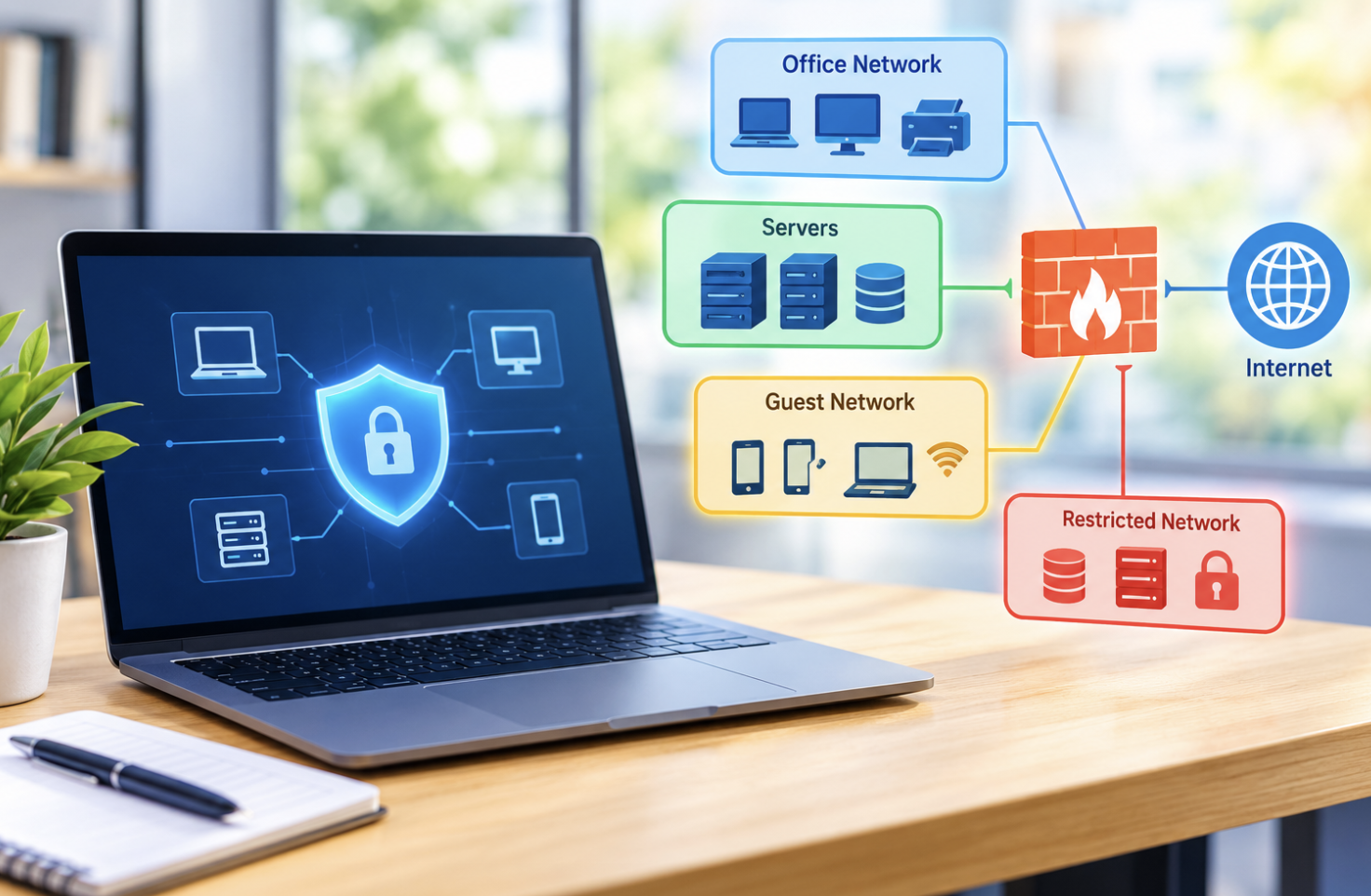
Segmentation divides a computer network into smaller sections, each with its own access controls and boundaries, rather than running the entire network as one undivided space. This lets organizations control how traffic and potential threats, move between different parts of their infrastructure.
Instead of assuming any device can freely talk to any other device, segmentation asks: does this specific connection actually need to exist? If not, it gets blocked by default.
Why Unsegmented Networks Present Significant Risk
A single compromised device on an unsegmented network can potentially reach and affect the entire network. Attackers who breach one entry point can often move freely from there, a pattern called lateral movement.
That opening scenario is exactly how lateral movement plays out in practice. Segmentation is specifically designed to stop that spread cold, containing a compromise to the specific area it first entered rather than letting it wander freely across the entire network.
How Segmentation Limits Attacker Movement
- Segmentation creates boundaries requiring explicit authorization to cross
- A compromise in one segment doesn’t automatically grant access to others
- This containment limits the overall scope of incidents that do occur
- Properly configured segmentation creates multiple barriers an attacker must overcome in sequence
The underlying logic accepts that breaches happen even to well-defended organizations, and focuses instead on limiting how far any single breach can actually spread.
Common Approaches to Implementation
Physical segmentation uses separate physical infrastructure for different sections. Virtual segmentation achieves the same logical separation through software within shared infrastructure. Organizations often segment by device type, smart home devices separate from primary computers, or by data sensitivity, keeping systems handling sensitive information apart from general-use systems.
Why IoT and Smart Devices Deserve Priority Segmentation
IoT devices frequently ship with weaker built-in security than traditional computers, making them attractive entry points for attackers. A smart speaker or security camera compromised through a known vulnerability shouldn’t be able to reach your laptop or file server, segmentation is what actually prevents that jump.
Segmentation Within Business Environments
Businesses often segment by department, function, or data sensitivity, keeping financial systems separate from general employee workstations, for instance. This limits how a compromise in one area affects other business functions, and larger organizations typically layer multiple segmentation strategies together.
Why Segmentation Alone Isn’t Complete Security
Segmentation limits lateral movement, but it doesn’t prevent an initial compromise from happening in the first place. Strong authentication, updated software, and ongoing maintenance still matter alongside it, segmentation is one important layer within a broader security approach, not a replacement for the rest of it.
Getting Started With Basic Segmentation
- Use your router’s guest network feature to isolate smart home and IoT devices
- Consider separate networks for work devices versus personal or family devices
- Research your specific router’s available segmentation features
- Consult more sophisticated equipment or professional guidance for complex needs
How Segmentation Changes the Economics of a Breach for Attackers
Segmentation doesn’t just limit technical damage, it changes an attacker’s cost-benefit calculation. An attacker who breaches a single, isolated segment gains access to a limited set of resources, meaning the considerable effort required to actually compromise a network in the first place yields a much smaller payoff than it would on an unsegmented network where one breach opens up everything at once.
This shift in incentives matters more than it might initially seem. Some attackers, particularly less sophisticated or opportunistic ones, simply move on to an easier target once they realize a breach has yielded limited access rather than the network-wide foothold they were hoping for.
A Practical Way to Think About What Belongs in Which Segment
A useful mental exercise for planning segmentation involves asking, for each device or system, exactly what it actually needs to talk to in order to function, nothing more. A smart thermostat needs to reach the internet and perhaps a smartphone app; it has no legitimate reason to ever communicate directly with a laptop storing tax documents.
Framing segmentation decisions around this specific, functional question tends to produce considerably tighter, more effective boundaries than simply grouping devices loosely by type or vague intuition.
This functional approach also makes segmentation easier to explain and maintain over time, since anyone reviewing the setup later can look at a specific segment and understand exactly why those particular devices were grouped together, rather than inheriting an arrangement whose original logic has been forgotten.
Why Guest Networks Alone Aren’t Quite the Same as True Segmentation
Many people assume that enabling a router’s guest network feature fully accomplishes proper segmentation, and while it’s a good, accessible starting point, it’s worth understanding its real limits. A basic guest network typically isolates guest devices from your primary network, but it doesn’t necessarily create the more granular, multiple-segment structure a household with several distinct device categories, work laptops, smart home gadgets, kids’ devices, might actually benefit from.
For most home users, a guest network represents a meaningful, worthwhile improvement over no segmentation at all, but households with more complex device ecosystems may eventually want to look into more capable router features or additional equipment supporting multiple, distinct segments rather than the simple two-way split a guest network alone provides.
Final Thoughts
Segmentation provides real security value by dividing networks into controlled sections, specifically limiting how far attackers or malware can travel even after an initial compromise. That office laptop from our opening scenario, on a properly segmented network, would have stayed a contained, manageable problem instead of an office-wide crisis.
Frequently Asked Questions
1. Is network segmentation only relevant for large businesses?
No, it provides value at any scale, including home networks, especially given how many smart devices most households now have.
2. Does implementing segmentation require significant technical expertise?
Basic segmentation, like using a router’s guest network, requires very little. More sophisticated business strategies benefit from professional input.
3. Can network segmentation slow down network performance?
Properly implemented, it shouldn’t meaningfully affect performance. Poor configuration could introduce issues, which is why appropriate setup matters.
4. How does network segmentation relate to firewalls?
They’re related but distinct. Firewalls enforce rules about traffic; segmentation is the broader structural division firewalls often help enforce.
5. Should segmentation come before or after other measures like strong passwords?
Neither takes priority, a solid security posture layers multiple protections together rather than sequencing them.
6. Can segmentation help if my device becomes infected anyway?
Yes, and this is really the whole point. Even when a compromise happens, segmentation keeps it contained to its specific segment rather than letting it spread.