
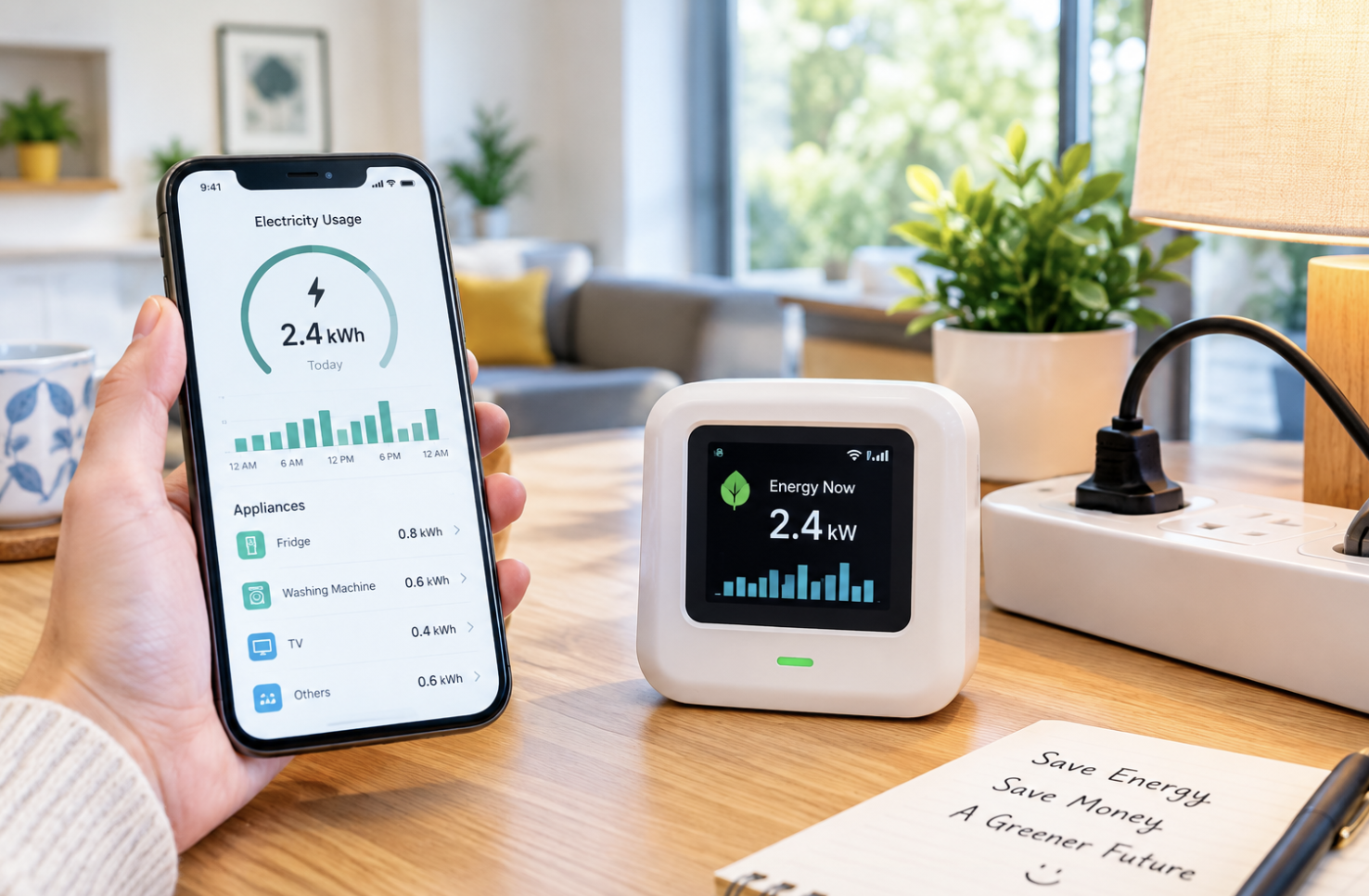
A homeowner stares at an electricity bill that’s noticeably higher than last month, with absolutely no idea which appliance is actually responsible. The old fridge? The space heater in the garage? The bill itself offers zero clues, just one lump number covering thirty days of invisible consumption. A home energy monitor exists specifically to answer exactly that question.
What a Home Energy Monitor Actually Does
A home energy monitor tracks your household’s electricity consumption in detail, typically showing real-time usage and, in more sophisticated systems, a breakdown by individual appliances or circuits. Where a utility bill gives you one number a month, a monitor shows you where that number actually comes from.
How Monitors Actually Measure Usage
Whole-home monitors install at your main electrical panel to track overall consumption. More sophisticated systems monitor individual circuits, and some use smart plugs for device-specific data. The basic version tells you total usage; the detailed version tells you which appliance is actually driving that number up, exactly the answer our confused homeowner needed.
How Detailed Data Enables Real Savings
- Spotting unexpected high-consumption appliances allows targeted efficiency fixes
- Understanding usage patterns reveals opportunities to shift consumption to cheaper time periods
- Detailed data can flag malfunctioning appliances drawing abnormal amounts of power
- This information supports informed decisions about replacement or habit changes
An appliance quietly starting to fail often draws noticeably more power before it actually breaks down completely, a monitor can catch that early, turning a surprise repair bill into a planned one.
The Real Limitations of Home Energy Monitors
The monitor only provides information; savings depend entirely on what you do with it. Circuit-level systems cost more upfront, and some installations require a professional electrician. Buying the devices doesn’t automatically save you anything. Reviewing the data and actually changing something does.
Calculating Whether the Investment Makes Sense
Weigh your current electricity costs and whether meaningful savings opportunities likely exist against the monitor’s upfront cost. Be honest with yourself about whether you’ll actually review the data regularly, since households with higher bills or unusual usage patterns tend to see the clearest return.
Which Households Benefit Most
Households with above-average electricity costs, homes with many appliances worth individually tracking, environmentally motivated households, and anyone sizing a future solar installation all tend to get the most practical value from this kind of monitoring.
How Monitors Connect to Broader Smart Home Systems
Many modern energy monitors integrate with smart home platforms and voice assistants, enabling automated responses like adjusting a smart thermostat based on usage patterns, or sending alerts when consumption crosses a threshold you’ve set.
When you combine a smart home system with a smart voice assistant, you can control your entire house without lifting a finger, changing the way you live your life. With a single voice command you can instantly dim the lights, adjust the thermostat, and lock your doors, without ever leaving the couch.
Getting Started With Home Energy Monitoring
- Research available monitor types and honestly assess the level of detail you actually need
- Consider starting with a basic whole-home monitor before investing in circuit-level systems
- Commit to reviewing usage data regularly rather than installing and forgetting
- Be prepared to actually act on what the data shows you
What a Typical First Month With a Monitor Actually Reveals
People installing a monitor for the first time are consistently surprised by which specific appliances turn out to be the real culprits, and it’s rarely the one they expected. Older refrigerators, space heaters, and certain older water heaters tend to top the list far more often than the obvious suspects like phone chargers or a television left on standby, which many people assume are the bigger problem based on how often they’re actually used.
This first-month surprise is exactly the value proposition working as intended, replacing a vague sense of “we use too much electricity” with a specific, actionable answer about precisely where that money is actually going every month.
Why Time-of-Use Data Matters if Your Utility Charges Variable Rates
An underappreciated benefit worth understanding involves utilities that charge different rates depending on the time of day electricity actually gets used, typically charging more during peak demand hours. A detailed energy monitor can reveal exactly how much of your consumption happens during these more expensive windows, opening the door to savings simply by shifting certain activities, like running a dishwasher or charging an electric vehicle, to cheaper off-peak hours instead.
This time-of-use insight is something a standard monthly bill simply cannot provide, since it only shows total consumption without any breakdown of exactly when that electricity actually got used throughout each day.
Why Comparing Your Usage Against Similar Homes Adds Useful Context
Some more advanced energy monitoring platforms offer a comparison feature, showing your household’s consumption against anonymized data from similar homes in your area based on size and other factors. This context helps answer a question raw consumption numbers alone can’t: is your usage actually unusually high, or does it simply reflect what’s normal for a home of similar size in your specific climate.
Without this comparison, it’s easy to either feel unnecessarily alarmed by a number that’s actually typical, or conversely miss a problem because the number seems roughly reasonable in isolation without any real benchmark to judge it against.
Final Thoughts
Home energy monitors provide detail your utility bill never will, but the savings only materialize if you actually act on that information. For the homeowner staring at that confusing bill, a monitor is the difference between guessing and actually knowing.
Frequently Asked Questions
1. How much can a home energy monitor help reduce costs?
It varies by household, though many users report meaningful savings after identifying specific high-consumption sources or failing appliances, results depend heavily on follow-through.
2. Do home energy monitors require professional installation?
It depends on the system. Basic monitors are often self-installable; circuit-level systems frequently need an electrician.
3. Can these monitors help identify electrical safety issues too?
Potentially, since unusual consumption patterns can hint at developing problems, though they’re not a substitute for a proper electrical inspection.
4. How long before I see meaningful data?
Basic patterns show up within days; seasonal trends or slowly developing issues take weeks or months of accumulated data.
5. Are these worth it for renters, not just homeowners?
Renters paying their own electricity can benefit similarly, though installation limits in rental properties may restrict which systems are actually feasible.
6. Can this data help size a solar panel system?
Yes, understanding your actual, detailed consumption patterns helps ensure a solar system is sized to match your needs rather than a rough guess.