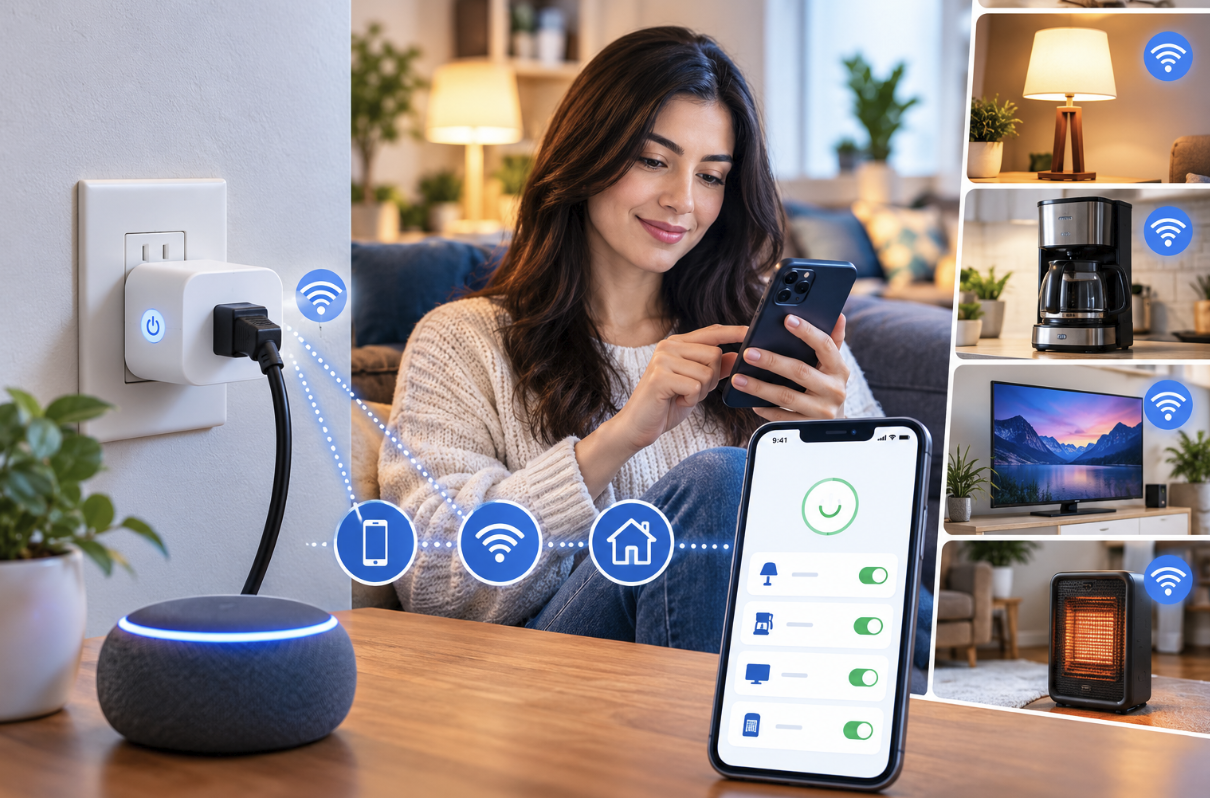
Smart home technology often involves purchasing entirely new, specifically designed smart appliances, yet smart plugs offer a genuinely accessible alternative, allowing many existing, traditional appliances to gain smart functionality without requiring complete replacement. Understanding how these relatively simple devices actually work reveals a practical, cost-effective entry point into smart home technology for many households.
What a Smart Plug Actually Is
A smart plug is a device that connects between a traditional electrical outlet and a regular appliance’s power cord, adding internet connectivity and remote control capability to that appliance without requiring the appliance itself to have any built-in smart features. This allows genuinely ordinary devices, like lamps, fans, or coffee makers, to gain smart home functionality through this simple, intermediary device.
Understanding this intermediary approach genuinely matters, since it explains smart plugs’ genuine practical appeal, allowing households to add smart functionality to existing appliances they already own, rather than requiring the more significant expense of replacing these appliances entirely with dedicated smart versions.
How Smart Plugs Actually Enable Remote Control
Understanding the genuine technical mechanism by which a smart plug actually allows you to control a connected appliance remotely helps clarify how this relatively simple device provides such practical smart home functionality.
- The smart plug connects to your home’s WiFi network, allowing it to receive commands remotely
- A companion smartphone app allows you to send commands to turn the connected appliance on or off
- These commands travel from your phone through the internet to your smart plug, which then executes them
- This entire process typically happens within moments, providing genuinely responsive remote control
This WiFi connectivity requirement deserves particular emphasis, since the smart plug itself essentially functions as a genuinely simple internet-connected switch, receiving your remote commands and translating them into the basic action of actually turning the connected appliance’s power on or off, representing a relatively straightforward technical function despite the genuine convenience it provides.
Why Scheduling Represents a Genuinely Popular Smart Plug Feature
Understanding why scheduling functionality has become one of the most genuinely popular, practical uses for smart plugs helps illustrate this technology’s real everyday value beyond simply remote control alone.
- Smart plugs typically allow setting specific times for connected appliances to automatically turn on or off
- This enables genuinely convenient automation, like having lights turn on automatically before you arrive home
- Scheduling can also support energy savings by automatically turning off devices during periods when they are not needed
- This automation happens without requiring ongoing manual intervention once genuinely configured
How Smart Plugs Genuinely Integrate With Broader Smart Home Systems
Understanding that smart plugs often work alongside other smart home devices and voice assistants, rather than functioning as an isolated technology, helps clarify their broader practical role within a more comprehensive smart home setup.
- Many smart plugs integrate with popular voice assistant platforms, enabling voice-controlled operation
- This integration allows traditionally non-smart appliances to be included within broader smart home automation routines
- Smart plugs can often be grouped with other smart devices for coordinated, combined automation actions
- This integration capability genuinely extends smart plugs’ practical value beyond their basic individual functionality
This voice assistant integration deserves particular emphasis, since it allows genuinely ordinary appliances connected through a smart plug to become part of the same voice-controlled experience as dedicated smart devices, meaning you could verbally request turning off a traditional lamp using the same voice command system you might use for dedicated smart lighting, creating a more genuinely unified smart home experience despite mixing traditional and purpose-built smart devices.
Understanding the Genuine Limitations of Smart Plugs
Understanding that smart plugs, despite their genuine convenience, come with some real practical limitations worth understanding before relying on them for every smart home need.
- Smart plugs only control whether power flows to a connected device, not more sophisticated device-specific functions
- This means devices with multiple settings beyond simple on and off gain relatively limited additional smart functionality
- Some appliances may not be genuinely suitable for smart plug control due to safety considerations
- Understanding these limitations helps set realistic expectations for what smart plugs can actually accomplish
This on-off limitation deserves particular emphasis, since a smart plug genuinely cannot provide the same level of sophisticated control that a dedicated smart appliance with built-in intelligence might offer, meaning while a smart plug can turn a fan on or off remotely, it typically cannot adjust that fan’s specific speed setting the way a dedicated smart fan with built-in smart features potentially could.
Practical Considerations for Choosing and Using Smart Plugs
- Consider which specific appliances in your home would genuinely benefit most from basic remote and scheduled control
- Check compatibility with your existing smart home ecosystem or voice assistant platform if you have one
- Be mindful of safety considerations, avoiding smart plug use with appliances requiring more careful, attended operation
- Consider your home’s WiFi coverage, since smart plugs require reliable network connectivity to function properly
Why Energy Monitoring Features Have Become a Genuinely Popular Addition
Understanding that many modern smart plugs now include energy monitoring capability, beyond simply basic on-off control, helps illustrate how this technology has genuinely expanded beyond its original, more limited core functionality.
These energy monitoring features allow users to actually track how much electricity a specific connected appliance consumes over time, providing genuinely useful insight into which devices contribute most significantly to household energy costs. This information can help households make more informed decisions about which appliances to actually replace with more efficient alternatives, or simply which devices genuinely benefit from being automatically scheduled to turn off during periods when they are not actually needed, extending smart plugs’ practical value beyond simple remote convenience into genuine, actionable energy awareness.
- Many modern smart plugs include energy monitoring capability beyond basic on-off control
- This allows tracking how much electricity a specific connected appliance actually consumes over time
- This insight helps identify which devices contribute most significantly to household energy costs
- This extends smart plugs’ value beyond convenience into genuine, actionable energy awareness and savings potential
Final Thoughts
Smart plugs provide a genuinely accessible, cost-effective way to add remote control and scheduling functionality to existing traditional appliances, serving as a practical entry point into smart home technology without requiring complete appliance replacement.
Understanding both their genuine capabilities and real limitations helps you make informed decisions about which specific appliances in your home might benefit most from this simple but genuinely useful smart home technology.
- You may want to know How to Secure a Smart Home Network From Hackers?
Frequently Asked Questions
1. Can I use a smart plug with any type of traditional appliance?
Most simple, basic appliances that just require being turned on or off work well with smart plugs, though appliances requiring more careful supervision during operation, like certain heating devices, may not be genuinely appropriate for unattended smart plug control for safety reasons.
2. Do smart plugs genuinely require a separate hub device to function?
Many modern smart plugs connect directly to your home WiFi network without requiring an additional separate hub, though some smart home ecosystems may still use a hub for broader device coordination depending on the specific system you are using.
3. How much do smart plugs typically cost compared to buying dedicated smart appliances?
Smart plugs are generally considerably less expensive than purchasing dedicated smart appliances, making them a genuinely cost-effective way to add basic smart functionality to your existing devices without the greater expense of complete appliance replacement.
4. Can multiple smart plugs genuinely be controlled together as a group?
Yes, many smart home apps and systems allow grouping multiple smart plugs together, enabling coordinated control where a single command or scheduled action affects several connected devices simultaneously.
5. Is it safe to leave appliances connected to smart plugs unattended?
This depends on the specific appliance, since basic devices like lamps are generally considered safe, while appliances involving heat generation or requiring more careful operation may warrant more caution or may not be genuinely appropriate for this kind of unattended, remote control.