
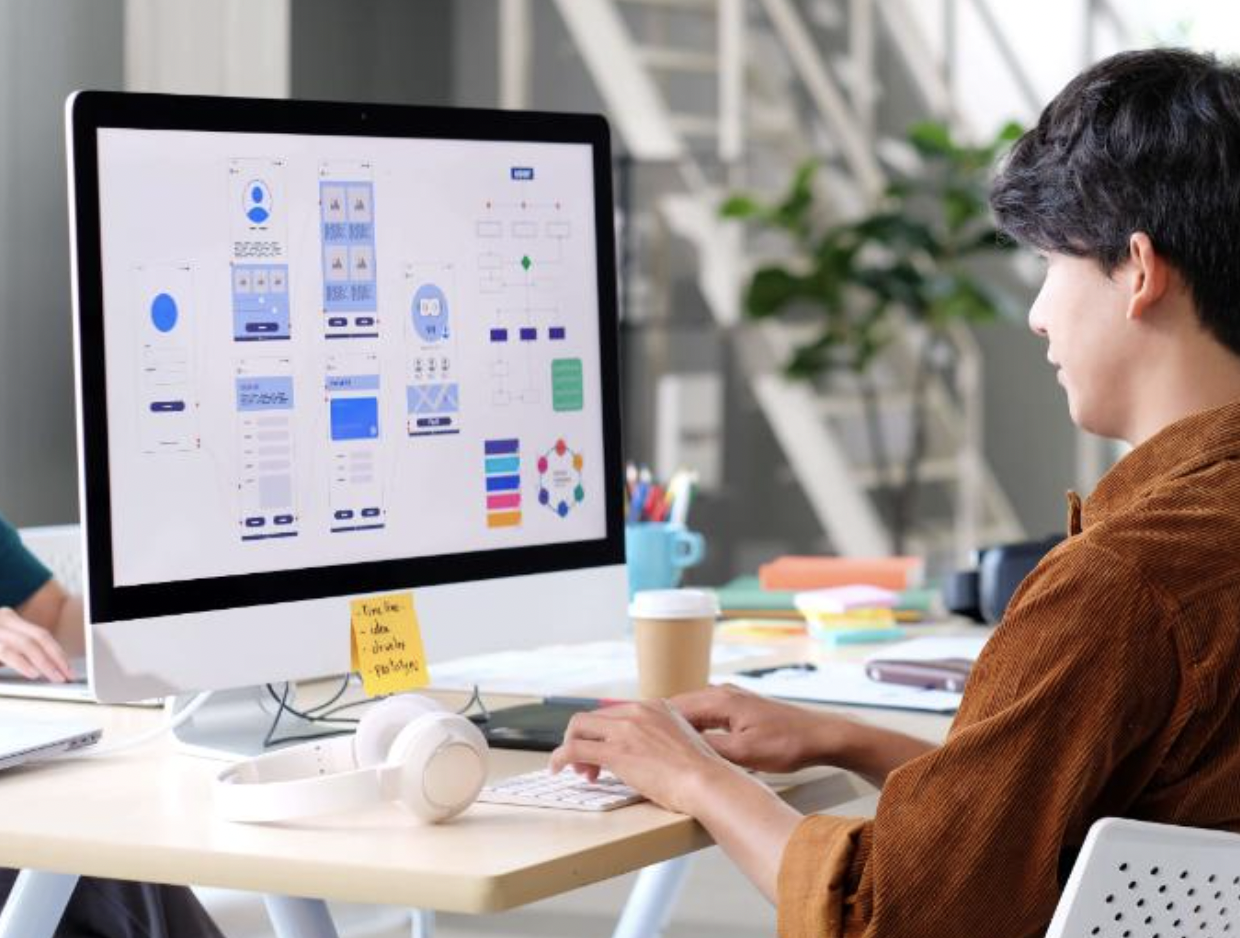
Introduction to a Results-Driven UX/UI Design Process
A well-structured UX/UI design process is the backbone of any successful digital product. We focus on delivering intuitive, user-centered experiences by following a systematic approach that transforms ideas into visually compelling and highly functional interfaces. From deep user research to pixel-perfect high-fidelity prototypes, every stage is critical in ensuring usability, accessibility, and business success.
To understand how visual elements shape storytelling, explore our detailed guide on costume design.
Understanding User Needs Through Strategic Research
Comprehensive User Research Techniques
We begin with data-driven user research, ensuring every design decision is rooted in real user behavior. This phase includes:
- User Interviews to gather qualitative insights
- Surveys and Questionnaires for scalable data collection
- Behavioral Analytics to understand real interaction patterns
- Competitive Analysis to identify market gaps
By synthesizing this information, we uncover pain points, motivations, and user expectations, forming the foundation of a highly effective UX strategy.
Creating User Personas
We translate research findings into detailed user personas, representing target audience segments. Each persona includes:
- Demographics and background
- Goals and objectives
- Frustrations and challenges
- Behavioral patterns
These personas guide us in designing relevant and personalized user experiences.
Defining User Journeys and Experience Mapping

User Journey Mapping for Clarity
We construct user journey maps to visualize how users interact with the product across different touchpoints. This helps us identify:
- Key interaction stages
- Emotional responses
- Opportunities for improvement
By mapping the entire experience, we ensure a seamless and frictionless user flow.
Information Architecture Planning
A well-organized information architecture (IA) ensures users can easily navigate the product. We define:
- Logical content hierarchy
- Clear navigation structures
- Intuitive categorization
This step guarantees efficient information discovery and usability.
Wireframing: Building the Structural Blueprint
Low-Fidelity Wireframes
We start with low-fidelity wireframes, focusing purely on structure and layout without visual distractions. These wireframes:
- Define content placement
- Establish interaction flow
- Highlight key functionalities
This stage allows rapid iteration and early validation of concepts.
Iterative Feedback and Refinement
We continuously refine wireframes based on:
- Stakeholder feedback
- User testing insights
- Usability considerations
This ensures that the design evolves into a highly optimized structure before moving forward.
Designing Engaging User Interfaces
Visual Design Principles
We apply modern UI design principles to create visually appealing interfaces, including:
- Consistency in typography and color schemes
- Effective use of white space
- Clear visual hierarchy
- Accessible design standards
These elements contribute to a professional and engaging user interface.
Design Systems and Style Guides
We develop comprehensive design systems that include:
- UI components and patterns
- Typography scales
- Color palettes
- Iconography
A robust design system ensures consistency, scalability, and faster development cycles.
Prototyping: Bringing Ideas to Life
Interactive Prototypes for Realistic Experiences
We create interactive prototypes that simulate real user interactions. These prototypes allow:
- Clickable navigation
- Micro-interactions
- Transition animations
This enables stakeholders and users to experience the product before development begins.
High-Fidelity Prototypes
High-fidelity prototypes represent the final visual design and functionality, including:
- Pixel-perfect layouts
- Real content integration
- Advanced interactions
These prototypes serve as a blueprint for developers, minimizing misunderstandings and rework.
Usability Testing and Validation
User Testing for Continuous Improvement
We conduct rigorous usability testing to validate design decisions. This includes:
- Moderated user testing sessions
- A/B testing for design variations
- Heatmaps and click tracking
Testing ensures that the product meets user expectations and performance goals.
Analyzing and Implementing Feedback
We analyze test results to identify:
- Usability issues
- Navigation challenges
- Interaction inefficiencies
By implementing improvements, we refine the design into a high-performing user experience.

Collaboration Between Design and Development
Seamless Handoff to Developers
We ensure a smooth transition from design to development by providing:
- Detailed design specifications
- Interactive prototypes
- Component libraries
This reduces development errors and ensures accurate implementation.
Agile Workflow Integration
We integrate UX/UI design into agile workflows, enabling:
- Continuous iteration
- Faster delivery cycles
- Ongoing improvements
This approach ensures the product remains adaptive and user-focused.
Optimizing for Accessibility and Performance
Inclusive Design Practices
We prioritize accessibility standards to ensure usability for all users, including:
- Proper contrast ratios
- Keyboard navigation support
- Screen reader compatibility
Inclusive design enhances reach and user satisfaction.
Performance-Driven Design
We optimize designs for speed and efficiency, ensuring:
- Fast loading times
- Minimal resource usage
- Responsive layouts across devices
Performance optimization directly impacts user retention and engagement.
Continuous Improvement and Iteration
Post-Launch Monitoring
After launch, we monitor performance using:
- User analytics
- Conversion tracking
- Feedback collection
This data helps identify areas for ongoing improvement.
Iterative Enhancements
We continuously refine the product by:
- Updating UI elements
- Enhancing user flows
- Introducing new features
This ensures the product remains competitive and user-centric over time.
Conclusion: Delivering Exceptional UX/UI Outcomes
A structured UX/UI design process transforms ideas into high-impact digital experiences. By combining deep user research, strategic planning, intuitive design, and rigorous testing, we create products that are not only visually stunning but also highly functional and user-friendly. From initial concepts to high-fidelity prototypes, every step is optimized to deliver maximum value and superior user satisfaction.