
Anyone starting to learn about databases quickly encounters the term SQL alongside a growing family of alternatives collectively called NoSQL, often without a clear explanation of what genuinely separates them or which makes more sense to learn first. This article breaks down the real differences between these two broad database categories and offers practical guidance for beginners deciding where to start.
What SQL Databases Actually Are
SQL, which stands for structured query language, refers both to a specific query language and, informally, to the broader category of relational databases that use it. These databases organize data into structured tables with predefined columns, similar in concept to a well-organized spreadsheet, where relationships between different tables are explicitly defined and enforced.
This structured approach means SQL databases excel at maintaining data consistency and handling complex relationships between different pieces of information, such as connecting a customer record to their associated orders and each order’s individual line items.
What NoSQL Databases Actually Are
NoSQL databases encompass a broader, more varied category of database types that generally move away from the strict, predefined table structure that SQL databases require. Rather than a single unified approach, NoSQL actually includes several distinct database styles, each suited to somewhat different use cases.
- Document databases store data in flexible, JSON-like documents rather than rigid tables
- Key-value databases store simple pairs of unique keys and their associated values
- Column-family databases organize data by columns rather than traditional rows, useful for certain analytical workloads
- Graph databases specifically model and query complex relationships between interconnected data points
This flexibility allows NoSQL databases to handle data that does not fit neatly into rigid, predefined table structures, and to scale more easily across many servers for certain types of workloads.
The Genuine Trade-Offs Between These Two Approaches
Neither SQL nor NoSQL is universally better, and the right choice genuinely depends on the specific characteristics of the data and workload involved.
- SQL databases excel at maintaining strict data consistency and handling complex relationships reliably
- NoSQL databases generally offer more flexibility for data that does not fit a rigid, predefined structure
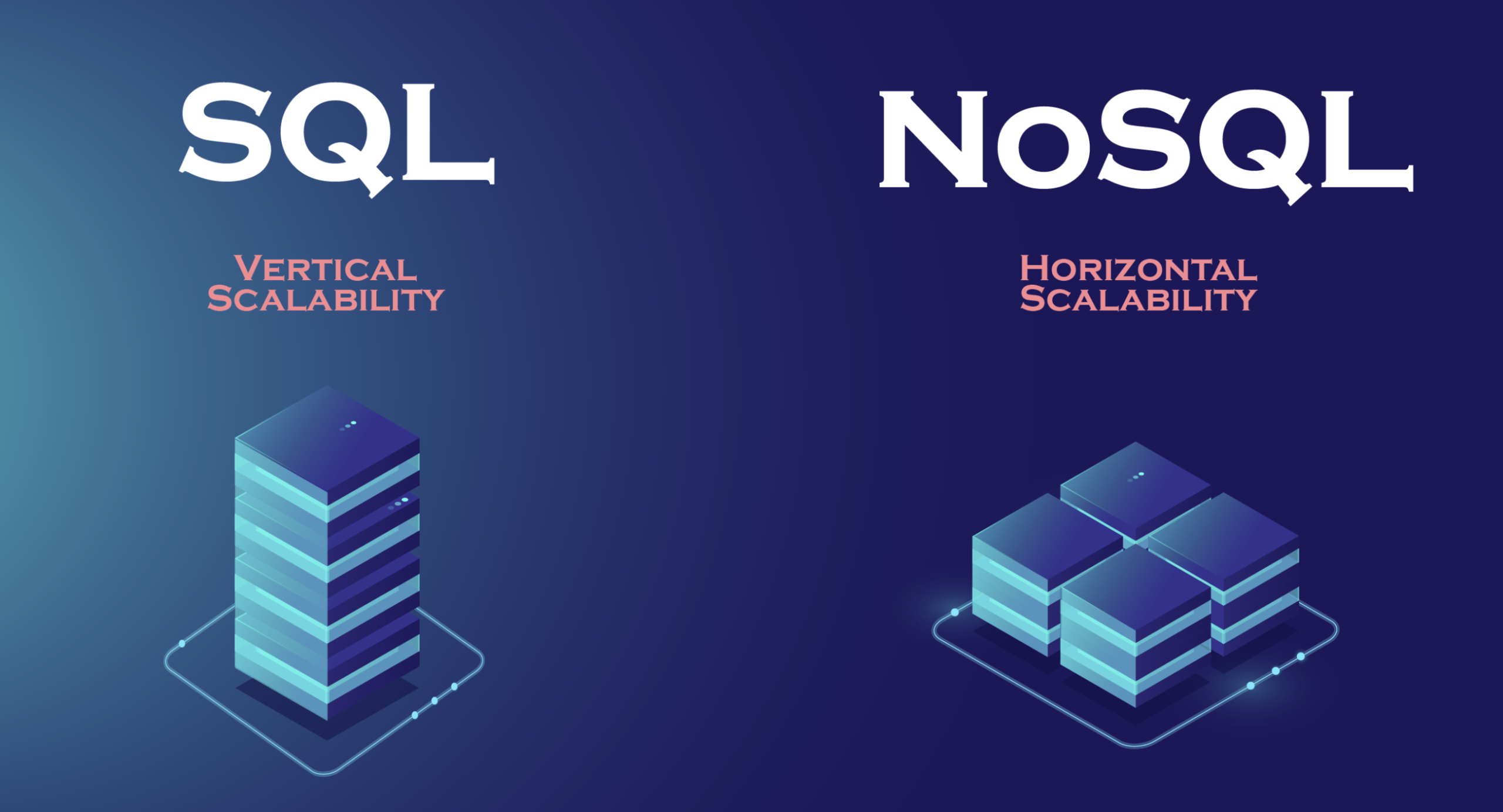
- SQL databases traditionally scale by adding resources to a single powerful server
- Many NoSQL databases were specifically designed to scale more easily across many distributed servers
This distinction matters considerably for real-world applications, where an ecommerce platform tracking orders, inventory, and customer relationships might benefit from SQL’s strong consistency guarantees, while a social media platform handling enormous volumes of rapidly changing, loosely structured user activity might benefit from NoSQL’s flexibility and scalability.
Which Database Type Makes More Sense to Learn First
For most beginners, starting with SQL genuinely makes sense, for several practical reasons beyond just historical popularity.
- SQL concepts, like structured tables and relationships, provide a strong foundational understanding of data organization
- SQL skills remain widely applicable across a huge number of existing systems and job opportunities
- Understanding SQL’s structured approach makes it considerably easier to appreciate why NoSQL alternatives exist
- Many foundational database concepts learned through SQL transfer usefully to understanding NoSQL systems later
Learning NoSQL concepts afterward tends to feel more intuitive once you already understand the structured approach that NoSQL databases were specifically designed to move away from in certain situations.
Practical Considerations for Choosing a Database for a Specific Project
- Consider whether your data has clear, consistent relationships that benefit from SQL’s structured approach
- Evaluate whether your application needs to scale across many servers, which may favor certain NoSQL options
- Think about how much your data structure is likely to change over time, since NoSQL offers more flexibility here
- Remember that many real-world applications successfully use both SQL and NoSQL databases for different specific purposes
A Practical Example Showing How the Two Approaches Actually Differ
Considering a concrete example helps make the distinction between SQL and NoSQL feel less abstract. Imagine building a system to track customer orders for an online store. In a SQL database, you would define separate, structured tables for customers, orders, and individual order items, with clearly defined relationships connecting them, ensuring that every order is reliably linked to a valid, existing customer record.
In a NoSQL document database, you might instead store each entire customer order as a single, self-contained document, including the customer’s information and all order items nested directly within that same document. This avoids the need to join separate tables together to retrieve a complete order, which can improve performance for certain access patterns, though it also means customer information might end up duplicated across multiple separate order documents rather than existing as a single, authoritative record.
- SQL databases use separate, related tables with enforced relationships between them
- NoSQL document databases often nest related data together within a single, self-contained document
- This structural difference creates genuine trade-offs around consistency, duplication, and query performance
- Neither approach is universally correct, since the right choice depends on the specific access patterns involved
Final Thoughts
SQL and NoSQL databases each offer genuine strengths suited to different types of data and application requirements, rather than one being a universal replacement for the other. For most beginners, starting with SQL provides a strong foundational understanding of data organization that makes learning NoSQL concepts considerably more intuitive once you are ready to explore them.
- Read more about Ortud!
Frequently Asked Questions
1. Is NoSQL simply a newer, better replacement for SQL databases?
No, NoSQL represents a different set of trade-offs rather than a strict improvement, and SQL databases remain the better choice for many applications requiring strong data consistency and complex relationship handling.
2. Can a single application use both SQL and NoSQL databases together?
Yes, many real-world applications use SQL for certain data with clear structure and relationships, while using NoSQL for other data that benefits from more flexibility or needs to scale differently.
3. Is SQL harder to learn than NoSQL for a complete beginner?
Both have their own learning curves, though SQL’s structured approach and widespread documentation often make it a genuinely solid, well-supported starting point for beginners new to databases generally.
4. Do all NoSQL databases work the same way?
No, NoSQL is a broad category encompassing several genuinely different database styles, including document, key-value, column-family, and graph databases, each with distinct strengths suited to different specific use cases.