
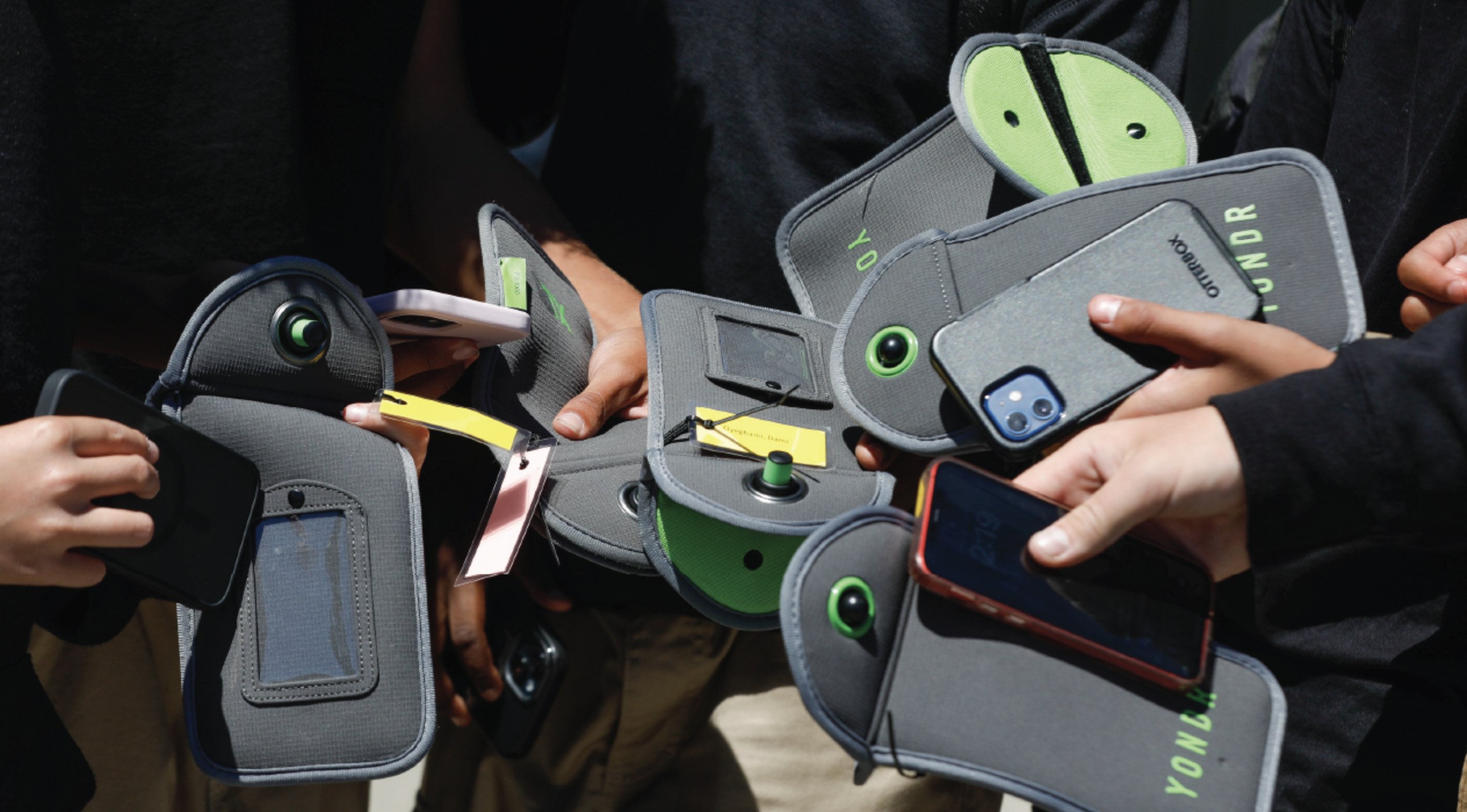
Few school rules reach into family life as directly as a limit on the phone in a child’s pocket. It touches attention, how parents reach their children, and who decides what happens when a device buzzes in class.
In this article, we will discuss Ballotpedia’s late March count of states with bans, how the different kinds of bans work, what Kansas did, which bills were pending, and how parents can prepare.
The Count in Late March
Ballotpedia News, in a report dated 26 March 2026, counted 33 states that had enacted a K-12 cellphone ban. Kansas was the 33rd, and the fifth state to do so in 2026. By simple arithmetic, if Kansas was the fifth in 2026, then 28 states had already acted before the year began. Ballotpedia also said 41 states had passed laws addressing phones in school in some form. Of those, 8 only encourage limits or require schools to adopt technology policies, which is a softer approach than a ban. That is the difference between 33 and 41: 33 plus 8 makes 41.
The remaining states are the other side of the ledger. By simple subtraction from 50, 9 states had not passed such a law at the time of the count. The report, as summarized for this article, does not name them, so readers should not assume anything about a particular state from the number alone. Some of those states may leave the decision to local districts, which in many parts of the country already write their own rules, and some may have bills in progress.
A single count hides important differences, so it helps to know what Ballotpedia was counting. A state law that bans phones for the full school day counts as a ban. So does one that limits use only during class. A state with a mere encouragement to adopt a policy does not make the 33, but does make the 41. Any total, including this one, depends on where the line is drawn, and a different organization with different definitions could reach a somewhat different number.
It also helps to remember who the count describes. Ballotpedia is a nonpartisan reference site that tracks legislation, and its tally is a summary of state statutes and state-level policies. It does not measure how strictly any school enforces its rule, and the report as summarized here offers no enforcement data. A state can have a ban on paper and wide variation from one building to the next, because principals, teachers and staff apply it differently. When you read that a state has a ban, treat it as the starting point for questions and not as proof of what happens in a particular hallway.
Timing matters even more. The count dates from March, and legislatures have met, adjourned and passed more bills since. Today the number could be higher than 33, and a few details in this article may have changed. Parents who want to know where their own state stands should check the current state law and, even more usefully, the policy of their own district, because the district policy is what a child lives with from day to day. Rules also differ by country: the examples here are American, and other nations handle school phones through national guidance, school-by-school policy or other methods.
Bell-To-Bell Bans Compared With Class-Time Limits
Not every ban is the same, and the label hides two quite different rules. The first kind covers the entire school day. The second covers only the periods when teaching is going on. The Ballotpedia report gives examples of each but no count in either category, so no one can say from that report how the 33 divide.
Bell-To-Bell Rules
A bell-to-bell ban applies from the first bell in the morning to the last bell in the afternoon. It reaches lunch, the hallways, passing periods and any break. Kansas is one example, with a ban on phone use during the school day. Indiana is another: according to the report, Indiana’s SB 78, signed on 5 March, expanded an existing limit into a bell-to-bell ban. The idea behind this model is simplicity. If the phone is away all day, no teacher has to decide whether a given moment counts as instructional, and no student can argue that the rule does not apply in the cafeteria.
Instructional-Time Limits
An instructional-time limit is narrower. Michigan’s law covers in-class use starting in 2026-27, per the report. North Carolina’s policy prohibits use “during instructional time,” also according to the report. The wording of such rules deserves a close read. Phrases like “instructional time” leave room for disagreement over whether study hall, a free period or a field trip counts.
Some schools answer by adding detail in the handbook, and others rely on teacher judgment, which can mean different treatment from room to room. Under this approach, a student might use a phone at lunch or between classes, provided it stays put during lessons. Supporters argue that this gives students some freedom and eases the load on the school office. Skeptics argue that it is harder to enforce, because a phone that is out at lunch can easily appear in the next class.
Policy-Based Approaches
Hawaii shows another variation. The report says Hawaii’s policy covers most grades starting in 2026-27, which means the limit comes from a policy and applies to most but not all grades. A policy can be changed more quickly than a statute, though a statute usually carries more weight.
The two routes also differ in who is accountable. A law passed by a legislature can be debated in public hearings and changed only by another vote, while a policy adopted by an education agency can be revised by that agency, often after a comment period. Neither route is better in every case, but they affect how stable a rule is and how a parent can seek change. For parents, the lesson is that “the state has a ban” can describe many different rules, and the actual text is what counts.
The school year in which these rules begin also matters. Because Michigan’s and Hawaii’s rules start in 2026-27, they would be reaching families this autumn, though districts decide how to put them into practice, and families should ask their schools how the changes have been rolled out.
Kansas as a Case Study
Kansas provides a clear example because the report describes the law in detail. Governor Laura Kelly signed HB 2299 on 20 March 2026. That signing made Kansas the 33rd state in the Ballotpedia count. The law has several features that are typical of the newer generation of bans, and each deserves a closer look.
Who Is Covered
The law covers all public schools and accredited nonpublic schools, so a private school that holds state accreditation falls under the same rule as a public one. It bans phone use during the school day, which makes it a whole-day model. That detail should be reassuring to families who worry that private schooling would be an exit from the rule, and it is useful for those who chose a private school and want to know whether the same rule applies. The answer, in Kansas, is yes if the school is accredited.
Storage Requirements
The law requires that phones be stored away from the student’s person. The report names three options: a school pouch, a locker or a vehicle. That list is revealing. A phone in a pocket or a backpack, where it can buzz or be pulled out, does not count as stored away. A locked pouch is a physical barrier, a locker is a place students may have to walk to, and a vehicle allows students who drive to leave the phone outside the building. How each school does it will shape the daily experience, including how phones are collected and returned, and whether lost or damaged phones become a source of disputes.
Certification Deadline
Districts in Kansas had to certify their policies to the state board by 1 September 2026. That date has now passed, so districts should already have filed their policies, and a parent can reasonably ask to see the policy that their district certified. The deadline illustrates how laws of this kind work in practice: the legislature sets the rule, and the district fills in the details, often in a handbook that is revised each year.
One design question deserves a moment of thought: who is responsible when a phone is stored in a pouch or locker? If a device is damaged, lost or stolen, families and schools can disagree about liability. The report does not address this, and the answer likely sits in district policy, so it is a fair item for a parent to ask about before the first incident, not after. Another practical issue is the student who drives to school. A vehicle is on the list of storage places, which suits older students, but it leaves the phone unreachable if a parent needs the student in the middle of the day, and it depends on the car being locked and safe.
The Kansas example also explains why a headline count can mislead. The law says that students may not use phones during the school day and that phones must be stored. It leaves the choice of pouch, locker or vehicle to local decision. Two Kansas schools could run quite different systems, both legal, and a family moving between districts may find different procedures.
Bills Still Moving in Late March
At the time of the report, several other states had bills in motion. The table below summarizes what Ballotpedia described. These outcomes are the situation in late March, and months have passed. Any of these bills could have been signed, amended or defeated since, so use the table as a snapshot and not as a current status.
| State | Bill or status reported | Situation in late March |
| Maryland | Bills passed one chamber each | Neither bill had cleared both chambers |
| Georgia | HB 1009 (high schools) | Passed the legislature on 23 March; a 2025 law already covers elementary and middle schools |
| Pennsylvania | SB 1014 | Passed the Senate 46 to 1; awaited House action |
| South Dakota | SB 198 | Failed in the House, 28 to 39 |
| New Mexico | SB 23 | Did not reach the House floor |
What the Snapshot Shows
The list is a small sample of how these debates go. Pennsylvania’s Senate vote, 46 to 1, shows that a bill can attract wide support in one chamber and still need action in the other. Georgia’s story is built in layers: an earlier law for younger students, and a newer bill for high schools that had cleared the legislature by 23 March. A passed bill still needs a governor’s signature in most states, and the report in the sheet does not say what happened next, so this article does not claim Georgia has a high school ban in force.
South Dakota’s defeat, 28 to 39, is a reminder that this is not a one-way trend. Some legislators prefer to leave decisions to local boards, and some doubt that a statewide rule fits every school. New Mexico’s bill never got a vote on the House floor, which is a different sort of outcome, usually the result of running out of time or of leaders choosing not to schedule it. Bills that stall in one year are often reintroduced in the next.
It is also worth noting how these bills differ in scope. Georgia’s high school measure follows a 2025 law for the lower grades, which shows how a state can build a policy in stages, starting with younger children and extending to older ones. High school students are the hardest group to regulate, since many drive, hold jobs, manage health conditions and expect more independence, so bills for that age group tend to attract more debate about exceptions. That context helps explain why a state might act on elementary and middle schools first.
For a parent in one of these states, the practical step is to look up the bill number on the legislature’s website. Most state legislatures publish a bill’s history, with dates for each vote and for any signature, and it takes a few minutes to find. Local news outlets often cover final outcomes as well.
Arguments on Both Sides
Phone restrictions are popular with many teachers and parents, but they are not free of cost. This article does not cite research, because the fact sheet behind it contains none, and it would be wrong to claim that studies prove any particular result. What follows are the arguments commonly made by each side, offered as arguments and not as findings.
The Case for Restrictions
Supporters make three main points. The first concerns attention: a phone in a pocket is a standing invitation to check notifications, and teachers say they compete with it for attention. The second is social: advocates argue that students who put phones away talk to each other at lunch and in the hallways. The third concerns the load on teachers, who otherwise spend lessons policing devices. A uniform state rule, supporters add, takes the pressure off individual teachers, who no longer have to be the only adult enforcing a rule that students resent.
The Concerns
Critics and cautious parents raise different points. The most emotional is safety and communication. Parents want to be able to reach a child quickly in an emergency, and many feel uneasy about being cut off, whatever the statistical likelihood of a crisis. Others point to medical needs, such as students who use phones to monitor health conditions, and to students who rely on devices for translation or accessibility. There is also the question of fairness and trust: a rule that treats all students as potential offenders can feel heavy-handed to well-behaved ones. Finally, some educators argue that students need to learn how to manage a device with guidance, and that a ban only postpones the lesson.
Teachers and the Daily Reality
Teachers apply these rules, and their experience varies. Where a policy is clear and every adult in the building enforces it, many teachers report relief, since the rule removes a daily argument. Where it is vague, or where leaders do not back staff, the same rule can create friction. A teacher who must confiscate a phone is in a delicate spot with a student and sometimes with a parent. Schools that train staff, agree on consequences and communicate them early usually avoid the worst conflicts. That is a general observation about how school rules work, not a finding from the Ballotpedia report.
Weighing the Two
Both sets of arguments contain truth, and the details of a policy usually determine whether it works. A ban that has clear exceptions for medical and accessibility needs, a reliable way to reach students in an emergency, and consistent enforcement answers most of the concerns. A ban with vague exceptions, inconsistent enforcement and no communication plan invites resentment from everyone. That is why the questions parents ask about implementation matter as much as the existence of the law.
There is a middle path that some families favor: a firm rule during the day combined with a clear, written channel for exceptions. Under such a system, the default is that the phone stays away, but a parent can request an accommodation, a student with a health plan can keep a device, and the school office handles urgent contact. Whether a given school offers that kind of flexibility depends on its leadership and on how much room the state law leaves. In Kansas, for instance, the report describes a ban on use during the school day with storage rules, and says nothing about exceptions, so a family there would want to read the district policy for those details.
Preparing for the Months Ahead
With the school year under way, the best use of this information is to learn what your own school does and to prepare your child for it. The advice here is general, since policies differ by state, district and school.
Questions to Put to the School
Ask for the text of the policy, not a summary. Then ask how phones are stored: in a pouch, a locker, a bag or elsewhere, and who has the key or the responsibility. Ask what happens at lunch and between classes, which tells you whether the rule is bell to bell or applies only during instruction. Ask how a parent should reach a student in an emergency, and whether the school has a process for passing urgent messages. Ask what accommodations exist for medical conditions and for students with disabilities, and how a family goes about requesting them. Ask what the consequences of a violation are and whether they escalate. Ask whether the rule extends to smartwatches, earbuds and tablets, because many policies mention only phones, and a watch that sends messages may or may not be allowed.
Reaching Your Child Under a Bell-to-Bell Rule
Under a whole-day rule, the simplest route in an emergency is the school office. Save the main number in your phone, and the number of any attendance line, and teach your child that the office is the right place to go if they need to reach you. Resist the temptation to text a child who is supposed to have the phone stored away, since a stream of messages may lead to a confiscated device. Agree in advance on after-school plans, pickup points and what to do if plans change, so that fewer messages need to be sent during the day.
Talking With Your Child
A new rule goes more smoothly if the child hears about it at home first. Explain what is changing and why, listen to the objections, and be honest about the ones you share. Children often worry about being unreachable, about missing a message from a friend, or about being the only one to follow the rule. Point out that everyone in the school is under the same rule. For students who use a phone to manage a health condition, make sure the school has the paperwork it needs in advance, so the first week is not a scramble.
Smartwatches and Other Devices
Phones are not the only devices that can send messages or access the internet. A smartwatch can display texts, take calls and sometimes connect to the web, and earbuds can carry audio from a hidden source. Because policies are often written with phones in mind, they sometimes leave these devices unaddressed or treat them case by case. If your child wears a watch for tracking or for health reasons, ask in writing whether it is allowed and in which mode. Some schools permit a watch only with messaging turned off, but that varies, so rely on the school’s own wording and not on a rule of thumb.
Looking Ahead
Keep an eye on your state. The count in this article dates from March, and legislatures may have added to it since, so check current state law and your district’s website once or twice a year. If a bill is moving in your state, find out what it would require, and consider telling your legislators or school board what has worked and not worked in practice. Policies improve when the people who live with them speak up, and a short, specific note about a real problem, such as a storage system that causes delays, tends to carry more weight than a general complaint.
Frequently Asked Questions
How Many States Have a School Cellphone Ban?
According to Ballotpedia News in late March 2026, 33 states had enacted a K-12 cellphone ban, with Kansas the 33rd. The number may have changed since then, so check current state law.
Is a Bell-to-Bell Ban the Same as a Classroom Ban?
No. A bell-to-bell ban covers the whole school day, including lunch and passing periods, while an instructional-time limit covers only class time. Ballotpedia gave examples of each but did not report how many states use each approach.
Can My Child Keep a Phone in a Backpack Under Kansas Law?
According to the report, Kansas requires phones to be stored away from the student’s person, and it names a school pouch, a locker or a vehicle. A phone carried in a backpack on the student would probably not meet that wording, but the district’s certified policy has the final detail.
How Can I Reach My Child During the School Day?
Call the school office, which is the standard route under bell-to-bell rules. Ask the school in advance how urgent messages are passed along, and agree on pickup plans with your child so fewer messages are needed.
Does a School Ban Apply to Smartwatches?
It depends on the policy. Many rules mention only phones, so ask the school whether watches, earbuds and tablets are covered, and whether any medical exception applies.
Which States Had Bills Pending in March?
Ballotpedia mentioned Maryland, Georgia, Pennsylvania, South Dakota and New Mexico. South Dakota’s SB 198 failed in the House, 28 to 39, and New Mexico’s SB 23 did not reach the House floor, while the others were still moving. Outcomes may have changed since March.