

Owning an electric vehicle changes the daily refueling routine more than almost any other part of the ownership experience. Instead of stopping at a gas station, most owners plug in overnight at home and wake up to a full battery, but getting to that point requires a few decisions about equipment, electrical capacity, and installation cost that gas vehicle owners never had to consider.
This guide walks through the practical side of home charging, from the difference between charger levels to what an electrician visit typically costs, so a new owner can plan the setup before the car ever arrives in the driveway.
Installing the Right Charging Equipment for Your Home
Home charging setups generally fall into two categories: Level 1, which uses a standard household outlet, and Level 2, which requires a dedicated 240-volt circuit similar to what powers an electric dryer or oven. Level 1 charging works out of the box with the cable that comes with most vehicles, requiring no installation at all, but it delivers power slowly, often adding only three to five miles of range per hour of charging.
Level 2 charging is the realistic choice for most daily drivers, since it can add twenty to forty miles of range per hour depending on the vehicle and the charger’s output. Installing a Level 2 charger means running a dedicated circuit from the home’s electrical panel to the garage or driveway, mounting a charging unit, and in most areas, obtaining an electrical permit before the work is considered complete.
- Level 1 setup: Uses a regular outlet, needs no installation, but charges slowly overnight.
- Level 2 setup: Requires a dedicated 240-volt circuit and a wall-mounted or pedestal-style charging unit.
- Panel capacity check: An electrician verifies the home’s panel has room for the new circuit’s amperage draw.
- Permit and inspection: Most municipalities require a permit and a follow-up inspection for new circuits.
Choosing between a hardwired charger and one that plugs into a dedicated outlet is another early decision. A hardwired unit is generally considered more durable for outdoor installations, while a plug-in unit offers the flexibility of being removed or relocated without rewiring the circuit itself. Amperage rating is a separate choice from the Level 1 versus Level 2 decision and affects how quickly a Level 2 unit charges a vehicle.
Common residential units range from 32 to 48 amps, with higher-amperage units delivering faster charging but also requiring a larger wire gauge and a correspondingly bigger circuit breaker. Pairing a 48-amp charger with an undersized circuit is not simply inefficient; it creates a real safety hazard, which is exactly why local code requires a licensed electrician to size the circuit correctly rather than leaving that decision to a vehicle owner installing equipment on their own.
Vehicle manufacturers typically publish a recommended maximum charging rate for each model, and matching the charger’s output to that rate avoids paying for charging speed the vehicle cannot put to use. A vehicle that tops out at 32 amps of onboard charging capacity gains nothing from a 48-amp charger beyond a small margin for future vehicles with higher charging capacity, so checking the owner’s manual before selecting equipment prevents an unnecessary upgrade in charger amperage.
Maintaining Realistic Expectations for Installation Costs
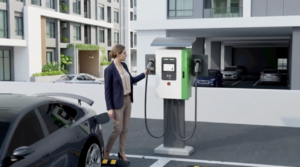
Installation costs vary widely depending on the home’s existing electrical setup, the distance between the panel and the charging location, and local labor rates. A straightforward installation, where the garage sits close to the panel and the panel has ample spare capacity, might run several hundred dollars in labor and materials. A more involved installation, requiring a panel upgrade or a long cable run through finished walls, can run well into four figures.
The biggest cost driver is usually whether the existing panel can support the new circuit without an upgrade. Older homes, especially those with panels rated at 100 amps or less, often need a panel upgrade to safely add a Level 2 charging circuit alongside existing household demands like central air conditioning and electric water heating.
- Simple installation: Short cable run, available panel capacity, typically the lowest cost tier.
- Panel upgrade: Replacing an undersized panel, a common added cost in older homes.
- Trenching costs: Running a line underground to a detached garage, which adds both labor and materials.
- Permit fees: Municipal charges that vary widely by location and project scope.
Getting quotes from at least two or three licensed electricians before committing is a reasonable practice, since the same job can carry noticeably different price tags depending on the contractor’s familiarity with electric vehicle installations specifically versus general electrical work.
Financing options have also expanded as demand for installations has grown. Some electricians now offer payment plans directly, while a number of vehicle manufacturers partner with installation networks that bundle the charger purchase and installation labor into a single quoted price.
Comparing a bundled offer against a separately sourced electrician and charger combination is worth the extra effort, since bundled pricing sometimes carries a markup in exchange for the convenience of a single point of contact handling both the equipment and the labor.
How Monthly Charging Costs Compare to Gasoline
Calculating the ongoing cost of home charging requires knowing the local electricity rate and the vehicle’s efficiency, usually measured in miles per kilowatt-hour. Multiplying the electricity rate by the kilowatt-hours needed to travel a typical monthly mileage gives a reasonably accurate monthly cost estimate, which in most regions comes out noticeably lower than an equivalent gasoline cost for a comparable vehicle.
Time-of-use electricity plans, offered by many utilities, add another layer of savings potential. These plans charge a lower rate during off-peak overnight hours, which lines up naturally with when most electric vehicle owners charge anyway. Shifting charging to these off-peak windows, often available through the charger’s own scheduling features or the vehicle’s app, can cut the per-mile cost compared with charging at standard daytime rates.
- Flat-rate electricity: A single rate applied regardless of time of day, simpler but usually not the cheapest option.
- Time-of-use plans: Lower overnight rates that reward scheduled charging during off-peak hours.
- Vehicle efficiency: Miles per kilowatt-hour, which varies by model and driving conditions, directly affecting cost per mile.
- Seasonal variation: Cold weather reducing efficiency and raising the effective cost per mile in winter months.
Public fast charging, used occasionally for longer trips, typically costs more per kilowatt-hour than home charging, sometimes several times more. This gap is one of the strongest financial arguments for prioritizing home charging for the bulk of daily driving and reserving public fast charging for trips beyond the vehicle’s comfortable one-way range.
Many utilities also offer a dedicated electric vehicle rate plan, separate from the standard time-of-use plan available to all customers, which can push overnight rates even lower in exchange for a submeter tracking the charger’s electricity use separately from the rest of the home.
Installing a submeter adds a modest upfront cost, but for a household charging daily, the lower blended rate over a few years can outweigh that initial expense. Checking with the local utility about program availability before committing to a standard rate plan is worth the short phone call it usually takes.
Why Electrical Panel Capacity Matters So Much
An electric vehicle charger draws more continuous power than nearly any other household appliance, often pulling as much current over several hours as a running oven pulls for a short cooking session. This sustained draw is why panel capacity, rather than just outlet availability, becomes the central technical question in most home charging installations.
A panel rated for 100 amps might already be running close to its practical limit once central air conditioning, an electric range, and a water heater are accounted for, leaving little headroom for a new 40 or 50-amp charging circuit. A panel upgrade to 150 or 200 amps resolves this constraint but adds a real amount to the overall installation cost, which is why an electrician’s load calculation early in the process is worth the modest fee it typically costs.
- Load calculation: An electrician’s formal assessment of total household electrical demand versus available capacity.
- Shared circuit risk: Overloading a panel without an upgrade, which can trip breakers repeatedly during simultaneous appliance use.
- Future-proofing: Sizing a new circuit generously to accommodate a faster charger or a second vehicle later.
- Utility coordination: In rare cases, a utility company upgrade to the service line itself is needed alongside the panel work.
Some newer chargers include load-management features that automatically reduce charging current when other high-draw appliances are active, which can avoid a full panel upgrade in borderline cases by sharing available capacity dynamically rather than drawing a fixed maximum at all times.
Solar panel owners face an additional layer of planning around panel capacity, since a home generating its own electricity still routes that power through the same panel used for the rest of the household’s electrical demand. Pairing a charger with a solar setup often works best when the charging schedule is shifted toward daylight hours rather than the typical overnight window, which runs counter to the usual advice about off-peak utility rates but makes sense for a household prioritizing self-generated power over grid electricity.
Some smart chargers can automatically detect solar production levels and adjust the charging rate in real time, drawing more current when panels are producing a surplus and tapering off when production drops, which keeps the vehicle from pulling grid power unnecessarily during sunny afternoons.
Battery storage systems add a further wrinkle for households that have installed one alongside solar panels. A stored battery can supply overnight charging without drawing from the grid at all, effectively replacing the time-of-use savings strategy with a self-sufficient setup, though the upfront cost of battery storage is substantial enough that few owners install one purely to support vehicle charging rather than broader home backup power goals.
Comparing Smart Chargers to Basic Charging Units
Charging units themselves range from simple, no-frills models to app-connected smart chargers with scheduling, usage tracking, and remote diagnostics. A basic unit does the core job reliably, delivering power on a fixed schedule or whenever plugged in, without any additional features beyond the charging function itself.
A smart charger adds the ability to schedule charging for off-peak electricity rates, track energy usage over time, and in some cases integrate with home solar systems to prioritize charging during periods of peak solar generation. These features come at a price premium, typically a few hundred dollars more than a comparable basic unit, which some owners recoup over time through the lower electricity costs that scheduled off-peak charging makes possible.
- Basic chargers: Reliable core charging function without connectivity or scheduling features.
- Smart chargers: App-based scheduling, usage tracking, and sometimes solar integration at a higher price point.
- Utility rebate eligibility: Some smart chargers qualify for rebates that basic units do not, depending on the program.
- Long-term value: Potential savings from optimized off-peak scheduling offsetting the higher upfront cost over several years.
Checking whether a local utility offers a rebate specifically for smart or networked chargers is worth doing before purchasing, since some programs effectively close most of the price gap between a basic and a smart unit. Data privacy is a smaller but growing concern tied to connected chargers, since these units typically transmit usage data to the manufacturer’s servers to power the app features owners rely on for scheduling and monitoring.
Reviewing a charger’s privacy policy before purchase, especially around whether usage data is shared with third parties, is a reasonable step for owners who are cautious about connected home devices in general. Firmware updates delivered automatically over the internet are another feature worth checking, since a charger that receives regular security patches is generally a safer long-term choice than one running outdated software with no update path.
Choosing a Charger Location and Avoiding Common Mistakes
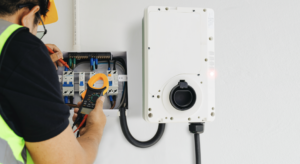
Where the charger gets mounted affects both the installation cost and the daily convenience of using it. A location close to where the vehicle typically parks, with a cable length generous enough to reach the charging port without strain, reduces daily hassle more than most new owners expect before living with the setup for a few weeks.
A common mistake is underestimating cable length needs, especially for owners who sometimes park a second vehicle in front of the primary spot or who may want to charge a vehicle parked on either side of a two-car garage. Buying a charger with a twenty-five-foot cable rather than the more basic eighteen-foot option often costs little extra but adds flexibility that becomes valuable once daily parking patterns settle into a routine.
- Mounting height: A comfortable reach height that avoids excessive bending or stretching the cable awkwardly.
- Cable length: Enough slack to reach the charging port regardless of which side of the garage the vehicle uses.
- Weather exposure: Outdoor-rated equipment and conduit for any installation not fully protected by a garage structure.
- Future parking changes: Planning for a second vehicle or a different parking arrangement down the road.
Outdoor installations especially benefit from weatherproof conduit and a unit rated for outdoor exposure, since a charger installed without proper weatherproofing can develop problems well before its expected service life ends.
Final Thoughts
Setting up home charging for an electric vehicle is less about the car itself and more about mapping the electrical capacity already present in a home and matching equipment choices to realistic daily driving needs. The upfront installation cost varies enough across homes that getting a proper load calculation and multiple electrician quotes is worth the time before committing to any specific equipment.
Once installed, the ongoing cost advantage over gasoline tends to be one of the more reliable financial benefits of electric vehicle ownership, especially for owners who take advantage of off-peak electricity rates. Treating the installation as a one-time infrastructure project, rather than an afterthought handled in a rush before the car arrives, leads to a setup that holds up well for years of daily charging.
Frequently Asked Questions
Is a 240-volt outlet enough, or does a charging unit also need to be installed?
Some vehicles come with a charging cable that can plug directly into a properly installed 240-volt outlet, skipping the need for a separate wall-mounted unit. Many owners still choose a dedicated charging unit for added features like scheduling and cable management.
How long does a typical home installation take?
A straightforward installation with existing panel capacity often takes a single day, including the electrician’s work and a follow-up inspection. More involved projects requiring a panel upgrade or trenching can take several days or longer depending on permitting timelines.
Can a renter install home charging equipment?
Renters generally need landlord approval before any electrical work, since the installation involves permanent changes to the property’s wiring. Portable Level 1 charging, which requires no installation, remains available to renters without that approval process.
Does home charging increase a utility bill noticeably?
Yes, though the increase is usually offset by the elimination of gasoline costs. Reviewing a utility bill before and after adopting an electric vehicle, alongside tracking the gasoline savings, gives the clearest picture of the net financial effect.
Is a panel upgrade always required?
No, Many homes, especially newer construction with panels rated at 150 amps or higher, have enough spare capacity for a Level 2 circuit without any upgrade. A licensed electrician’s load calculation is the only reliable way to know for a specific home.
What happens during a power outage?
Home charging stops during a power outage just like any other electrical appliance. Owners relying heavily on home charging in an area prone to outages sometimes plan around this by maintaining a buffer of charge rather than routinely running the battery down to a low level.