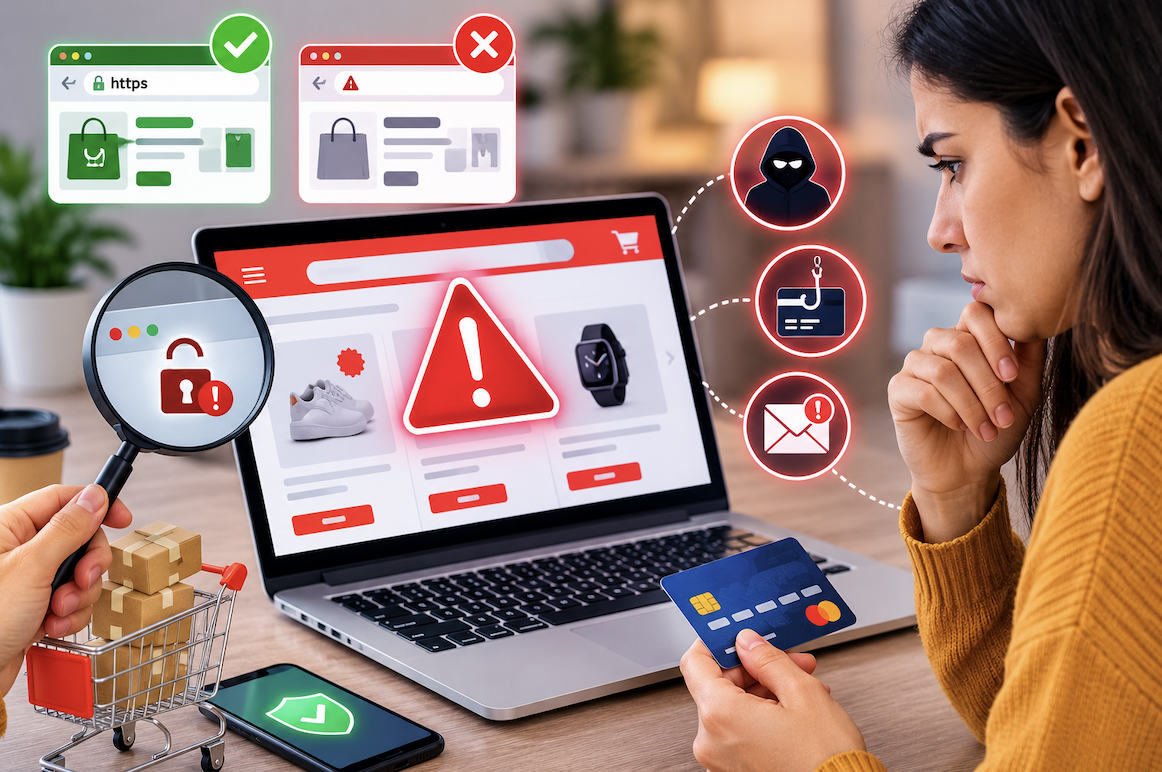
Online shopping scams have become increasingly sophisticated, with fraudulent websites now capable of closely mimicking legitimate retailers, complete with professional-looking design and seemingly genuine product listings, making it considerably harder to distinguish authentic online stores from fake ones designed purely to steal your payment information. Understanding the practical warning signs that genuinely help identify these fraudulent sites protects you before you enter any payment details.
Why Fake Shopping Websites Have Become Genuinely More Convincing
Understanding why distinguishing legitimate online stores from fraudulent ones has become genuinely more challenging provides useful context before diving into specific practical detection strategies.
- Website creation tools have become genuinely more accessible, allowing scammers to build convincing sites quickly
- Scammers increasingly copy design elements and even entire product catalogs from legitimate retailers
- Fake sites often use paid advertising to appear in search results, lending an appearance of legitimacy
- This increased sophistication means relying on a single warning sign is no longer genuinely sufficient protection
Checking the Website Address Carefully Before Trusting It
Understanding how to genuinely examine a website’s actual address provides one of the more reliable, accessible detection methods available to everyday online shoppers.
- Look carefully for subtle misspellings or unusual variations of a well-known retailer’s actual domain name
- Be suspicious of unusual domain extensions that do not match what you would genuinely expect for that business
- Verify the website uses a secure connection, though note this alone does not guarantee overall legitimacy
- Consider manually typing a known retailer’s address directly rather than clicking links from search results or advertisements
This domain examination deserves particular emphasis, since scammers frequently register domain names deliberately designed to closely resemble legitimate retailers, often through subtle misspellings or slight variations that many shoppers genuinely overlook when quickly clicking through to complete a purchase without carefully checking the actual address bar.
Evaluating Genuine Warning Signs Within Pricing and Deals
Understanding that unrealistic pricing represents one of the more genuinely reliable warning signs for identifying fraudulent shopping websites helps you apply appropriate skepticism to deals that seem too good to be true.
- Be genuinely skeptical of prices significantly lower than what legitimate retailers typically charge for the same item
- Consider whether a specific “limited time” urgency claim seems designed to pressure quick, less careful decision-making
- Compare pricing across multiple known, legitimate retailers if a specific deal seems suspiciously generous
- Remember that legitimate retailers rarely offer discounts dramatically exceeding typical, realistic promotional ranges
Examining Contact Information and Business Details
Understanding how to verify whether a shopping website provides genuinely legitimate, verifiable business information helps distinguish authentic retailers from fraudulent operations designed to disappear after collecting payments.
- Check whether the website provides a genuine physical address and a functioning contact phone number
- Search for the specific business name independently to see if it has a genuine, verifiable online presence elsewhere
- Be suspicious of sites providing only a contact form with no other genuine, verifiable contact information
- Research whether the business has any genuine customer reviews on independent, third-party review platforms
Why Payment Method Options Provide Genuine Additional Clues
Understanding that legitimate and fraudulent websites often differ meaningfully in their available payment options provides another practical verification signal worth checking before completing any purchase.
- Legitimate retailers typically offer standard, well-established payment methods with genuine buyer protections
- Be genuinely cautious of sites that only accept unusual payment methods lacking typical consumer protections
- Payment methods that are difficult to trace or dispute should raise genuine concern about a website’s legitimacy
- Using a credit card, when possible, typically provides stronger dispute protections than many alternative payment methods
This payment method consideration deserves particular emphasis, since legitimate retailers generally have no reason to avoid standard, widely trusted payment processing methods, while fraudulent sites sometimes specifically prefer payment methods offering less consumer protection and dispute recourse, precisely because this makes it considerably harder for victims to recover their money after realizing they have been scammed.
Checking for Genuine Product Details and Website Quality
Understanding how to evaluate the overall quality and consistency of a website’s actual content provides additional useful signals for assessing genuine legitimacy beyond just pricing and contact information alone.
- Look for genuinely detailed, specific product descriptions rather than vague, generic text
- Notice whether product images appear genuinely consistent in style and quality throughout the site
- Check for basic website quality issues, like broken links, poor grammar, or inconsistent formatting
- Be aware that sophisticated fraudulent sites may still exhibit polished quality, making this signal alone insufficient
Practical Steps for Verifying a Website Before Making a Purchase
Search independently for the business name combined with terms like “reviews” or “scam” before purchasing
- Check whether the website has been active and established for a genuinely reasonable period of time
- Verify contact information independently rather than trusting only what the website itself provides
- Use a credit card rather than methods offering fewer consumer protections when shopping from an unfamiliar site
- Trust your genuine instincts if something about a specific site feels suspicious, even without one single definitive red flag
Why Social Media Advertising Deserves Genuine Additional Scrutiny
Understanding that fraudulent shopping websites increasingly promote themselves through social media advertising, rather than relying solely on search engine visibility, helps explain why this particular discovery channel deserves genuinely heightened caution beyond standard website verification alone.
Social media platforms’ advertising systems often involve less rigorous verification of advertiser legitimacy compared to what many shoppers assume, meaning an advertisement appearing polished and professional within your social media feed does not inherently guarantee the underlying business is genuinely legitimate. This is particularly relevant for products that generate significant impulse-driven engagement, like trending fashion items or seasonal products, where fraudulent operators specifically leverage social media’s visual, fast-scrolling format to drive quick purchasing decisions before a shopper has genuinely taken time to verify the actual seller’s legitimacy.
- Social media advertising often involves less rigorous advertiser verification than many shoppers assume
- A polished, professional-looking advertisement does not inherently guarantee genuine business legitimacy
- Fraudulent operators specifically target impulse-driven purchases through fast-scrolling social media formats
- This makes applying the same verification standards to social media shopping ads genuinely important, not just search results
Final Thoughts
Spotting a fake shopping website reliably requires examining multiple signals together, including the actual domain address, pricing reasonableness, verifiable contact information, and available payment methods, rather than relying on any single warning sign alone. Building this habit of thorough verification before entering payment information provides genuine, practical protection against increasingly sophisticated online shopping scams that continue evolving to appear more convincingly legitimate.
Frequently Asked Questions
1. Can a fake shopping website have genuinely convincing, positive customer reviews?
Yes, unfortunately, since some fraudulent operations fabricate reviews or use various manipulation techniques to appear more legitimate, it is worth checking whether reviews appear on genuinely independent, third-party platforms rather than trusting reviews displayed only on the website itself.
2. Is it safe to shop on a website simply because it appeared in my search engine results?
Not necessarily, since fraudulent sites sometimes use paid advertising or search engine manipulation techniques to appear in search results, meaning appearing in search results alone does not guarantee a website’s genuine legitimacy.
3. What should I do if I suspect I have already made a purchase on a fraudulent website?
Contact your payment provider immediately to report the potentially fraudulent transaction and explore dispute options, and consider monitoring your account for any additional unauthorized activity that might indicate your payment information was further compromised.
4. Do fake shopping websites only target well-known, popular retail brands for impersonation?
No, while impersonating popular brands is common, fraudulent sites also create entirely fictional retail brands, particularly for trending products or seasonal items, meaning unfamiliarity with a specific brand should also prompt additional verification rather than assuming safety simply because it is not impersonating a known company.
5. How can I verify a website’s actual legitimacy if I cannot find independent information about it anywhere?
The genuine absence of any independent, verifiable information about a business represents a meaningful warning sign itself, and in these situations, exercising additional caution or simply avoiding the purchase entirely represents a reasonably safe, practical approach.