Logging into a state unemployment portal, a tax filing website, or even certain age-restricted retail sites increasingly means more than typing a username and password. A growing number of government agencies and private companies now require proof that the person behind the screen is who they claim to be, often through a smartphone selfie matched against a photo ID and a liveness check.
This shift toward digital identity verification has moved quickly from a niche security measure into a near-daily requirement for many people, and knowing how these systems work, where they show up, and what happens to the data collected along the way is becoming a practical necessity rather than an optional curiosity.
The Shift Toward Digital Identity Verification
For years, identity verification largely meant showing a physical ID in person or answering knowledge-based questions pulled from a credit file, such as a previous address or an old loan amount. Both approaches have real weaknesses. In-person verification does not scale to online services, and knowledge-based questions have become easier for fraudsters to answer correctly given how much personal data has leaked through past breaches.
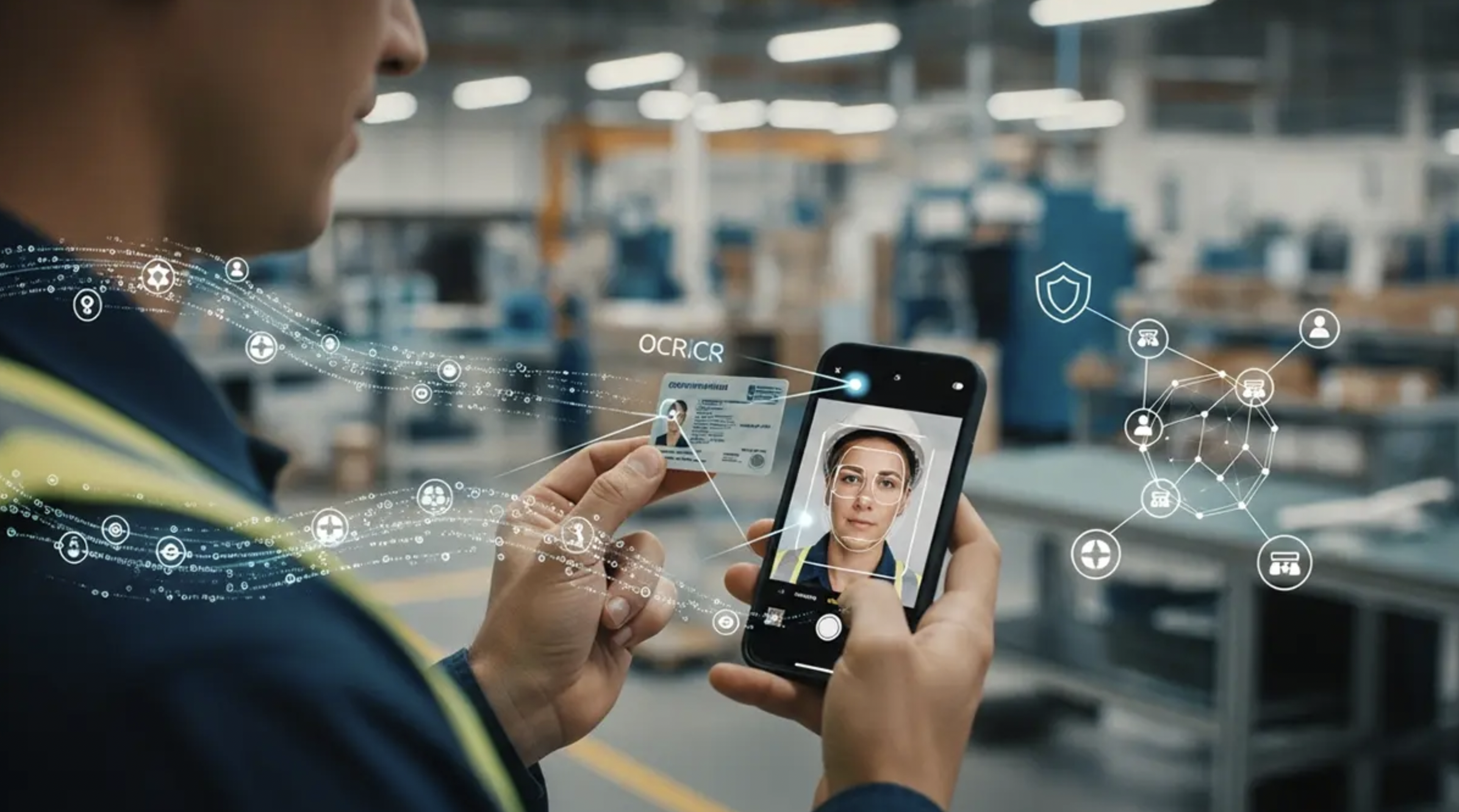
Digital identity verification apps attempt to close that gap by combining a scan of a government-issued ID with a live selfie, using software to confirm the ID appears authentic and that the face in the selfie matches the photo on the document. Many systems add a liveness check, asking a user to blink, turn their head, or follow an on-screen prompt, specifically to prevent someone from holding up a printed photo or a photo on another screen to fool the camera.
Adoption accelerated sharply during the shift toward remote government services, when agencies needed a way to confirm identity for people who could not appear in person at an office. What began as a pandemic-era workaround has since become a standard requirement across a widening range of services, from filing taxes to accessing certain healthcare portals.
Key Players: ID.me, Clear, and Login.gov
A handful of companies now handle a large share of digital identity verification in the United States. ID.me has become one of the most recognizable names, used by the Internal Revenue Service, numerous state unemployment agencies, and the Department of Veterans Affairs, among others, to verify identity before granting access to sensitive accounts or benefits. The company combines document scanning, facial matching, and in some cases a live video call with a human agent for cases where automated matching fails.
Clear, better known for its airport and stadium biometric screening lanes, has expanded into broader identity verification services as well, building a reusable digital identity that can speed up both travel and other verification needs once enrolled. Login.gov, run directly by the federal government’s General Services Administration, offers a separate path used across a range of federal agency websites, positioning itself as a government-run alternative to privately operated verification services.
- ID.me: Widely used for tax filing, unemployment benefits, and veterans’ services, combining automated checks with human review for edge cases.
- Clear: Known for airport and venue biometric lanes, now offering broader identity verification tied to a reusable digital profile.
- Login.gov: A federally operated service used across multiple government websites as a government-run alternative to private verification vendors.
- State-specific systems: Some states run their own verification tools separate from these larger national players, especially for benefits programs.
Where These Checks Show Up in Daily Life
Tax season is one of the most common points of contact, with the IRS requiring identity verification through approved providers for certain online account features. Unemployment benefits systems in many states now require similar verification before releasing payments, a change driven partly by a wave of fraudulent claims filed using stolen identities during periods of high claim volume.
Beyond government services, private industry has adopted similar tools for age verification on certain retail and content platforms, account recovery after a lost password, and fraud prevention for financial services opening new accounts remotely. Airlines and transportation hubs use biometric identity checks to speed up security lines and boarding, while some employers now use identity verification during remote hiring to confirm a new employee matches the identity documents submitted during onboarding.
- Tax filing portals: The IRS and several state tax agencies require verification for certain online account access.
- Unemployment and benefits systems: Many states now verify identity before processing or releasing benefit payments.
- Financial account opening: Banks and fintech companies use similar checks to prevent fraudulent account creation.
- Age-restricted platforms: Some retail and content sites use identity checks to confirm a user meets a minimum age requirement.
- Airport and travel screening: Biometric verification speeds up security and boarding processes at a growing number of airports.
Privacy Concerns and Data Storage Practices
Collecting a scan of a government ID alongside a facial biometric raises real privacy questions, since this combination of data is more sensitive than a password and, unlike a password, cannot simply be changed if compromised. Privacy advocates have raised concerns about how long these companies retain biometric data, whether it is shared with other government agencies beyond the original purpose of verification, and what happens to that data if a company is acquired or experiences a data breach.
Companies operating in this space generally publish privacy policies describing retention periods and data-sharing practices, though these policies can be dense and are not always read carefully by users eager to complete a verification step quickly. Some services offer an option to delete biometric data after verification is complete, while others retain a hashed or encrypted version to speed up future verifications, a trade-off between convenience and long-term data minimization that each user has to weigh for themselves.
Regulatory attention has increased in step with public concern, with some states passing biometric privacy laws that impose specific consent and disclosure requirements on companies collecting facial or fingerprint data. Illinois’ Biometric Information Privacy Act is among the more frequently cited examples, having prompted lawsuits and settlements against companies found to have collected biometric data without proper consent procedures.
Security Benefits Over Traditional Methods
Despite the privacy trade-offs, these systems do address real security weaknesses in older verification methods. Knowledge-based authentication questions, once a common fallback for identity verification, proved vulnerable once enough personal data became available through past data breaches, making it possible for a fraudster to answer security questions correctly without being the real account holder.
Biometric and document-based verification raises the bar substantially for that kind of impersonation, since replicating a face match and a valid-looking government ID is far more difficult than looking up an old address in a leaked data set. This has made these tools especially effective at reducing certain categories of fraud, including fraudulent unemployment claims and tax refund fraud, both of which spiked when criminals exploited weaker verification systems during periods of high claim volume.
- Reduced reliance on static personal data: Facial matching is harder to replicate than answering a security question based on old records.
- Faster fraud detection: Automated document authenticity checks can flag forged or altered identification quickly.
- Consistent verification standards: A shared verification provider applies the same checks across multiple agencies rather than each one building a separate system.
- Reduced identity theft payouts: Agencies using stronger verification have reported lower rates of certain fraud categories after implementation.
Government Services and Login Requirements
Government adoption of these services has not been without friction. Some agencies initially required verification exclusively through a single private vendor, prompting criticism over creating a barrier for people without a smartphone, reliable internet access, or comfort navigating a biometric verification process. In response, several agencies have added alternative paths, including a live video call option with a verification agent for people unable to complete the automated process, and in some cases in-person verification options at physical locations.
Accessibility remains an ongoing concern, especially for older adults, people with disabilities affecting facial recognition accuracy, and those in areas with limited broadband access needed to upload clear photos and complete a live selfie check. Agencies rolling out these systems have faced pressure to maintain non-digital alternatives for people who cannot reasonably complete an online verification process, a balance that continues to evolve as adoption expands.
Congressional hearings and oversight reports have periodically examined how federal agencies contract with private identity verification vendors, questioning both the cost of these contracts and whether relying on a single private company for access to public benefits creates too much dependency on one point of failure. Some lawmakers have pushed for federal agencies to expand government-run alternatives like Login.gov specifically to reduce reliance on any single private vendor, while others have raised concerns about whether a government-run system can match the fraud-detection sophistication that private vendors have built through years of dedicated investment in the space. This tension between public accountability and private-sector capability is likely to keep shaping how these programs evolve over the coming years, especially as more services move toward requiring some form of digital identity check.
Problems Users Commonly Encounter
Even for people comfortable with technology, the verification process does not always go smoothly. Poor lighting, an outdated or damaged photo ID, or a camera that struggles to capture a clear image can all cause automated matching to fail, sometimes requiring a follow-up video call with a live agent that can involve a long wait time depending on demand. People who have changed their appearance a great deal since their ID photo was taken, whether through aging, weight change, or other factors, sometimes encounter more frequent mismatches than the general population.
Technical issues are common too, including apps that crash mid-verification, unclear instructions about which documents are acceptable, and confusion about whether a previous verification with one provider transfers to a different agency’s requirements. Customer support for these services varies widely in responsiveness, and a failed verification at a critical moment, such as during tax filing season, can delay access to time-sensitive services.
International documents and less common ID formats also create friction for automated systems trained primarily on standard driver’s licenses and passports. Someone with a foreign passport, a temporary paper ID, or an older-format license that a scanning system does not recognize well may face repeated rejections that a human reviewer would resolve quickly, if only the case could be routed to one faster. Wait times for human review have varied over time depending on how many other people are simultaneously going through the same fallback process, which tends to spike during predictable peak periods such as the run-up to a tax filing deadline or the opening weeks of a new unemployment benefits program.
Protecting Yourself When Verifying Identity Online
A few precautions reduce the odds of running into trouble during an identity verification process. Completing the verification in good lighting, using a recent and undamaged photo ID, and following instructions closely for photo angle and framing reduces the odds of an automated rejection that then requires a slower manual review.
Before starting, confirming that a service is the legitimate provider used by the agency in question, rather than a look-alike phishing site, protects against a growing category of scams that mimic official verification portals to harvest personal information and ID scans. Checking a government agency’s official website for the correct verification link, rather than clicking a link from an unsolicited email or text message, is one of the simplest ways to avoid this trap.
- Use good lighting and a clear photo ID: Reduces the chance of an automated rejection requiring manual review.
- Verify you’re on the official site: Confirm the verification link comes from the agency’s own website, not an email or text link.
- Keep documentation of failed attempts: Screenshots or case numbers help if a manual review or support call becomes necessary.
- Review the provider’s privacy policy: Knowing the retention practices before submitting sensitive documents helps set expectations.
- Use a strong, unique password on the verification account: This adds a layer of protection alongside the biometric check itself.
Timing a verification attempt also matters more than most people expect. Attempting to complete a check during a known high-volume period, such as the final days before a tax deadline, increases the odds of encountering server slowdowns or being routed to an overloaded human review queue. Completing a verification well ahead of any deadline, rather than waiting until the last moment, leaves room to work through a rejected attempt or a slow manual review without the added pressure of a looming cutoff date.
Keeping a backup form of identification on hand, such as a passport in addition to a driver’s license, also gives an alternative option if the first document submitted triggers a rejection for reasons that are not always obvious to the person attempting to verify.
Final Thoughts
Digital identity verification has moved from an occasional security measure to a routine part of accessing tax records, benefits, and financial accounts, driven by real fraud problems that older verification methods struggled to prevent. The trade-off comes in the form of sensitive biometric and document data being collected and stored by a smaller number of private companies, raising legitimate privacy questions that regulators and users continue to work through.
Approaching these systems with a bit of caution, confirming legitimacy before submitting documents, and reviewing privacy policies where practical helps balance the convenience these tools offer against the sensitivity of the information involved. As more agencies and companies add these checks to their sign-up and login flows, treating a verification request with the same care as any other request for sensitive personal documents is a habit worth building now rather than after a bad experience prompts it.
Frequently Asked Questions
Is it safe to submit my ID and a selfie to these verification services?
Reputable providers used by government agencies generally follow established security practices, but no system is risk-free, so confirming you are using the official, agency-approved provider and reviewing its privacy policy before submitting documents is a reasonable precaution.
Can I refuse to use a digital identity verification service?
Some agencies offer alternative verification paths, such as a video call with a live agent or in-person verification, though not all services provide these options, so checking with the specific agency about alternatives is worthwhile if you prefer not to use an automated system.
What happens to my data after verification is complete?
This varies by provider and depends on stated privacy policies, with some deleting biometric data after verification and others retaining an encrypted version for future use, so reviewing the specific provider’s retention practices gives the clearest answer.
Why do some verifications require a live video call with an agent?
A live call is typically triggered when automated document or facial matching fails or returns an inconclusive result, allowing a human reviewer to manually confirm identity rather than denying access outright.
Do I need a smartphone to complete identity verification?
Most services are built around smartphone cameras for document scanning and selfies, though some offer a desktop webcam alternative or an in-person option for people without a suitable smartphone.
Are these verification systems the same across different government agencies?
Not always. Different agencies may use different providers, such as ID.me for one service and Login.gov for another, and a completed verification with one provider does not automatically transfer to an agency using a different one.