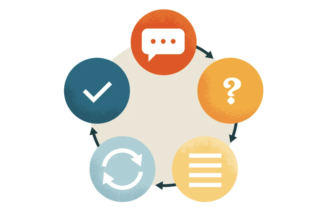

Research skills are among the most valuable abilities in both education and professional life. Whether you’re writing a paper, solving a business problem, or analyzing market trends, research is how you find truth amidst endless noise.
Strong research habits sharpen decision-making, boost creativity, and make learning more efficient.
Yet most people confuse “searching online” with real research. True research means identifying credible information, interpreting data critically, and using facts to solve problems or innovate.
In this ultimate guide, you’ll learn how to develop strong research skills—from basic techniques to advanced applications—so you can work smarter, write stronger, and make decisions confidently.
What Are Research Skills?
Definition
Research skills refer to the ability to gather, evaluate, interpret, and use information effectively. They combine critical thinking, curiosity, organization, and analytical reasoning.
Types of Research
- Academic Research: Used in schools and universities for study or publication.
- Professional Research: Conducted to improve work performance or strategy.
- Market Research: Gathers data about products, services, and audiences.
- Scientific Research: Focuses on discovery through experimentation.
- Business Research: Helps organizations make data-driven choices.
Core Components
- Finding relevant information
- Evaluating accuracy and credibility
- Organizing findings logically
- Drawing conclusions backed by evidence
Why Research Is a Lifelong Skill
Whether you’re a student, educator, freelancer, or entrepreneur, research strengthens problem-solving. In a world of misinformation, good research is a superpower.
Common Struggles with Research
- Unclear objectives or methods
- Reliance on unreliable sources
- Disorganized notes
- Difficulty connecting data to real conclusions
When research fails, decisions suffer. Mastering these skills guarantees better results everywhere—from academics to the workplace.
The Research Process Step-by-Step

1. Identify the Problem or Question
Define what you’re trying to solve. A well-framed question guides the entire process.
2. Set Goals and Objectives
Clarify why the research matters and what outcomes you expect.
3. Design Strong Research Questions
Your questions should be clear, focused, and measurable.
Example: Instead of “Why do students fail?” ask “Which study habits most influence college performance?”
4. Choose a Methodology
- Surveys and Interviews (qualitative)
- Experiments (scientific)
- Data analysis (quantitative)
- Case studies (mixed methods)
5. Gather Data
Use trusted sources—academic journals, official reports, and verified media. Keep track of everything.
6. Analyze Findings
Look for patterns, trends, and insights. Compare data from multiple perspectives.
7. Present or Use Results
Transform insights into action—create reports, make informed decisions, and share outcomes with your team.
Avoiding Information Overload
Limit your research scope. Decide what to ignore as much as what to include.
A short, practical workflow:
Define 👇 → Collect 👇 → Filter 👇 → Analyze 👇 → Apply
How to Find Reliable Information
Primary vs. Secondary Sources
- Primary sources: Original data (experiments, interviews, firsthand reports).
- Secondary sources: Summarized or analyzed versions of data (articles, reviews, summaries).
Credible vs. Unreliable Sources
Look for:
✅ Recognized authors or organizations
✅ Recent publication date
✅ Peer-reviewed status
🚫 Avoid biased blogs or anonymous posts
Spotting Misinformation
Check domain names (.edu, .gov, .org are often reliable), cross-verify facts, and use independent sources to confirm truth.
Quick Reliability Checklist
- Author credentials
- Source citations
- Publication quality
- Absence of extreme emotional tone
Red flag: Anything that uses fear, exaggeration, or lacks evidence.
Mastering Online Research Skills
Advanced Search Techniques
Use operators like:
- “quotes” for exact phrases
- site:.edu / site:.gov for credible domains
- filetype:pdf for specific reports
- -keyword to exclude irrelevant terms
Using Academic Databases
- Google Scholar: Wide academic papers.
- JSTOR: Humanities and social sciences.
- PubMed: Medical and life sciences.
- ResearchGate: Scientific collaboration.
- Government Databases: Statistical and policy data.
Leveraging AI Tools Wisely
AI tools can summarize and organize research—but always verify the results. Use them to save time, not replace thinking.
Finding Statistics and Reports
Search institutions like World Bank, IMF, and National Statistics offices. Avoid statistics without transparent methodology.
Organizing Digital Research
Create folders, tag documents, and use citation managers like Zotero, Mendeley, or Notion databases.
Effective Note-Taking and Information Organization
Note-Taking Methods
- Cornell Method: Split pages into notes, cues, and summary sections.
- Mind Mapping: Visualize ideas and connections.
- Digital Notes: Tools like Evernote or Notion help centralize everything.
Organizing References
Categorize by topic or source type. Create a master list of URLs or citations as you go; never leave it for later.
Avoid Losing Information
Back up your data on the cloud or external drive regularly. Label files logically: Topic_Year_SourceType.
Pro Tip: Summarize each resource in one sentence. It forces clarity.
Writing Strong Research Questions and Hypotheses

Characteristics of a Good Research Question
- Clear and specific
- Researchable with available data
- Relevant to your goals
- Open-ended but focused
Developing Hypotheses
A hypothesis predicts an outcome based on theory or prior findings.
Example: “Regular exercise improves memory performance among college students.”
Weak vs. Strong Questions
🚫 Weak: “Is pollution bad?”
✅ Strong: “How does air pollution in urban areas affect respiratory diseases in children under 10?”
A powerful question sets the tone of your entire research journey.
Understanding Research Methods
Qualitative Research
Explores feelings, behaviors, or experiences through interviews or observations.
Quantitative Research
Uses numerical data, statistics, or measurements to test hypotheses.
Mixed-Method Approach
Combines both—numbers plus human insight—to create a richer understanding.
Choosing the Right Method
Pick based on your goal, resources, and data type. For large trends, go quantitative. For human stories, go qualitative.
Common Mistake: Trying to use every method at once. Keep it simple but solid.
Academic Writing and Citation Skills
Structure of a Research Paper
- Abstract
- Introduction
- Literature Review
- Methodology
- Analysis
- Conclusion
- References
Proper Source Integration
Paraphrase and summarize instead of copying. Always cite your sources.
Popular Citation Styles
- APA (Social sciences)
- MLA (Humanities)
- Chicago (History, general)
- Harvard (Business, general use)
Avoiding Plagiarism
Use plagiarism detectors like Grammarly or Turnitin. Attribution is integrity.
Shortcut: Use citation managers to auto-format references—less stress, more accuracy.
Developing Critical Thinking Skills
Key Elements
- Ask “Why?” and “How?” instead of accepting surface-level facts.
- Identify hidden assumptions.
- Evaluate multiple perspectives.
- Separate emotion from evidence.
How Critical Thinking Improves Research Quality
It prevents bias, helps form logical arguments, and ensures your conclusions are defendable.
Daily Training: Analyze one article or claim per day—figure out what’s fact and what’s opinion.
Analyzing and Interpreting Data
Basics
Understand numbers before drawing conclusions. Correlation ≠ causation.
Reading Charts and Trends
Focus on scale, source, and time period. A graph without context can mislead.
Avoid Misinterpretation
Check whether sample sizes are representative. Always question unusual extremes.
Example: If 80% of survey participants come from one region, the data doesn’t represent all populations.
From Data to Insight
Summarize findings into clear actions or lessons. Information without application has little value.
Workplace Research Skills
Practical Applications
- Product or market analysis
- Competitor research
- Industry forecasting
- Policy evaluation
Why Employers Value Research Skills
They show initiative, accuracy, and the ability to make evidence-based recommendations.
Example: A marketing manager using consumer trend analysis saves thousands by targeting the right audience.
Research Skills for Job Seekers
Before the Interview
Research company values, competitors, and industry updates. Use official reports and LinkedIn.
Salary and Market Insights
Compare salary data from multiple job boards to negotiate effectively.
Building a Personal Brand
Study what employers value, and shape your online presence to match those priorities.Information gives confidence.
Using Research for Better Decision-Making

Research skills empower everyday decisions:
- Financial: Compare loan rates or investments
- Professional: Evaluate career opportunities
- Academic: Choose credible dissertation topics
- Strategic: Forecast market or educational trends
Every decision backed by evidence reduces risk.
Time Management for Research Projects
Planning Timeline
Break long projects into milestones—problem definition → data collection → analysis → review.
Avoiding Procrastination
Set deadlines for each task, not just the final submission.
Focus Techniques
Use the Pomodoro method (25-minute sessions).
Keep one notebook or file open at all times for quick notes.
Advanced Research Strategies
Techniques for Senior-Level Research
- Conduct meta-analysis (compare multiple studies).
- Write systematic reviews that summarize entire topics.
- Use cross-referencing to confirm consistency.
- Try research synthesis to merge findings.
Trend Forecasting
Collect multi-year data to anticipate future patterns—a valuable skill in business and science alike.
AI and Automation in Research
AI can save time in literature scans or data compilation—but human judgment must always guide interpretation.
Common Research Challenges and Solutions
| Challenge | Quick Solution |
| Information overload | Narrow your topic and set boundaries |
| Lack of credible sources | Use academic databases and citations |
| Writer’s block | Write outlines and short drafts daily |
| Difficult data analysis | Simplify charts; focus on key indicators |
| Poor organization | Use folders and tagging systems |
| Limited time | Plan research in short bursts |
Consistency, not perfection, drives success.
30-Day Research Skill Improvement Plan
Week 1: Learn Fundamentals
Read about research types, credible sources, and ethics.
Week 2: Practice Source Evaluation
Find five articles and score them for reliability.
Week 3: Improve Note-Taking & Analysis
Apply the Cornell or Mind Map method daily.
Week 4: Complete a Mini Research Project
Pick a topic, gather evidence, analyze results, and present findings in writing.
Celebrate each milestone—you’re building expertise step by step.
Conclusion
Research skills are more than academic requirements—they are life skills. They help you think critically, solve complex problems, and make informed decisions.
The more you practice structured research, the more confident and independent you become—academically, professionally, and personally.
Start small today: pick one idea, research it deeply, and share what you learn. With consistent practice, you’ll turn information into insight—and insight into success.
FAQS about Research Skills
What are the most important research skills?
Critical thinking, evaluating sources, organizing data, and synthesizing information are the top four. Together, they form the backbone of strong decision-making.
How can beginners improve research abilities quickly?
Practice regularly with small projects. Compare multiple sources, summarize findings, and always verify facts.
What tools can help with research?
Tools like Google Scholar, Zotero, Notion, and Grammarly help manage references, organize information, and maintain accuracy.
How can I research faster without losing accuracy?
Use focused search phrases, trusted databases, and note key takeaways immediately instead of stockpiling too much material.