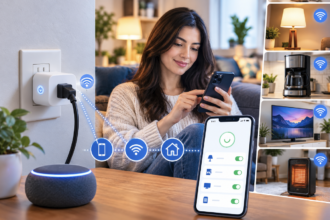

Imagine arriving home after work and your lights turn on automatically, the temperature is already comfortable, and your front door locks itself when you leave. Your security camera sends an alert when it detects unusual movement, while your smart speaker plays your favorite music with a simple voice command.
This is the idea behind smart home technology.
A smart home is not simply a house filled with expensive gadgets. It is a connected system in which devices can communicate with each other, respond to instructions, and sometimes make decisions automatically. From smart lights and thermostats to security cameras, door locks, appliances, and voice assistants, these technologies are changing how people interact with their homes.
However, smart home technology is not always as simple as buying a device and plugging it in. Compatibility, privacy, internet connections, security, cost, and installation all matter. A poorly planned smart home can become a confusing collection of apps that creates more problems than it solves.
The good news is that you do not need to automate everything at once. With the right approach, you can start small, choose compatible devices, and gradually build a home that is more convenient, energy-efficient, secure, and responsive to your daily routine.
What Is Smart Home Technology?
Smart home technology refers to connected devices and systems that allow homeowners to monitor, control, and automate different parts of a home. These devices usually connect through Wi-Fi, Bluetooth, Zigbee, Z-Wave, or other communication technologies.
A basic example is a smart light bulb. Instead of using only a traditional wall switch, you may control it using a smartphone app, voice command, schedule, motion sensor, or automation rule. For example, your hallway light could turn on automatically when a motion sensor detects movement at night.
The important difference between a regular electronic device and a smart device is connectivity and control. A traditional fan simply operates when you turn it on. A smart fan may allow remote control, scheduling, temperature-based automation, and integration with other devices.
A typical smart home system includes three main parts:
- Smart devices that perform actions or collect information.
- A connection or network that allows devices to communicate.
- A control system such as a mobile app, smart hub, or voice assistant.
For instance, a smart door sensor may detect that a door has opened. The system can then send an alert to your phone, turn on nearby lights, and activate a security camera. This is where home automation becomes more useful than controlling individual gadgets separately.
How Does a Smart Home Work?
Smart home technology works by connecting devices to a network and allowing them to exchange information. The exact process depends on the products you choose, but the basic idea is relatively simple.
Imagine a smart thermostat connected to a temperature sensor. The sensor measures the temperature in a room and sends the information to the system. If the temperature falls below a chosen level, the thermostat can automatically turn on the heating.
The process usually involves:
1. Sensors Collect Information
Sensors detect changes in the environment. These may include motion, temperature, humidity, light levels, smoke, water leaks, or whether a door is open or closed.
2. The System Processes the Information
A smart device, hub, or cloud-based service processes the information and compares it with your settings.
For example:
If motion is detected after 10 p.m., turn on the hallway light at 30% brightness.
3. The System Performs an Action
The system then tells another device what to do. The light turns on, the thermostat adjusts the temperature, or your phone receives a notification.
Some smart home systems process information locally inside your home. Others rely heavily on cloud servers and an internet connection. Local processing can sometimes improve privacy and reliability, while cloud-based systems may offer advanced features and easier remote access.
This is why understanding the technology behind a device matters. Two products may look similar but behave very differently when your internet connection goes down.
Common Types of Smart Home Devices
Smart home technology covers a wide range of products. You do not need all of them to create a useful smart home. The best devices are the ones that solve real problems in your daily life.
Smart Lighting
Smart lighting is one of the easiest ways to begin automating a home. Smart bulbs, switches, and dimmers can be controlled through apps, voice commands, motion sensors, and schedules.
You might set your bedroom lights to gradually brighten in the morning or program outdoor lights to turn on around sunset. A motion sensor can also activate a hallway light when someone walks through the area.
The main advantage is flexibility. However, smart bulbs can become inconvenient if someone regularly turns off the physical wall switch. In that situation, the bulb loses power and cannot respond to app or voice commands.
For homes with multiple users, smart switches may sometimes be a better choice than smart bulbs because everyone can still use a normal wall switch.
Smart Thermostats and Climate Control
Smart thermostats can help manage heating and cooling more efficiently. Some models learn your schedule, while others use sensors to detect whether people are present.
For example, a thermostat may reduce heating while everyone is away and return the temperature to a comfortable level before the family comes home.
The potential benefit is reduced energy waste, but results depend on how the system is configured. A smart thermostat will not automatically save money if it is constantly set to extreme temperatures or if your home has poor insulation.
Climate control can also become more complex in homes with multiple rooms. A single thermostat may not accurately represent the temperature throughout the entire house.
Smart Home Security
Security is one of the most popular areas of home automation. Smart cameras, doorbells, locks, motion sensors, window sensors, and alarm systems can work together to provide alerts and remote monitoring.
For example, a smart door sensor could notify you if a door opens while you are away. A camera might then provide a visual check of the area.
Smart locks can also allow temporary access to family members, cleaners, or guests without giving everyone a physical key. However, security devices must be configured carefully. Weak passwords, outdated software, and poor account protection can create risks.
Convenience should never replace basic security practices such as using unique passwords, enabling two-factor authentication when available, and keeping devices updated.
Smart Appliances
Smart appliances include refrigerators, washing machines, ovens, coffee makers, robotic vacuum cleaners, and other connected products.
A smart washing machine might notify you when a cycle is finished. A robotic vacuum can clean according to a schedule. A smart oven may allow remote monitoring.
The value of smart appliances depends heavily on your lifestyle. A connected coffee maker may be genuinely useful for someone with a fixed morning routine. For another person, it may simply add another app to manage.
Before buying a smart appliance, ask a practical question: Does the connected feature solve a real problem, or is it just an extra feature that sounds impressive?
Smart Speakers and Voice Assistants
Smart speakers provide a convenient way to control compatible devices using voice commands. You can ask the system to turn off lights, set timers, play music, or adjust connected devices.
Voice control can be especially useful when your hands are busy. Imagine cooking in the kitchen and being able to set a timer without touching your phone.
However, privacy is an important consideration. Smart speakers may process voice commands through online services, so users should understand the device’s privacy settings and account controls.
Smart Sensors
Sensors are often the hidden foundation of a smart home. They can detect motion, temperature, light, humidity, water leaks, smoke, and more.
A water leak sensor placed near a washing machine or water heater can potentially alert you before a small leak becomes serious damage. A motion sensor can turn lights on only when someone is present.
Sensors are valuable because they allow automation to respond to what is actually happening instead of relying only on fixed schedules.
What Are the Main Benefits of Smart Home Technology?
Smart home systems can offer several practical advantages. The benefits are not limited to convenience.
Convenience and Automation
The most obvious benefit is the ability to automate repetitive tasks. Lights can follow a schedule, doors can lock automatically, and appliances can send alerts when a task is complete.
This may seem small, but small improvements repeated every day can make a noticeable difference.
For example, instead of checking every window before bed, a smart home routine could confirm the status of connected doors and windows. You may still want to physically check important areas, but the system can reduce unnecessary effort.
Energy Efficiency
Smart home devices can help reduce energy waste by providing better control and information.
Smart lights can turn off automatically when a room is empty. Smart thermostats can adjust heating and cooling according to occupancy. Smart plugs can help monitor or control devices that consume power when left on.
However, the technology itself does not guarantee lower energy bills. The biggest savings usually come from better habits and sensible automation.
A homeowner who uses smart heating but keeps every room excessively warm may not save money. The technology is a tool, not a magic solution.
Improved Home Security
Smart security devices can make it easier to monitor a property. Notifications, cameras, sensors, and smart locks can provide more information than traditional systems.
For example, you may receive an alert that a garage door has been left open. You can check the situation remotely and close it if your system supports remote control.
Still, no connected system is completely risk-free. Security should include both digital protection and physical safety measures.
Better Accessibility
Smart home technology can make homes easier to use for older adults and people with certain disabilities.
Voice control can reduce the need to physically reach switches. Automated lighting can improve visibility. Smart locks and sensors can provide additional assistance with daily routines.
The best systems are designed around the user’s needs rather than simply adding as many devices as possible.
Remote Monitoring
Many smart home products allow remote access through a smartphone. You can check a camera, receive an alert about a leak, or confirm whether a device is operating.
This is particularly useful when traveling. For example, a water sensor can alert you to a potential problem while you are away from home.
Remote access is convenient, but it also makes account security extremely important. Anyone who gains access to your smart home account may potentially control connected devices or view private information.
What Are the Disadvantages and Challenges?
Smart home technology has clear advantages, but it also comes with real limitations.
Privacy Concerns
Connected devices may collect information about your home and habits. A smart speaker may process voice commands. A camera may record video. Sensors may reveal when people are home or away.
Before buying a device, check what data it collects, how that data is stored, and whether you can adjust privacy settings.
A camera placed outside your home is very different from a camera inside a private bedroom. Location and configuration matter.
Cybersecurity Risks
Any internet-connected device can potentially become a target for unauthorized access. Poor security practices increase the risk.
Common mistakes include:
- Reusing the same password across multiple accounts
- Ignoring software updates
- Buying devices from unknown manufacturers without checking support
- Leaving default passwords unchanged
- Connecting every device to the same network without considering security
A strong password and two-factor authentication can make a significant difference. You should also remove old devices from your accounts when you stop using them.
Internet and Cloud Dependence
Many smart devices depend on internet services. If your internet connection fails, some features may stop working.
This creates an important difference between a traditional light switch and a cloud-dependent smart light. The traditional switch continues to work without the internet. A smart device may lose remote control or automation features.
For this reason, it is wise to understand what happens when a product loses internet access before installing it throughout your home.
Compatibility Problems
Not every smart home product works perfectly with every other product. A device may support one ecosystem but not another.
This can result in multiple apps, separate accounts, and limited automation options.
Before buying several devices, check compatibility carefully. Standards designed to improve cross-platform compatibility can help, but support may still vary between products and features.
Cost
A smart home can become expensive quickly. Buying one inexpensive smart bulb is simple. Replacing an entire home’s switches, appliances, locks, cameras, and sensors is a much larger investment.
The best approach is usually gradual. Start with one problem, solve it, and then expand if the result is genuinely useful.
Smart Home Technology and Privacy: What Should You Consider?
Privacy should be considered before installation, not after a problem occurs.
Start by asking what information a device needs to operate. A smart light bulb may need very little personal information. A camera or voice assistant may involve far more sensitive data.
Important questions include:
- Does the device require an account?
- Where is collected data stored?
- Can you delete recordings or data?
- Does the company provide regular security updates?
- Can you disable unnecessary features?
- What happens if the company stops supporting the product?
You should also think about physical placement. A security camera pointed toward your own entrance is different from one that records a neighbor’s private space.
A practical approach is to avoid buying connected devices simply because they are cheap. The initial price is only one part of the decision. Long-term software support and the company’s approach to security also matter.
How to Build a Smart Home Step by Step
You do not need to transform your home in one weekend. A planned approach is usually better.
Step 1: Identify a Real Problem
Start with something that annoys you or wastes time.
Do you frequently forget to turn off lights? A smart lighting system may help. Do you worry about a water leak while traveling? A water sensor may be a better first purchase.
The goal is not to own the most devices. The goal is to make your home work better for you.
Step 2: Choose Your Main Ecosystem
Decide how you want to control your devices. This might involve a particular mobile platform, voice assistant, or smart home hub.
Choosing a general direction can reduce compatibility problems later.
Step 3: Check Compatibility
Before buying a device, confirm that it works with your existing equipment and preferred control system.
This is especially important for smart locks, security systems, thermostats, and devices that need to communicate with each other.
Step 4: Start Small
Begin with one or two devices. Learn how they work before expanding.
For example, you might start with smart lights and a motion sensor. Once you understand basic automation, you can add other devices.
Step 5: Create Useful Automations
Good automation should reduce effort, not create more complexity.
Useful examples include:
- Turning off lights when everyone leaves
- Turning on outdoor lighting at sunset
- Sending a notification when a door opens
- Adjusting the thermostat based on a schedule
- Turning off selected appliances at bedtime
Avoid creating complicated routines that depend on too many conditions. If an automation fails regularly, people eventually stop trusting the system.
Step 6: Secure Everything
Use strong, unique passwords and enable additional account protection where available. Install firmware and software updates.
Also review which devices have access to your home network.
A Real-World Example: A Small Apartment Smart Home
Consider a person living in a small apartment who wants more convenience but has a limited budget.
Instead of buying ten different products, they begin with three devices:
- Smart bulbs in the main living area
- A motion sensor in the hallway
- A smart plug for a frequently used lamp
The hallway light turns on automatically at night at low brightness. The living room lights follow a schedule. The smart plug turns a lamp on before the person arrives home.
After several weeks, the person evaluates the setup. If the system genuinely improves daily life, they might add a door sensor or smart thermostat.
This approach is better than buying a large collection of devices without a clear plan. The apartment becomes smarter based on actual needs rather than marketing promises.
Common Smart Home Mistakes to Avoid
Buying Devices Without Checking Compatibility
A cheap device is not a bargain if it cannot work with the rest of your system.
Automating Too Much Too Quickly
Too many automations can become confusing. Start with simple routines and expand gradually.
Ignoring Physical Controls
Not everyone in a home wants to use a smartphone or voice command for every action. Keep basic controls available where possible.
Forgetting About Security
Smart devices should be treated as connected computers. Use good passwords, update them, and review account access.
Choosing Price Over Long-Term Support
A low-cost device may seem attractive, but poor software support can make it unreliable or insecure later.
Relying Completely on the Internet
Understand what happens when your internet connection stops working. Important functions should have a backup or manual option where practical.
What Is the Future of Smart Home Technology?
The future of smart homes is likely to focus less on individual gadgets and more on systems that work together naturally.
Instead of manually controlling dozens of devices, homeowners may increasingly rely on context-based automation. A system could understand that someone has arrived home, recognize the time of day, detect room occupancy, and adjust lighting or temperature accordingly.
Artificial intelligence may also play a larger role in analyzing patterns and making recommendations. For example, a system might identify unusual energy consumption or detect a change in normal household activity.
However, greater intelligence also raises important questions. Who controls the data? How much automation should a homeowner allow? What happens when an automated decision is wrong?
The smartest home may not be the one with the most technology. It may be the one that quietly performs useful tasks while still giving people control when they need it.
Practical Tips for Getting Better Results from Smart Home Devices
If you are ready to begin, keep these practical tips in mind:
- Start with one clear problem instead of buying random gadgets.
- Choose devices that work together before making large purchases.
- Use strong passwords for every account.
- Turn on two-factor authentication when available.
- Keep device software updated.
- Review privacy settings regularly.
- Avoid placing cameras in unnecessarily private areas.
- Keep manual controls for important functions.
- Test automations before relying on them.
- Consider what happens if the internet or cloud service is unavailable.
- Buy products from manufacturers that provide reliable long-term support.
These simple steps can prevent many of the frustrations that new smart home users experience.
Final Thoughts
Smart home technology can make everyday life more convenient, efficient, secure, and accessible. From automatic lighting and smart thermostats to connected security systems and intelligent appliances, the possibilities continue to grow.
But a successful smart home is not created by filling every room with connected gadgets. It starts with understanding your needs and choosing technology that solves real problems.
The best approach is simple: start small, choose compatible products, protect your privacy, secure your accounts, and expand gradually. A smart home should make life easier, not turn basic tasks into a complicated technical project.
Whether you live in a small apartment or a large house, the right smart home system can grow with your lifestyle. The goal is not to automate everything. The goal is to create a home that responds intelligently when technology can genuinely make a difference.
Frequently Asked Questions
1. What is smart home technology in simple words?
Smart home technology refers to connected devices that can be controlled remotely or work automatically. Examples include smart lights, thermostats, cameras, locks, appliances, and sensors. These devices can often be managed through a smartphone app, voice command, schedule, or automation system.
2. How does smart home technology work?
Smart home devices connect through technologies such as Wi-Fi, Bluetooth, Zigbee, Z-Wave, or other communication systems. Sensors collect information, a system processes that information, and connected devices perform actions based on your settings. For example, a motion sensor can detect movement and automatically turn on a light.
3. Is smart home technology worth it?
It can be worth it if the technology solves a real problem. Smart lighting, security sensors, thermostats, and leak detectors can provide practical benefits. However, not every smart device is necessary. The value depends on your needs, budget, privacy preferences, and how well the devices work together.
4. Does a smart home need Wi-Fi?
Many smart home devices use Wi-Fi, but not all of them require it directly. Some use Bluetooth, Zigbee, Z-Wave, or another local connection. However, internet access is often needed for remote control, cloud features, software updates, or certain voice assistant functions.
5. Can smart home devices work without the internet?
Some devices continue to work locally without an internet connection, while others lose important features. A smart light may still work through a physical switch, but remote access or cloud-based automation may stop. Always check the manufacturer’s offline functionality before buying a device.
6. Is smart home technology safe?
Smart home technology can be safe when properly configured, but connected devices can create privacy and cybersecurity risks. Use strong unique passwords, enable two-factor authentication where available, keep software updated, and carefully review privacy settings.
7. What is the best smart home device for beginners?
Smart lighting is often a good starting point because it is relatively simple to install and provides an immediate benefit. Smart plugs, motion sensors, and door sensors are also useful beginner-friendly options. The best first device is the one that solves a problem you regularly experience.
8. Can smart home technology save money?
Smart home devices can help reduce energy waste by automating lights, heating, cooling, and appliances. However, savings are not automatic. The results depend on your settings, habits, home insulation, energy prices, and the devices you use.
9. Are smart home devices difficult to install?
Many consumer smart home devices are designed for simple installation, especially smart bulbs, plugs, sensors, and some cameras. Other products, such as smart thermostats, locks, or wired switches, may require more technical knowledge or professional installation.
10. How can I make my smart home more secure?
Use strong and unique passwords, enable two-factor authentication, update device software, secure your Wi-Fi network, remove unused devices from your accounts, and buy products from manufacturers that provide regular security support. Avoid leaving default passwords unchanged.
11. Can different smart home devices work together?
Yes, many smart home devices can work together, but compatibility varies. Before buying a product, check whether it supports your preferred platform or communication standard. Planning compatibility in advance can prevent the need to manage several disconnected apps.
12. What is the biggest mistake people make with smart homes?
One of the biggest mistakes is buying too many devices without a clear plan. This can create compatibility problems, multiple apps, unnecessary costs, and complicated automations. Starting with one real need and expanding gradually usually produces a better result.
13. Do smart home devices invade privacy?
Some smart devices collect data about usage, voice commands, movement, or activity. Privacy risks depend on the type of device, its settings, and the company’s data practices. Review privacy controls before installation and avoid placing cameras or other monitoring devices in highly private locations.
14. What should I buy first for a smart home?
Start with a device that solves a specific problem. Smart bulbs are useful for lighting automation, smart plugs can control ordinary appliances, motion sensors can trigger lights, and water sensors can provide early warnings about leaks. Your first purchase should match your daily needs rather than a trend.