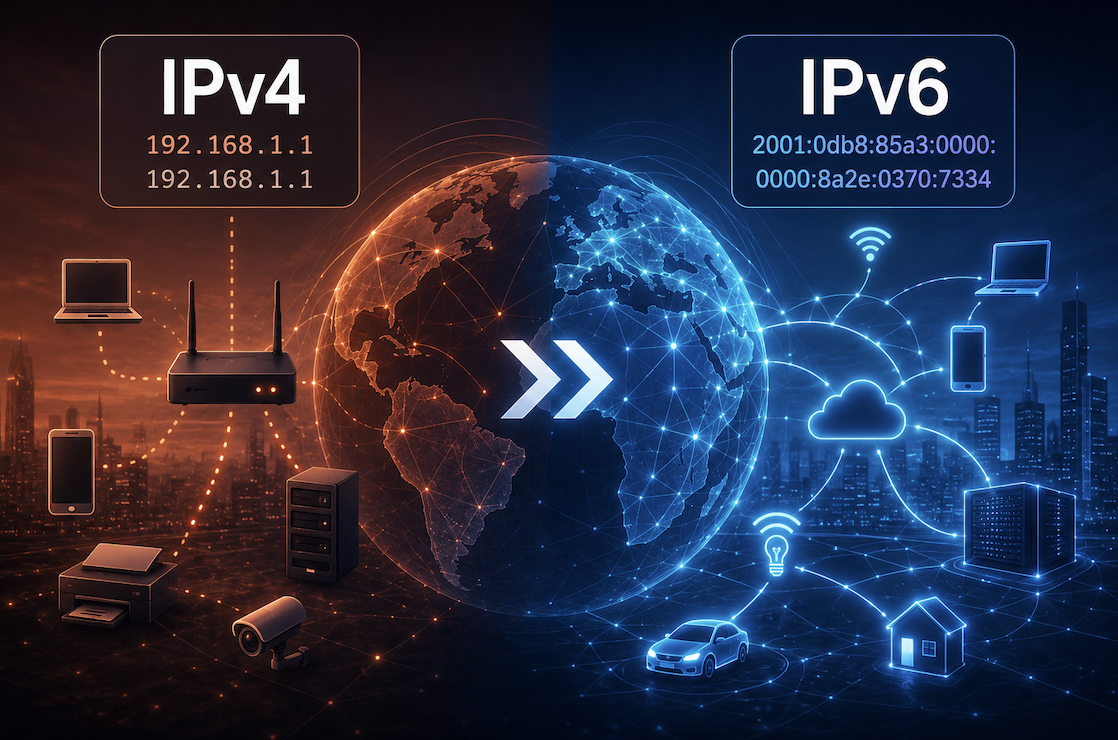
Every device connected to the internet needs a unique address to send and receive data, similar in concept to how a postal address identifies where mail should be delivered. For decades, the internet has relied on a system called IPv4 to provide these addresses, but a genuinely fundamental limitation has driven the ongoing transition toward a newer system called IPv6. This article explains what IPv6 actually is and why this transition has become genuinely necessary.
What an IP Address Actually Does
Every device connected to the internet, whether a computer, smartphone, or smart home device, requires a unique numerical identifier called an IP address, allowing data to be correctly routed to and from that specific device across the internet’s vast, interconnected network of servers and routers. Without this addressing system, there would be no reliable way for data to reach the correct destination among billions of connected devices worldwide.
The original internet addressing system, called IPv4, was designed decades ago using a format that allows for approximately 4.3 billion unique addresses, a number that seemed genuinely enormous when the system was first designed, but has proven considerably insufficient given how dramatically internet usage has grown since then.
Why IPv4 Addresses Have Genuinely Run Out
When IPv4 was originally designed, the idea of billions of individual devices, from smartphones to smart refrigerators to connected doorbells, all requiring their own unique internet address, was simply not part of the original design consideration. The explosive growth of internet-connected devices has meant that the available pool of IPv4 addresses has become genuinely exhausted.
- IPv4’s address format mathematically allows for approximately 4.3 billion unique addresses
- The explosive growth of connected devices worldwide has exceeded this available capacity
- Various workarounds have been used to extend IPv4’s usable lifespan, but these are genuinely temporary measures
- This fundamental capacity limitation is the core problem driving the need for a genuinely new addressing system
Various technical workarounds, like network address translation, which allows multiple devices within a single household or business to share one public IPv4 address, have helped extend the usable lifespan of the existing system, but these workarounds add complexity and do not solve the fundamental underlying capacity limitation.
What IPv6 Actually Changes
IPv6 was specifically designed to solve this capacity problem by dramatically expanding the available address space, using a considerably longer address format that allows for an almost incomprehensibly larger number of unique addresses compared to the older IPv4 system.
- IPv6 uses a considerably longer address format compared to IPv4’s more limited structure
- This expanded format allows for a vastly larger number of unique addresses, effectively solving the exhaustion problem
- The available address space under IPv6 is large enough to assign unique addresses to virtually every conceivable device for the foreseeable future
- This capacity expansion is the primary, foundational reason IPv6 was developed and is being gradually adopted
Beyond simply solving the address exhaustion problem, IPv6 also includes several other technical improvements over IPv4, including more efficient routing and processing, and built-in support for certain security features that had to be added separately to the older IPv4 system.
Why the Transition to IPv6 Has Taken So Long
Despite IPv6 being developed and available for many years, the actual transition from IPv4 has happened considerably more gradually than the underlying technical urgency might suggest, reflecting genuine practical challenges involved in this kind of fundamental infrastructure transition.
- IPv6 is not directly backward compatible with IPv4, requiring dual support during the transition period
- Existing infrastructure, hardware, and software built around IPv4 represents a massive, expensive installed base
- Network administrators and internet service providers have needed to gradually update infrastructure to support IPv6
- Workarounds extending IPv4’s usable lifespan have reduced the immediate urgency felt by some organizations
This gradual transition means that, in practice, much of the internet currently operates using both IPv4 and IPv6 simultaneously, with individual networks and devices supporting both systems during this genuinely extended transition period that continues even now, years after IPv6 first became available.
How This Transition Actually Affects Everyday Internet Users
For the vast majority of everyday internet users, this transition happens almost entirely behind the scenes, handled automatically by internet service providers, device manufacturers, and network infrastructure, without requiring any direct action or even awareness from typical users.
- Most modern devices and operating systems already support both IPv4 and IPv6 automatically
- Internet service providers handle the underlying infrastructure transition without requiring customer action
- Most websites and online services support both addressing systems, ensuring compatibility regardless of which system a user’s connection relies on
- Users generally do not need to take any specific action to benefit from IPv6 support where it is already available
This behind-the-scenes handling reflects a deliberate design goal throughout this transition: allowing the fundamental infrastructure change to happen gradually and largely invisibly to typical users, rather than requiring disruptive, immediate changes that would affect everyday internet usage.
Why This Transition Genuinely Matters for the Internet’s Future
As the number of internet-connected devices continues growing dramatically, particularly with the expansion of smart home devices, connected vehicles, and various other internet-of-things applications, having a sufficiently large addressing system becomes increasingly important for supporting this continued growth without running into the same capacity limitations that affected IPv4.
- Continued growth in connected devices makes IPv6’s expanded capacity increasingly important
- Smart home devices, connected vehicles, and IoT applications all require unique internet addresses
- IPv6 provides sufficient capacity to support this continued growth for the foreseeable future
- This transition represents genuinely foundational infrastructure work supporting the internet’s continued expansion
How Network Address Translation Temporarily Eased the IPv4 Shortage
Understanding network address translation, one of the primary technical workarounds that helped extend IPv4’s usable lifespan, provides useful context for appreciating why the transition to IPv6 has felt less urgent to many casual observers than the underlying capacity numbers might otherwise suggest. This technique allows an entire household or business, potentially containing dozens of individual devices, to share a single public IPv4 address, with an internal, private addressing system managing traffic for each specific device behind that shared public address.
This approach has genuinely stretched IPv4’s practical usability considerably further than its raw address capacity alone would have allowed, which is a significant reason why most everyday users have not directly experienced the address exhaustion problem despite it being a genuine, well-documented technical reality. However, this workaround adds a meaningful layer of complexity to network configuration and does not solve the underlying capacity problem for the internet as a whole, which is precisely why the more fundamental transition to IPv6 remains genuinely necessary despite these effective, if temporary, mitigating measures.
- Network address translation allows many devices to share one public IPv4 address
- This technique has significantly extended IPv4’s practical usability beyond its raw capacity limits
- This workaround adds configuration complexity without solving the underlying, fundamental capacity problem
- IPv6 remains necessary as a genuine, complete solution despite these effective temporary mitigating measures
Final Thoughts
IPv6 represents a genuinely necessary evolution of the internet’s fundamental addressing system, solving the real capacity limitations of the older IPv4 system that simply was not designed to accommodate today’s billions of connected devices. Understanding why this transition matters, even though it happens largely invisibly for most everyday users, provides useful context for appreciating the foundational infrastructure work quietly supporting the internet’s continued growth and expansion.
Frequently Asked Questions
1. Do I need to do anything specific to use IPv6?
Generally no, since most modern devices, operating systems, and internet service providers handle this transition automatically without requiring any direct action from typical users, though checking your specific device and provider’s support can provide additional confirmation if you are curious.
2. Is IPv6 faster than IPv4?
IPv6 includes some technical efficiency improvements, though for most typical everyday internet usage, the practical speed difference is generally minimal, since the primary benefit of IPv6 relates to address capacity rather than raw speed improvements.
3. Will IPv4 eventually stop working entirely?
IPv4 is expected to remain in use for a considerable time alongside IPv6, given the massive existing infrastructure built around it, though the industry’s long-term trajectory points toward eventually relying primarily on IPv6 as the transition continues progressing gradually.
4. Why did the internet not simply switch to IPv6 immediately once available?
The transition involves considerable practical challenges, including updating massive amounts of existing infrastructure, ensuring compatibility between IPv4 and IPv6 systems during the transition period, and coordinating this change across countless independent networks and organizations worldwide.
5. Does IPv6 offer better security than IPv4?
IPv6 was designed with certain security considerations built into its foundational design, though actual real-world security depends considerably more on how networks and devices are configured and maintained than on the underlying addressing protocol alone.