Some of the most significant cybersecurity incidents in recent years have not involved directly attacking a specific target organization, but instead compromising a trusted vendor or software component that target organization relied upon, a technique called a supply chain attack. Understanding how this particularly insidious attack method actually works, and why it presents such genuine, significant prevention challenges, provides important context for understanding modern cybersecurity threats.
What a Supply Chain Attack Actually Means
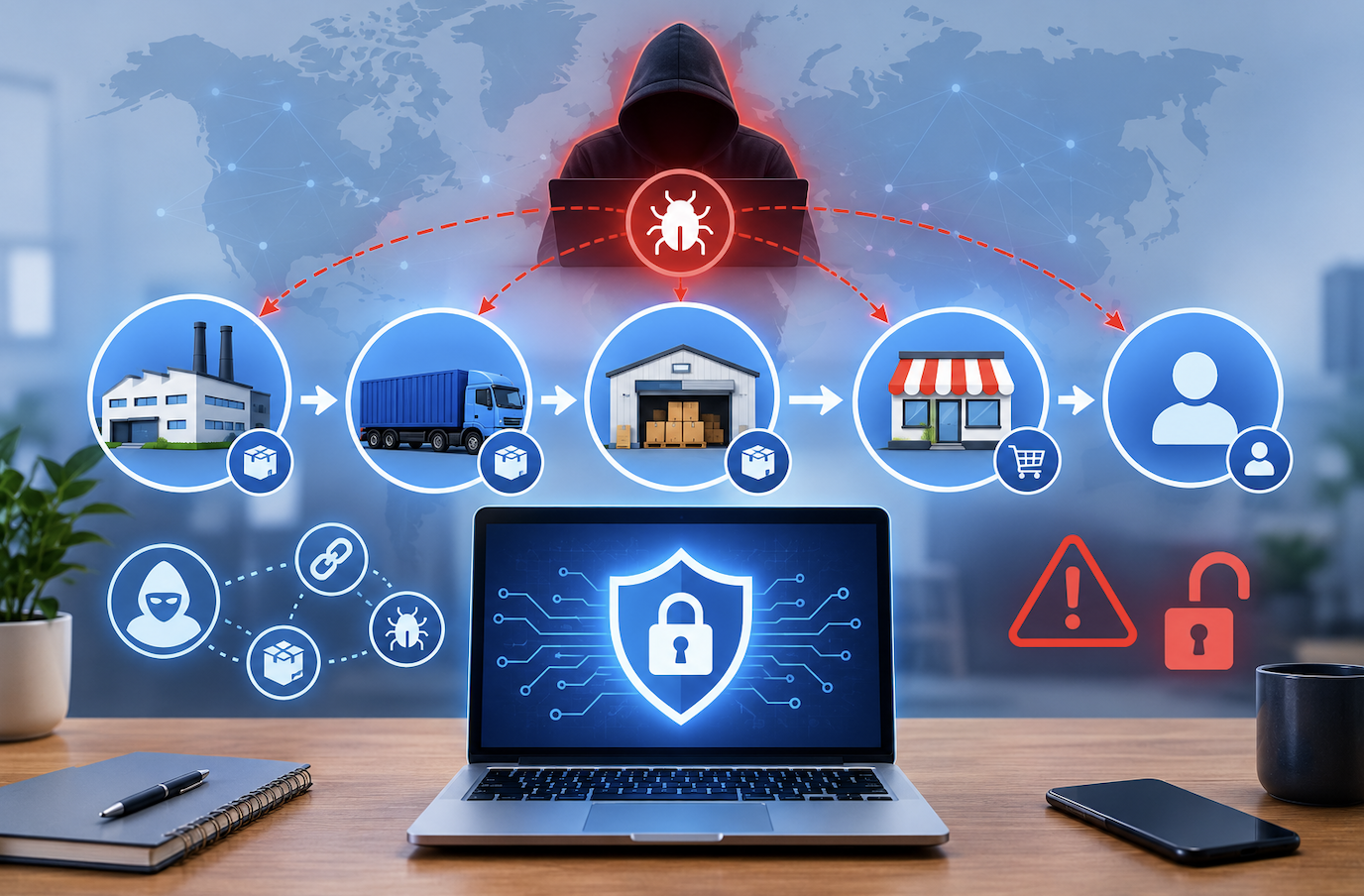
A supply chain attack occurs when an attacker compromises a trusted third-party vendor, software component, or service provider specifically to gain indirect access to that vendor’s actual customers or users. Rather than directly attacking a well-defended target organization, attackers instead target a less well-defended link within that organization’s broader supply chain, using this compromised trust relationship to ultimately reach their genuine intended target.
Understanding this indirect approach genuinely matters, since it explains why supply chain attacks can prove so effective even against organizations with genuinely strong direct security measures, given that these attacks specifically exploit the trust relationships between organizations and their vendors, rather than attempting to breach an organization’s own security defenses directly.
How Supply Chain Attacks Actually Work in Practice
Understanding the genuine technical process behind how these attacks actually unfold helps clarify why this attack method has become such a significant, genuinely concerning cybersecurity threat.
- An attacker identifies a vendor or software provider serving numerous, potentially high-value target organizations
- The attacker compromises this vendor’s systems, software, or update mechanisms
- This compromise allows the attacker to distribute malicious code through the vendor’s otherwise legitimate channels
- Organizations trusting and using this vendor’s genuine products then unknowingly receive this malicious content
This trust exploitation deserves particular emphasis, since it represents the genuine core mechanism making supply chain attacks so effective, given that organizations typically trust software updates and services from established, legitimate vendors without extensively verifying each individual update, precisely the trust relationship these attacks specifically exploit to distribute malicious content through channels that would normally be considered genuinely safe.
Why Software Updates Represent a Particularly Common Attack Vector
Understanding why compromised software updates specifically have become such a genuinely common method for executing supply chain attacks helps illustrate this particular vulnerability’s practical significance.
- Software updates are generally trusted and often installed with minimal additional verification ● A compromised update mechanism can potentially reach every customer using that specific software ● This represents a genuinely efficient way for attackers to reach numerous targets through a single compromise
- Organizations often lack practical means to verify the complete integrity of every software update they receive
Why These Attacks Prove Genuinely Difficult to Prevent
Understanding the specific reasons supply chain attacks present such significant, genuine prevention challenges helps clarify why this threat category has proven particularly persistent despite genuine cybersecurity efforts.
- Organizations cannot realistically audit every single vendor’s internal security practices in complete detail ● Trust relationships with vendors are genuinely necessary for normal business operations to function ● Detecting a sophisticated supply chain compromise often requires identifying subtle changes within otherwise legitimate software
- The sheer number of vendors and third-party components most organizations rely on creates a genuinely large potential attack surface
This large attack surface consideration deserves particular emphasis, since modern organizations typically rely on numerous different software vendors, cloud services, and third-party components, meaning securing against supply chain attacks requires considering genuine risk across this entire extended network of relationships, rather than simply focusing security efforts on an organization’s own direct systems and infrastructure alone.
Why Detecting Supply Chain Compromises Genuinely Takes Time
Understanding why these attacks often remain undetected for genuinely extended periods helps clarify another significant challenge associated with this particular attack category.
- Malicious code inserted into legitimate software can be specifically designed to avoid triggering obvious detection
- Attackers sometimes wait genuinely extended periods before actually activating malicious functionality ● This delayed activation makes connecting an eventual security incident back to its original compromise source genuinely difficult
- These combined factors mean supply chain attacks can sometimes go undetected for months or even longer
How Organizations Are Working to Address This Genuine Threat
Understanding the various approaches organizations and the broader cybersecurity industry are implementing to address supply chain attack risk helps provide balanced context alongside understanding this threat’s genuine, significant challenges.
- Implementing more rigorous vendor security assessment processes before establishing new business relationships
- Using technical verification methods to help confirm software authenticity and integrity
- Developing better monitoring systems specifically designed to detect unusual behavior that might indicate compromise
- Increasing industry-wide information sharing about known supply chain attack patterns and indicators
Practical Implications for Organizations and Individuals
Organizations should genuinely evaluate vendor security practices as part of their broader security strategy
- Maintaining updated, layered security defenses helps limit potential damage even if a supply chain compromise occurs
- Individuals should keep software updated through official channels while remaining aware this attack category exists
- Understanding this threat category helps inform more realistic, comprehensive cybersecurity risk assessment
Why Open Source Software Introduces Its Own Distinct Supply Chain Considerations
Understanding how the widespread use of open source software components, which many modern applications genuinely depend upon extensively, introduces its own particular version of supply chain attack risk helps illustrate this threat’s genuine breadth beyond simply commercial vendor relationships alone.
Modern software applications frequently incorporate numerous open source components and libraries, often created and maintained by relatively small, sometimes volunteer-based development communities without the same institutional security resources larger commercial vendors might have. This creates a genuinely distinct supply chain consideration, since compromising a widely used open source component could potentially affect the enormous number of applications that have incorporated it, making the security practices of these often under-resourced open source projects a genuinely important, though sometimes overlooked, part of the broader supply chain security landscape.
- Modern applications frequently depend extensively on open source components maintained by smaller communities
- These projects often lack the institutional security resources larger commercial vendors typically have available
- Compromising a widely used open source component could potentially affect enormous numbers of dependent applications
- This represents a genuinely distinct, important consideration within the broader supply chain security landscape
Final Thoughts
Supply chain attacks exploit the trust relationships between organizations and their vendors, allowing attackers to reach well-defended targets indirectly through less secure links within that organization’s broader vendor ecosystem, representing a genuinely significant and persistently challenging cybersecurity threat. Understanding both how these attacks actually work and why they prove so difficult to fully prevent helps provide realistic context for the genuine, ongoing challenges modern organizations face in securing their increasingly complex, interconnected technology relationships.
Frequently Asked Questions
1. Can individual computer users genuinely do anything to protect against supply chain attacks?
While individual users have limited direct control over vendor security practices, maintaining updated software through official channels, using reputable security software, and staying informed about significant known supply chain incidents represents reasonable, practical protective steps.
2. Are supply chain attacks a genuinely new type of cybersecurity threat?
While the underlying concept has existed for some time, this attack category has received considerably increased attention in recent years following several genuinely significant, high-profile incidents that demonstrated this method’s serious potential impact and scale.
3. How can organizations genuinely evaluate whether their vendors maintain adequate security practices?
Organizations increasingly use security assessment questionnaires, third-party security certifications, and in some cases direct security audits to evaluate vendor practices, though genuinely comprehensive verification across an organization’s entire vendor ecosystem remains a significant, ongoing challenge.
4. Do supply chain attacks only affect large organizations, or can smaller businesses also be genuinely targeted?
Organizations of any size can be affected, either as a direct target reached through a compromised vendor or, in some cases, as the initially compromised vendor itself if that smaller business provides software or services to other organizations.
5. Is there any way to completely eliminate supply chain attack risk?
Complete elimination remains genuinely unrealistic given how deeply modern organizations depend on numerous vendor relationships and third-party components, making risk reduction through improved vendor evaluation and layered security defenses a more realistic, practical goal than complete risk elimination.