
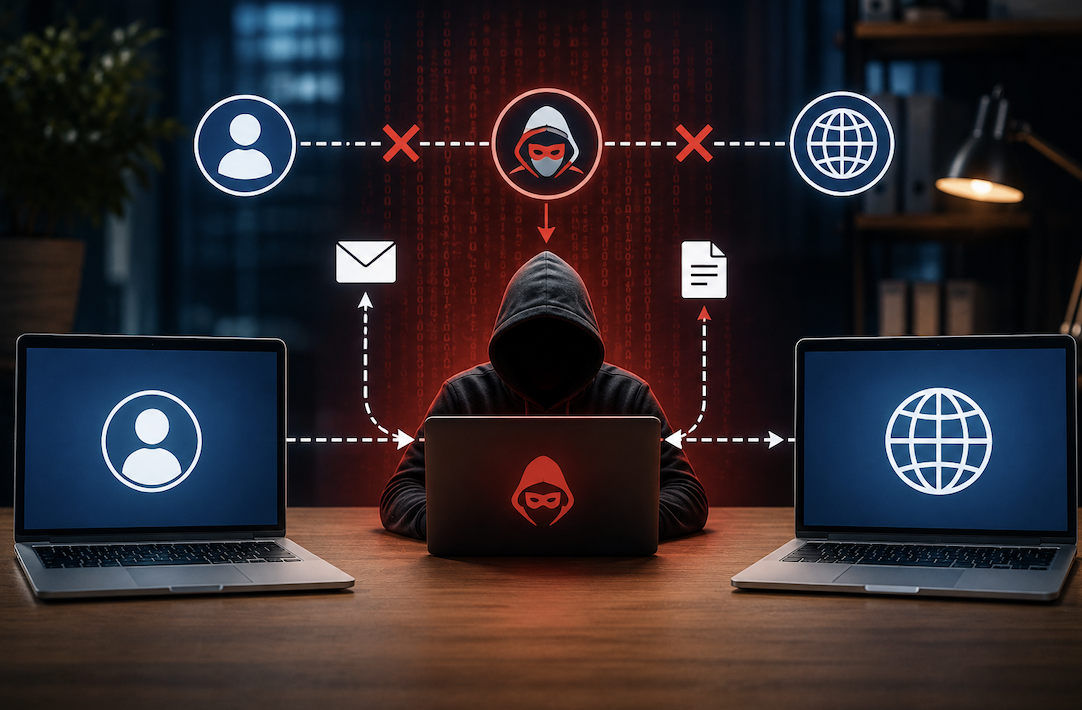
Public Wi-Fi at a coffee shop or airport feels convenient, but it also creates a genuine opportunity for a specific type of cyberattack that many people have heard of without fully understanding how it actually works. A man-in-the-middle attack involves someone secretly intercepting communication between two parties who believe they are communicating directly with each other. This article explains exactly how this attack works and how to protect yourself against it.
What a Man-in-the-Middle Attack Actually Involves
A man-in-the-middle attack occurs when an attacker secretly positions themselves between two communicating parties, intercepting and sometimes altering the data being exchanged, all while both original parties remain unaware that anything unusual is happening. From the perspective of the victim, everything appears normal, since they are still receiving responses that seem to come from the legitimate source they intended to communicate with.
This positioning allows an attacker to potentially read sensitive information passing between the two parties, such as login credentials, financial details, or private messages, without either party realizing their communication has been compromised.
How Attackers Actually Position Themselves for This Attack
Attackers use several different techniques to insert themselves into a communication path, and understanding these methods helps clarify why certain everyday situations carry genuinely elevated risk.
- Setting up a fake, malicious Wi-Fi hotspot that mimics a legitimate public network’s name
- Exploiting vulnerabilities in network protocols to intercept traffic on a shared network
- Compromising a router to intercept traffic passing through it
- Using malicious software installed on a victim’s device to intercept data before it gets encrypted
Public Wi-Fi networks represent a particularly common opportunity for this attack, since anyone connected to the same unsecured network can potentially position themselves to intercept traffic from other users sharing that same network.
What Happens Once an Attacker Successfully Intercepts Communication
Once positioned between two communicating parties, an attacker has several options for exploiting that access, depending on their specific goals and the nature of the intercepted communication.
- Simply reading intercepted data, such as login credentials or private messages, without altering anything
- Modifying the data being exchanged before passing it along, potentially injecting malicious content
- Redirecting a victim to a fake, malicious version of a legitimate website
- Capturing session information that could allow the attacker to impersonate the victim afterward
The most dangerous versions of this attack often involve intercepting login credentials on unencrypted connections, since a captured username and password can then be used to directly access the victim’s actual account.
Why Encryption Genuinely Protects Against This Attack
Modern encrypted connections, indicated by the padlock icon and secure protocol shown in your browser, provide meaningful protection against man-in-the-middle attacks, since even if an attacker successfully intercepts the encrypted data, they cannot read or meaningfully alter it without the proper decryption keys.
- Encrypted connections scramble data in a way that intercepted traffic remains unreadable without proper keys
- This significantly limits what an attacker can actually do even if they successfully intercept the connection
- Sites using outdated, unencrypted connections leave visitors considerably more vulnerable to this attack
- Modern browsers actively warn users when attempting to visit sites lacking proper encryption
Practical Steps to Protect Yourself From This Attack
- Avoid accessing sensitive accounts, like banking, while connected to unsecured public Wi-Fi networks
- Use a reputable VPN when connecting to public Wi-Fi to add an additional layer of encryption
- Verify you are connecting to the legitimate network name at a public location rather than a similarly named fake
- Pay attention to browser warnings about unencrypted or potentially unsafe website connections
- Keep your device’s software updated to patch known vulnerabilities that could otherwise be exploited
How Modern Browsers Help Detect These Attacks in Real Time
Modern web browsers include built-in security features specifically designed to help detect and warn users about potential man-in-the-middle scenarios, even though the attack itself is fundamentally designed to remain invisible. These protections primarily center around certificate verification, checking that the encryption credentials a website presents genuinely belong to that website rather than an impersonating attacker positioned in between.
When a browser detects a mismatch or problem with a website’s security certificate, it typically displays a prominent warning before allowing you to proceed, since this kind of certificate problem is one of the more common signals that could indicate an attacker has inserted themselves into the connection. Taking these warnings seriously, rather than clicking through them out of habit or impatience, represents one of the more effective practical defenses available to everyday users.
- Browsers verify security certificates to confirm a website’s identity is genuine
- Certificate mismatches or errors often trigger prominent warning messages before you can proceed
- These warnings represent one of the more accessible, practical defenses available to everyday users
- Taking browser security warnings seriously, rather than dismissing them, meaningfully reduces your risk
Final Thoughts
Man-in-the-middle attacks exploit the trust inherent in everyday network communication, secretly inserting an attacker between two parties who believe they are communicating directly. Understanding how this attack actually works, and why encryption and cautious public Wi-Fi habits provide meaningful protection, helps you make more informed decisions about when and how you access sensitive information while connected to networks you do not fully control.
Frequently Asked Questions
1. How common are man-in-the-middle attacks for everyday people?
While less common than simpler attacks like phishing, they remain a genuine risk, particularly on unsecured public Wi-Fi networks, which is exactly why security experts consistently recommend caution in these specific situations.
2. Does using a VPN completely eliminate the risk of this attack?
A reputable VPN significantly reduces this risk by encrypting your traffic before it reaches the public network, though no single tool eliminates every possible risk entirely, and good overall security habits remain valuable.
3. How can I tell if I am currently experiencing a man-in-the-middle attack?
This is genuinely difficult to detect in real time, since the attack is specifically designed to remain invisible to both parties, which is exactly why prevention through encryption and cautious network habits matters more than detection.
4. Are man-in-the-middle attacks only a risk on public Wi-Fi?
Public Wi-Fi represents a particularly common opportunity, but this attack can theoretically occur on any network where an attacker gains sufficient access, including compromised home routers or certain vulnerable network configurations.