Few consumer technology decisions generate as much ongoing debate as the choice between Android and iPhone, and both camps often defend their choice with genuine passion, sometimes making it difficult to get an honestly balanced comparison rather than one-sided advocacy. This article sets aside the tribalism and walks through the genuine, practical differences that actually matter when deciding which platform fits your specific needs.
Understanding the Core Philosophical Difference
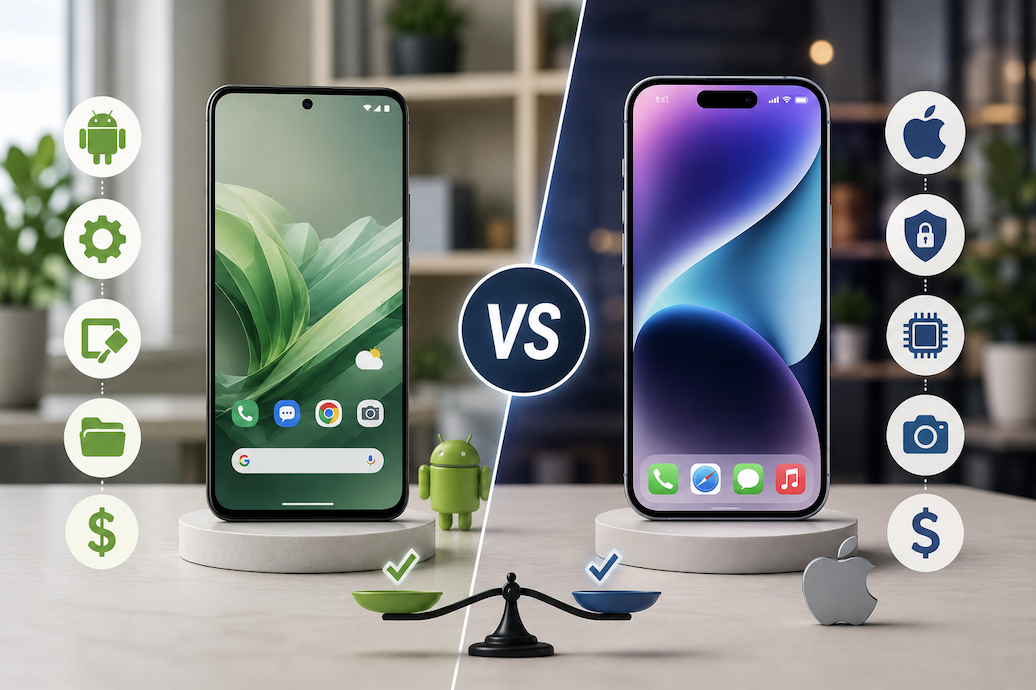
At the most fundamental level, Android and iPhone represent genuinely different approaches to how a mobile operating system should work. iPhone, running Apple’s iOS, prioritizes a tightly controlled, consistent experience across a limited range of hardware, all designed and manufactured by a single company. Android, by contrast, is an open platform used by many different manufacturers, resulting in considerably more hardware variety, price points, and customization options, but also more inconsistency between different devices.
This philosophical difference cascades into nearly every practical comparison point between the two platforms, and understanding it helps explain why certain trade-offs exist in the first place, rather than seeming like arbitrary differences between competing companies.
Comparing Customization and Flexibility
One of the most consistently cited differences involves how much each platform allows you to customize your actual experience, and this is an area where Android generally offers considerably more flexibility than iPhone.
- Android allows changing default apps for core functions like browsers, messaging, and email more freely
- Android supports more extensive home screen customization, including widgets and alternative launcher apps
- iPhone offers a more consistent, curated experience with less variation between individual setup choices
- Android’s flexibility can appeal to users who genuinely want to tailor their experience, while iPhone’s consistency appeals to those who prefer a more streamlined, uniform approach
Neither approach is objectively better, and this genuinely comes down to personal preference regarding how much you value customization flexibility versus a more consistent, simplified experience across your device.
Comparing Hardware Variety and Price Points
Android’s open ecosystem, involving many different manufacturers, creates genuinely significant variety in available hardware, ranging from budget-friendly devices to premium flagships, often at a wider range of price points than iPhone offers.
- Android offers devices across a considerably broader price range, including genuinely capable budget options
- iPhone offers a more limited number of models at any given time, generally at higher average price points
- Android hardware variety means you can find devices with specific features prioritized, like larger batteries or specialized cameras
- iPhone’s more limited hardware lineup simplifies the decision process but offers less granular customization of specifications
This price variety matters considerably for budget-conscious buyers, since genuinely capable Android devices exist at price points where comparable iPhone options simply are not available.
Comparing App Ecosystems and Software Support
Both platforms offer robust app ecosystems with access to the vast majority of popular, mainstream applications, though some genuine differences exist worth understanding, particularly around software update timelines and app availability patterns.
- iPhone historically offers more consistent, longer-term software update support across its device lineup
- Android update timelines vary considerably between manufacturers, with some offering excellent long-term support and others considerably less
- Both platforms offer access to virtually all major, popular applications, with genuinely minimal practical differences for most users
- Certain specialized or niche apps occasionally launch first, or exclusively, on one platform before the other
Software update consistency deserves particular attention, since a device that stops receiving security updates becomes a genuine security liability over time, making this a practically important consideration beyond simply comparing initial purchase specifications.
Comparing Integration With Other Devices and Services
For many people, the practical decision between Android and iPhone increasingly depends less on the phone itself and more on how well it integrates with other devices and services they already use regularly.
- iPhone offers particularly seamless integration within Apple’s broader ecosystem, including laptops, tablets, and wearables
- Android offers strong integration with many services broadly, though this integration is often less tightly unified than Apple’s ecosystem
- Switching costs increase considerably once you have invested in accessories, apps, or services tied to a specific ecosystem
- Consider your existing devices and services when evaluating this factor, since ecosystem lock-in becomes genuinely significant over time
This factor often ends up being more practically decisive than the phone specifications themselves, particularly for people already invested in one ecosystem through other devices like laptops, smartwatches, or tablets.
Comparing Privacy and Security Approaches
Both platforms have made genuine investments in privacy and security features, though their specific approaches and default settings differ in ways worth understanding if privacy is a significant priority for your decision.
- iPhone has generally emphasized privacy as a core marketing and design principle across its ecosystem
- Android has made significant privacy improvements in recent years, though default settings and manufacturer customization can introduce some variation
- Both platforms allow reviewing and adjusting app permissions, though the specific interface and default behavior differ somewhat
- Security update consistency, discussed earlier, also meaningfully affects genuine real-world security over a device’s lifespan
Practical Questions to Help Guide Your Decision
- What is your realistic budget, and does that budget favor one platform’s available options more clearly?
- What other devices and services do you already use regularly that might favor ecosystem consistency?
- How much do you genuinely value customization flexibility versus a simplified, consistent experience?
- Do you have specific software update or long-term support priorities that matter to your decision?
- Are there specific features, like camera capabilities or specialized apps, that are particularly important to you?
How Resale Value Factors Into the Overall Cost Comparison
An often-overlooked factor in the Android versus iPhone comparison involves resale value, since the total real-world cost of owning a phone includes not just the initial purchase price but also what you can reasonably expect to recover when you eventually sell or trade in that device. iPhones have historically maintained
meaningfully stronger resale value compared to most Android devices, sometimes retaining a considerably higher percentage of their original price even after a few years of use.
This resale value gap can meaningfully affect the genuine total cost comparison over the lifespan of device ownership, particularly for people who upgrade their phone every year or two and factor trade-in value into their next purchase. While a flagship Android device might have a lower initial price than a comparable iPhone, the gap in total ownership cost can narrow, or in some cases reverse, once resale value gets factored into the overall calculation across multiple years of ownership.
- iPhones have historically maintained stronger resale value compared to most Android devices
- This resale value gap can meaningfully affect the genuine total cost of ownership over time
- Frequent upgraders who trade in devices regularly should factor this consideration into their decision
- Specific resale value varies by model and market conditions, so researching current trends remains worthwhile
Final Thoughts
Choosing between Android and iPhone genuinely comes down to your personal priorities around customization, budget, existing ecosystem investment, and specific feature preferences, rather than one platform being objectively superior to the other in every respect. Working through your own practical priorities honestly, rather than relying purely on brand loyalty or general reputation, leads to a choice that genuinely fits how you actually use your phone day to day.
Frequently Asked Questions
1. Is one platform genuinely more secure than the other?
Both platforms have made significant security investments, and for most everyday users following basic security practices, either platform provides genuinely strong protection, though software update consistency varies more within Android’s ecosystem depending on the specific manufacturer chosen.
2. Does switching between Android and iPhone cause genuine inconvenience?
Switching does involve some inconvenience, particularly around transferring data, adjusting to a different interface, and potentially losing access to platform-specific apps or features you had grown accustomed to, though both platforms offer tools to ease this transition considerably.
3. Is iPhone always more expensive than Android?
Generally yes, at the high end, though Android’s broader price range means genuinely capable budget and mid-range options exist that do not have a direct iPhone equivalent at similar price points.
4. Which platform offers better camera quality?
Camera quality varies considerably by specific device model on both platforms, with flagship devices from either ecosystem generally offering excellent photography capabilities, making this comparison more about specific model choice than a blanket platform advantage.
5. Should I choose based on what my friends and family use?
This is actually a genuinely reasonable practical consideration, since certain features, like simplified photo and video sharing, work more seamlessly between devices on the same platform, which can meaningfully affect everyday convenience beyond the phone’s individual specifications.