Voice assistants reading your messages aloud, audiobook apps converting written text into narration, and accessibility tools helping visually impaired users access written content all rely on text-to-speech technology, a genuinely sophisticated system that has become remarkably natural-sounding compared to the robotic voices many people remember from earlier decades. Understanding how this technology actually converts written words into spoken audio reveals genuinely interesting engineering behind an increasingly common everyday feature.
What Text-to-Speech Technology Actually Does
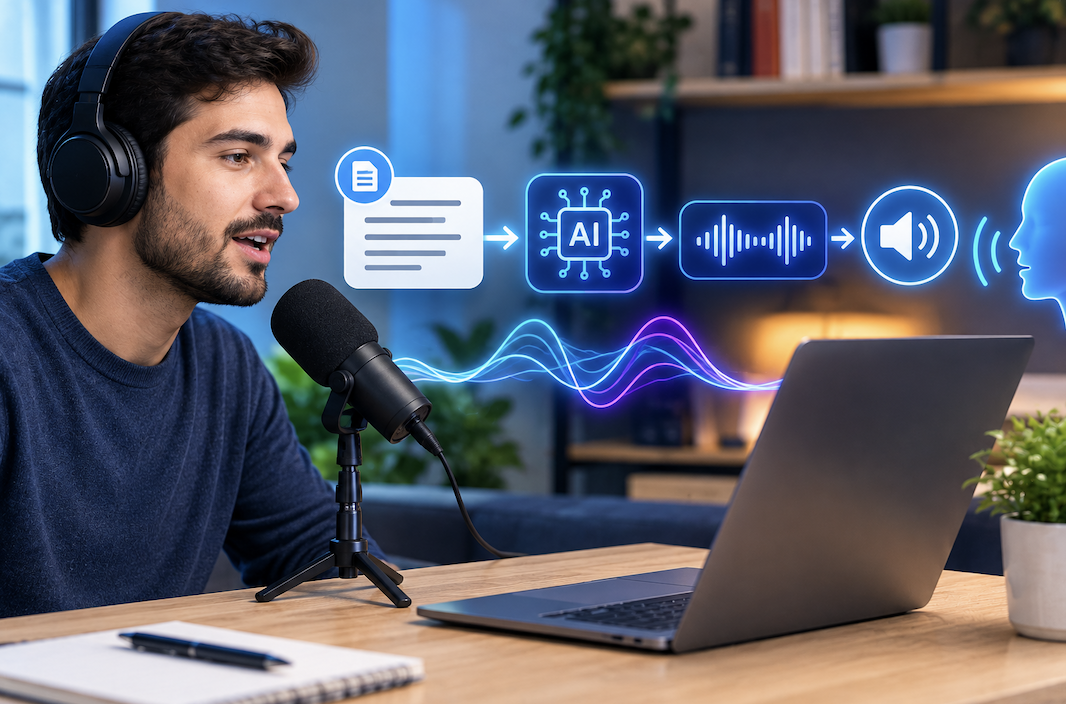
Text-to-speech technology converts written text into spoken audio output, allowing a computer system to essentially “read aloud” any text provided to it. This differs from simply playing back pre-recorded human speech, since text-to-speech systems must genuinely generate speech for text they have never specifically encountered before, requiring considerably more sophisticated technology than simply storing and replaying fixed audio recordings.
Understanding this generative capability genuinely matters, since it means these systems need to handle virtually unlimited possible text combinations, correctly pronouncing words, applying appropriate intonation, and producing genuinely natural-sounding speech patterns, rather than simply retrieving from a limited, predetermined library of pre-recorded phrases.
How Older Text-to-Speech Systems Actually Worked
Understanding the earlier technical approaches to text-to-speech provides useful context for appreciating how significantly this technology has genuinely improved in recent years.
- Earlier systems often used a technique called concatenative synthesis, combining small pre-recorded speech segments
- These segments, often individual sounds or short syllables, would be joined together to form complete words and sentences
- This approach could produce recognizable speech but often sounded genuinely robotic or unnatural
- Transitions between these combined segments frequently created the characteristic choppy, mechanical sound of older systems
This segment-joining approach deserves particular emphasis, since it explains why earlier text-to-speech technology sounded so distinctly artificial, given that joining separately recorded speech fragments together inherently creates audible inconsistencies in tone, pacing, and natural speech flow that genuinely differ from how a human actually produces continuous, naturally flowing speech.
How Modern Text-to-Speech Systems Actually Achieve Natural Sound
Understanding the genuine technical advancement that has allowed modern text-to-speech to sound considerably more natural helps clarify why this technology has improved so dramatically compared to earlier robotic-sounding versions.
- Modern systems increasingly use AI models trained on large amounts of genuine human speech data
- These models learn to generate entirely new speech waveforms rather than combining pre-recorded segments
- This approach allows for considerably more natural intonation, rhythm, and overall speech flow
- The AI model essentially learns the underlying patterns of natural human speech production itself
This waveform generation approach represents a genuinely significant technical advancement, since rather than being constrained to combining existing recorded segments, these AI models can generate entirely novel speech patterns that flow naturally from one word to the next, considerably narrowing the gap between synthesized and genuinely human speech.
How Text-to-Speech Systems Handle Pronunciation Challenges
Understanding how these systems actually determine correct pronunciation, particularly for genuinely ambiguous or unusual words, helps clarify some of the more sophisticated challenges this technology needs to address.
- Systems use pronunciation dictionaries containing correct pronunciations for common words
- Context analysis helps determine correct pronunciation for words that can be pronounced differently depending on meaning
- Unusual names or specialized terminology can present genuine ongoing challenges for accurate pronunciation
- Machine learning approaches increasingly help systems make more genuinely informed pronunciation decisions for unfamiliar text
How These Systems Determine Appropriate Intonation and Emphasis
Understanding how text-to-speech systems actually decide where to place emphasis and how to vary pitch and rhythm throughout a sentence reveals genuinely sophisticated language processing beyond simply converting individual words into sound.
- Systems analyze sentence structure to determine natural places for pauses and emphasis
- Punctuation provides important genuine cues about intended pacing and intonation patterns
- Advanced systems can adjust emphasis based on the apparent meaning or emotional context of specific text
- This analysis happens automatically, without requiring the original text to include explicit formatting instructions
This automatic analysis deserves particular emphasis, since it means these systems need to genuinely infer appropriate speech patterns from written text alone, a task humans accomplish naturally through years of language exposure but that requires considerably sophisticated language processing for an AI system to replicate convincingly.
Common Applications of Text-to-Speech Technology
- Accessibility tools helping visually impaired individuals access written digital content
- Voice assistants reading messages, notifications, or search results aloud
- Audiobook and article narration services converting written content into audio format
- Navigation systems providing spoken directions based on written route information
- Language learning applications demonstrating correct pronunciation of vocabulary
Why Voice Customization Has Become Increasingly Sophisticated
Understanding how modern text-to-speech systems increasingly offer genuine customization options, beyond simply choosing between a limited set of pre-built voices, helps illustrate this technology’s continued advancement.
- Some systems now allow adjusting speech rate, pitch, and other vocal characteristics
- More advanced systems can generate voices with specific accents or speaking styles
- Some technology can even be trained to replicate a specific individual’s genuine voice characteristics
- This customization capability raises both genuinely exciting applications and important ethical considerations worth understanding
Why Real-Time Processing Speed Genuinely Matters for Practical Applications
Understanding why text-to-speech systems need to genuinely balance speech quality against processing speed helps clarify an important practical engineering consideration relevant to how this technology actually gets deployed across different applications.
Applications like voice assistants responding to a spoken question genuinely need text-to-speech generation to happen quickly enough that the resulting delay does not feel awkward or unnatural to the person waiting for a response, meaning these systems often need to balance achieving the most naturally sounding speech possible against the genuine practical requirement of generating that speech quickly enough for real-time conversational use. This trade-off explains why some applications prioritizing absolute maximum speech quality, like audiobook narration where processing time matters less, can sometimes achieve marginally more natural results than applications requiring near-instantaneous response for real-time conversational interaction.
- Real-time applications need text-to-speech generation quickly enough to avoid feeling awkward or delayed
- This creates a genuine trade-off between maximum possible speech quality and generation speed
- Applications without strict real-time requirements can sometimes achieve marginally more natural results
- Understanding this trade-off helps explain quality differences you might notice across different specific applications
Final Thoughts
Text-to-speech technology has evolved from choppy, robotic-sounding concatenated speech segments toward considerably more natural AI-generated speech that genuinely learns patterns from extensive human speech data, enabling increasingly convincing, useful applications across accessibility, entertainment, and everyday digital interaction. Understanding this technical evolution helps explain both the impressive current capabilities of this now-common technology and the genuine ongoing challenges researchers continue working to address.
Frequently Asked Questions
1. Why do some text-to-speech voices still sound noticeably more robotic than others?
This typically reflects differences in the underlying technology, with systems using older concatenative approaches or less sophisticated AI models generally sounding more mechanical compared to systems using more advanced, modern speech generation techniques trained on extensive natural speech data.
2. Can text-to-speech technology genuinely read any language?
Text-to-speech capability varies by language, with more widely spoken languages generally having more sophisticated, natural-sounding options available due to greater available training data and development investment, while less common languages may have more limited options.
3. How does text-to-speech technology handle numbers, abbreviations, or symbols?
These systems include specific processing rules for converting numbers, abbreviations, and symbols into their appropriate spoken form, though genuinely ambiguous cases, like whether a specific abbreviation should be spelled out or spoken as a word, can occasionally present continued challenges.
4. Is it possible for text-to-speech technology to convey genuine emotion in speech?
More advanced modern systems increasingly can convey some degree of emotional tone, adjusting pace and intonation to sound more expressive, though achieving genuinely convincing emotional nuance comparable to human speech remains an ongoing area of active development.
5. Are there genuine privacy or ethical concerns associated with advanced text-to-speech technology?
Yes, genuinely, particularly regarding voice cloning technology that can replicate a specific individual’s voice, raising concerns about potential misuse for creating convincing but unauthorized audio content, which has prompted ongoing discussion about appropriate safeguards and ethical guidelines.