
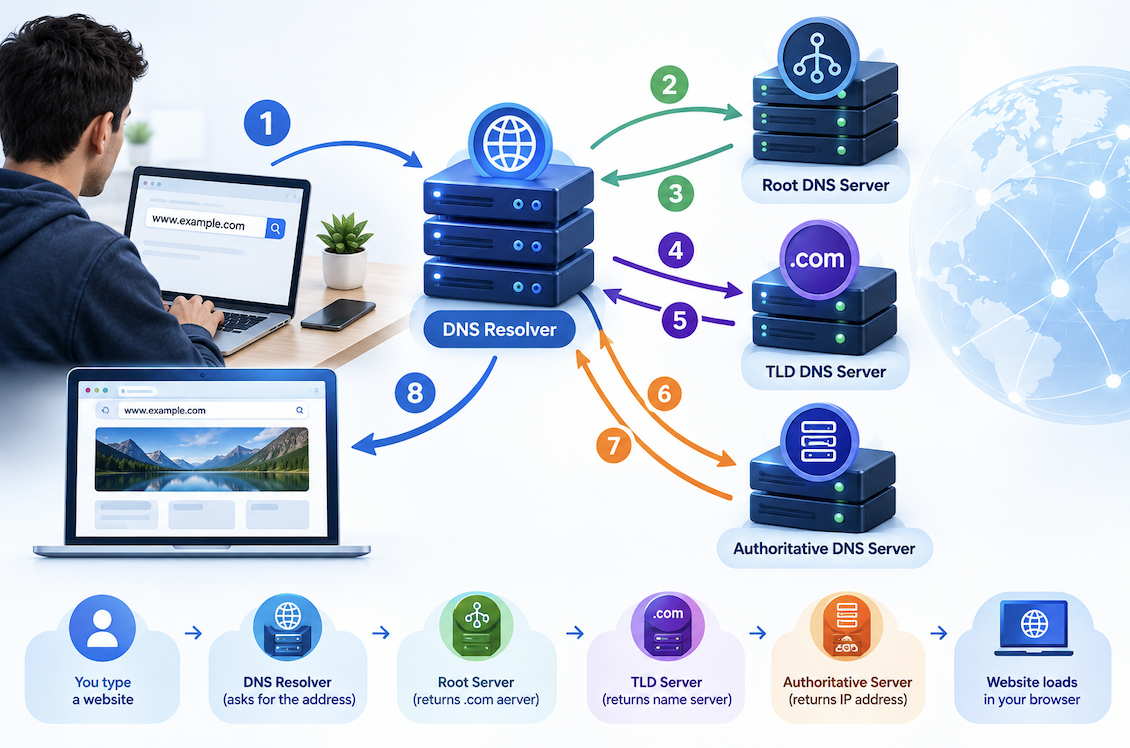
Typing a website name into your browser and having the correct page load within moments represents a genuinely sophisticated behind-the-scenes process most internet users never consciously consider. This process relies on DNS servers, and understanding how they actually work reveals an essential, foundational piece of internet infrastructure that makes the web genuinely usable for everyday people rather than requiring everyone to memorize long strings of numbers.
What a DNS Server Actually Does
A DNS server, short for Domain Name System server, translates human-readable website names into the numerical IP addresses that computers actually use to locate and communicate with specific servers across the internet. This translation function allows people to type memorable website names rather than needing to remember and enter the actual numerical address associated with every website they want to visit.
Understanding this translation function genuinely matters, since computers fundamentally communicate using these numerical addresses, meaning that without DNS servers performing this translation, using the internet would require memorizing and entering long numerical sequences for every single website, a genuinely impractical requirement for widespread, everyday internet use.
How the DNS Resolution Process Actually Works
Understanding the genuine, step-by-step process that happens when you type a website address helps clarify the sophisticated infrastructure operating behind this seemingly instantaneous, simple action.
- Your device sends a request asking for the numerical IP address associated with the website name you entered
- This request travels to a DNS server specifically configured to handle this translation
- The DNS server looks up the corresponding IP address for that specific website name
- This IP address gets returned to your device, which then uses it to actually connect to the correct website
This lookup process deserves particular emphasis, since it typically happens within a genuinely small fraction of a second, involving your device consulting what is effectively a distributed, massive directory system to find the correct numerical address before your browser can actually begin loading the website’s genuine content.
Understanding the Distributed Nature of the DNS System
Understanding that DNS resolution genuinely relies on multiple different types of servers working together, rather than a single centralized directory, helps clarify how this system manages to handle the internet’s enormous, ongoing address lookup demands.
- Root servers provide the starting point for locating more specific DNS information
- Top-level domain servers handle information for specific domain extensions
- Authoritative servers hold the genuinely specific address information for particular websites
- This distributed structure allows the DNS system to handle enormous global lookup volume efficiently
This distributed structure deserves particular emphasis, since a single, centralized system attempting to handle every DNS lookup for the entire internet would represent a genuinely impractical bottleneck and single point of failure, while this distributed approach allows the overall system to handle the internet’s massive, continuous volume of address lookups reliably and efficiently across numerous independent, coordinated servers.
Why DNS Caching Genuinely Speeds Up Your Everyday Browsing
Understanding how DNS caching, storing previously looked-up address information temporarily, genuinely improves the speed of your everyday internet browsing helps clarify an important efficiency mechanism built into this overall system.
- Your device and various intermediate systems store recently looked-up DNS information temporarily
- This cached information allows skipping the full lookup process for genuinely recently visited websites
- This caching happens at multiple levels, including your own device and your internet service provider
- This mechanism genuinely speeds up repeat visits to websites you access regularly
Understanding What Happens When DNS Servers Experience Problems
Understanding the genuine practical consequences when DNS servers experience issues helps clarify why this seemingly invisible infrastructure component can significantly affect your overall internet experience when problems occur.
- If a DNS server cannot properly resolve a website address, you may experience connection errors
- This can happen even when the actual destination website itself is functioning normally
- Switching to a different DNS server can sometimes resolve these specific connectivity issues
- Understanding this distinction helps troubleshoot situations where websites seem unreachable despite working internet connectivity
This troubleshooting distinction deserves particular emphasis, since experiencing difficulty reaching a specific website does not always indicate a problem with that website itself, sometimes, instead, it reflects a genuine issue specifically with the DNS resolution process, making this an important troubleshooting consideration when websites seem unexpectedly unreachable despite your overall internet connection functioning normally otherwise.
Why You Can Actually Choose Different DNS Servers
Understanding that internet users genuinely have the option to use different DNS servers beyond whatever their internet provider automatically assigns helps clarify a practical customization option available to interested users.
- Various organizations offer alternative DNS servers beyond your internet provider’s default option
- Some alternative DNS servers genuinely emphasize faster resolution speed or enhanced privacy features
- Changing your device’s DNS server settings represents a relatively straightforward technical adjustment
- Understanding this option helps users interested in potentially improving speed or privacy make informed choices
Practical Situations Where Understanding DNS Genuinely Helps
- Troubleshooting situations where specific websites seem unreachable despite working internet connectivity
- Understanding why switching DNS servers sometimes resolves certain connectivity issues
- Appreciating the genuine infrastructure complexity underlying seemingly simple everyday web browsing
- Making informed decisions about whether alternative DNS server options might benefit your specific situation
Why DNS Genuinely Represents a Common Target for Certain Cyberattacks
Understanding why this foundational internet infrastructure component sometimes becomes a genuine target for malicious activity helps clarify an important security dimension of this seemingly purely technical, background system.
Attackers sometimes attempt to manipulate DNS resolution specifically to redirect users toward malicious websites without their knowledge, exploiting the genuine trust users place in typing a familiar website address and expecting to reach the genuine, legitimate destination. This is precisely why reputable DNS providers implement various security measures specifically designed to protect against this kind of manipulation, and why using established, trustworthy DNS services matters beyond simply speed considerations alone, extending into genuine security territory that affects your overall safe internet browsing experience.
- Attackers sometimes attempt to manipulate DNS resolution to redirect users toward malicious websites
- This exploits the genuine trust users place in typing familiar addresses and reaching legitimate destinations
- Reputable DNS providers implement security measures specifically designed to protect against this manipulation
- Choosing trustworthy DNS services matters for genuine security, not simply resolution speed considerations alone
Final Thoughts
DNS servers perform the genuinely essential translation between human-readable website names and the numerical addresses computers actually use to locate and connect with websites, relying on a distributed system of servers working together to handle the internet’s enormous, continuous lookup demands efficiently.
Understanding this foundational infrastructure helps demystify how seemingly instantaneous website loading actually happens, while providing useful context for troubleshooting certain connectivity issues and understanding available customization options.
Frequently Asked Questions
1. Do I need to understand DNS servers for basic, everyday internet use?
Generally no, since this system works automatically without requiring user awareness for typical internet use, though understanding the basic concept becomes genuinely useful for troubleshooting certain connectivity issues or considering alternative DNS server options.
2. Can changing my DNS server genuinely improve my internet browsing speed?
In some cases, yes, since certain alternative DNS servers may offer genuinely faster resolution times compared to your default provider’s DNS servers, though the actual improvement varies depending on your specific location and internet service provider’s existing DNS performance.
3. Why do websites sometimes work on one device but not another on the same network?
This can occasionally reflect different DNS server configurations between devices, though it might also stem from various other genuine causes, making DNS configuration just one of several potential factors worth considering when troubleshooting this kind of inconsistent connectivity issue.
4. Is using an alternative DNS server genuinely safe compared to my default provider’s option?
Reputable alternative DNS providers are generally considered safe, though it remains worth researching a specific provider’s genuine reputation and privacy practices before switching, similar to the consideration you would apply when evaluating any other service handling your internet traffic.
5. How quickly does DNS information genuinely update if a website changes its actual server address?
This varies based on caching settings, though DNS information is not always instantaneous, sometimes taking anywhere from minutes to potentially longer to genuinely propagate and update across the various distributed servers and caches throughout the broader DNS system.