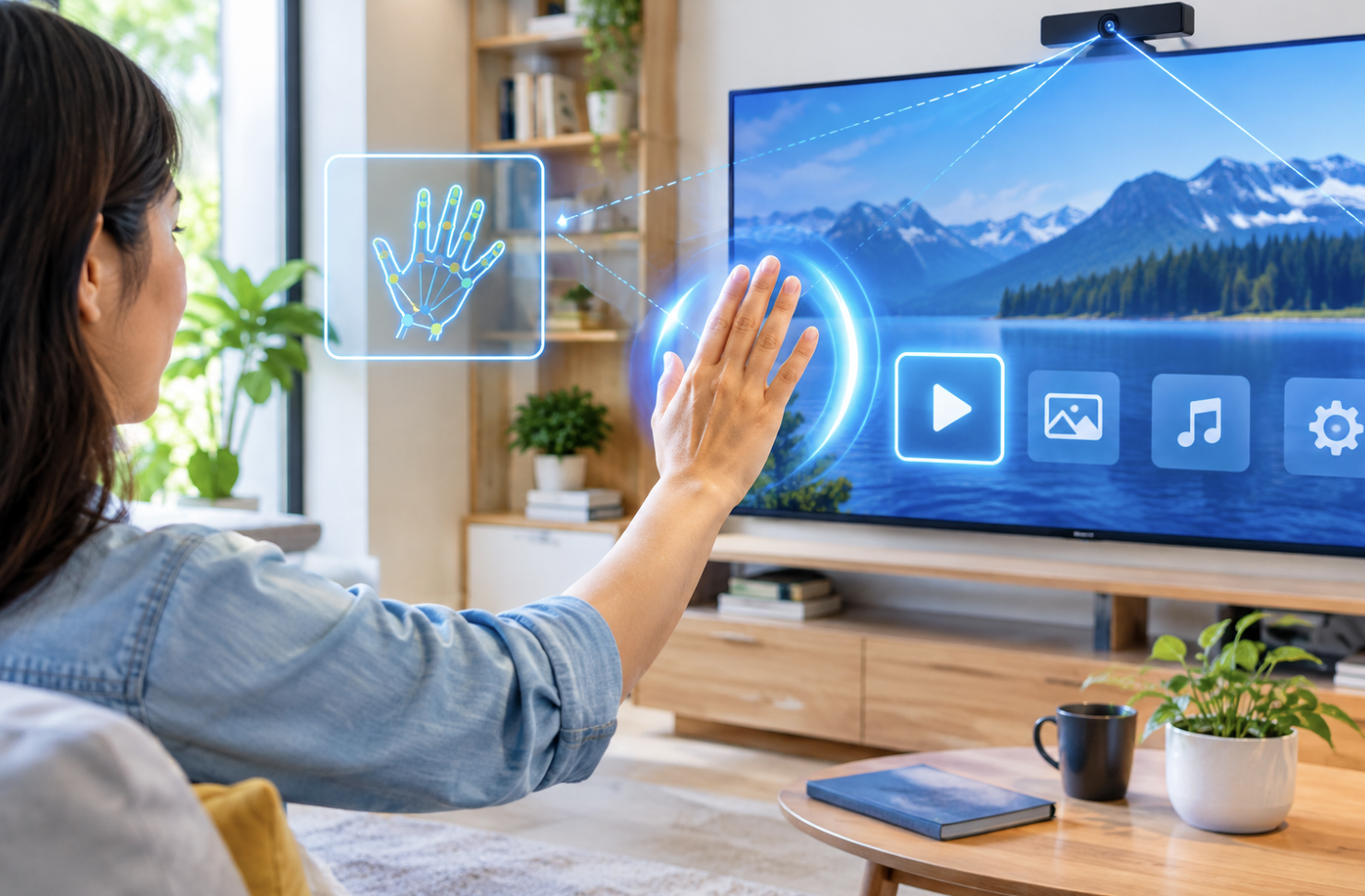
Waving your hand to skip a song or swiping through the air to navigate a menu without physically touching any device represents genuinely impressive technology that has moved from science fiction concept toward increasingly practical, real-world application. Understanding how gesture control technology actually detects and interprets your movements reveals fascinating sensor technology and processing sophistication behind this increasingly common interaction method.
What Gesture Control Technology Actually Does
Gesture control technology allows devices to detect and respond to specific hand or body movements, enabling users to interact with electronics without requiring physical touch or traditional input devices like remote controls or keyboards. This technology interprets your genuine physical movements as specific commands, translating natural human gestures into meaningful device inputs.
Understanding this movement interpretation function genuinely matters, since it represents a fundamentally different interaction paradigm compared to traditional touch or button-based controls, requiring the technology to actually understand and correctly interpret the genuine intent behind your specific physical movements rather than simply detecting a straightforward physical contact event.
How Gesture Control Systems Actually Detect Movement
Understanding the genuine sensor technologies gesture control systems typically use to actually capture your movements helps clarify the technical foundation underlying this increasingly common interaction method.
- Camera-based systems use visual sensors to actually observe and analyze your movements
- Some systems use specialized sensors specifically designed to detect motion through methods beyond standard cameras
- Infrared sensors can detect movement even in low-light conditions where standard cameras might struggle
- Different gesture control implementations may combine multiple sensor types for genuinely more reliable detection
This multi-sensor approach deserves particular emphasis, since combining different sensor types can genuinely improve reliability compared to relying on a single detection method alone, since each specific sensor type carries its own particular strengths and limitations, meaning thoughtful combination can help compensate for scenarios where any single sensor type alone might struggle to reliably detect movement.
How Systems Actually Process Raw Movement Data Into Recognized Gestures
Understanding the genuine processing steps between initially detecting raw movement and actually recognizing this as a specific, meaningful gesture command reveals considerable technical sophistication beyond simple motion detection alone.
- Raw sensor data gets analyzed to identify genuine, distinct movement patterns
- This analysis compares detected movement against known patterns associated with specific recognized gestures
- The system determines whether detected movement genuinely matches a recognized gesture with sufficient confidence
- Successfully recognized gestures then trigger their associated, corresponding device command or action
This pattern matching process deserves particular emphasis, since gesture recognition systems need genuinely sophisticated processing to distinguish between an intentional, specific gesture and simply incidental movement that happens to occur within the sensor’s detection range, requiring the underlying technology to reliably differentiate between genuinely meaningful, intentional gestures and unrelated background movement that should not actually trigger any device response.
Why Distinguishing Intentional Gestures From Incidental Movement Proves Genuinely Challenging
Understanding the specific technical challenge gesture control systems face in reliably distinguishing genuine, intentional gestures from unrelated background movement helps clarify why this technology, despite genuine advancement, still sometimes exhibits imperfect accuracy.
- Systems need to avoid triggering unintended actions from genuinely incidental, non-gesture movement
- This requires establishing clear technical criteria for what actually constitutes a recognized, intentional gesture
- Overly sensitive detection can result in frustrating false triggers from unrelated movement
- Overly conservative detection can result in genuine gestures sometimes not being properly recognized
Common Applications Where Gesture Control Has Found Genuine Practical Use
Understanding the range of genuine, practical applications where gesture control technology has found meaningful real-world adoption helps illustrate this technology’s broader significance beyond simply an interesting technical novelty.
- Smart televisions and entertainment systems allowing basic navigation without a physical remote control
- Automotive interfaces allowing drivers to control certain functions without removing hands from the steering wheel
- Gaming systems incorporating gesture-based interaction for certain types of gameplay
- Accessibility applications helping individuals with certain physical limitations interact with technology more easily
Why Gesture Control Technology Continues Genuinely Improving
Understanding the ongoing technical advancement occurring within gesture control technology helps clarify why this interaction method continues becoming increasingly reliable and practically useful over time.
- Improved sensor technology continues providing more accurate, detailed movement detection capability
- More sophisticated processing algorithms continue improving genuine gesture recognition accuracy
- Expanded training data helps systems better distinguish intentional gestures from incidental movement
- This continued advancement makes gesture control increasingly practical for genuinely everyday use cases
Why Gesture Control in Automotive Applications Faces Genuinely Unique Considerations
Understanding why implementing gesture control specifically within vehicles presents genuinely distinct challenges beyond those affecting stationary devices helps illustrate how this technology needs thoughtful adaptation for particularly demanding, safety-critical use cases.
Automotive gesture control systems need to genuinely account for a moving vehicle’s vibration, varying lighting conditions from changing daylight and headlights, and the critical safety requirement that the system reliably avoids misinterpreting normal driving movements as unintended gesture commands.
This combination of challenges means automotive gesture control implementations typically require genuinely more rigorous testing and refinement compared to gesture control designed for stationary environments like a living room, reflecting the considerably higher safety stakes involved when a driver’s attention and vehicle control genuinely matter so significantly.
- Automotive gesture control faces genuinely unique challenges from vehicle vibration and varying lighting conditions
- These systems must reliably avoid misinterpreting normal driving movements as unintended gesture commands
- This requires considerably more rigorous testing compared to gesture control for stationary environments
- Understanding this reflects the genuinely higher safety stakes involved in this particular application context
Final Thoughts
Gesture control technology combines sophisticated sensors with genuinely advanced processing to detect and interpret human movements as meaningful device commands, requiring careful technical work to reliably distinguish intentional gestures from incidental movement. Understanding this underlying technology helps appreciate both the genuine sophistication behind this increasingly common interaction method and the ongoing technical advancement continuing to make gesture control more reliable and practically useful across various everyday applications.
As sensor technology and processing algorithms continue maturing, gesture control will likely continue expanding into new practical applications beyond its current use cases, gradually becoming an increasingly natural, seamlessly integrated part of how we interact with the growing range of technology in our everyday lives.
Frequently Asked Questions
1. Does gesture control technology genuinely work reliably in all lighting conditions?
This varies by specific implementation, since camera-based systems can sometimes struggle in low-light conditions, while systems incorporating infrared or other specialized sensors often maintain more consistent, reliable performance across varying lighting conditions.
2. Can gesture control technology genuinely be fooled by unintentional movements?
Yes, occasionally, though well-designed systems work to minimize this through careful pattern recognition specifically designed to distinguish intentional gestures from incidental movement, though achieving perfect accuracy in every situation remains a genuinely ongoing technical challenge.
3. Is gesture control technology genuinely accessible for people with certain physical limitations?
Yes, genuinely, gesture control can provide valuable accessibility benefits for individuals who may find traditional touch or button-based interfaces challenging, though the specific accessibility value depends on an individual’s particular physical capabilities and the specific gesture control implementation involved.
4. Do all gesture control systems genuinely recognize the same specific set of gestures?
No, different devices and applications often support genuinely different specific gesture sets, meaning gestures recognized by one particular device or application may not necessarily work the same way, or at all, with a different gesture control system.
5. Will gesture control technology eventually genuinely replace traditional touch and button interfaces entirely?
This seems unlikely in the foreseeable future, since gesture control offers genuine advantages for specific situations and use cases, while traditional interfaces continue providing reliable, precise control well suited to many other everyday interaction needs.