A traveler watches the luggage carousel go around three times before finally accepting their bag simply isn’t on this flight. With a tracker tucked inside, at least they’d know exactly where it actually ended up, rather than filling out a claim form with nothing but a description and a prayer. Here’s how these devices actually work, and whether they’re worth the peace of mind.
What a Luggage Tracker Actually Does
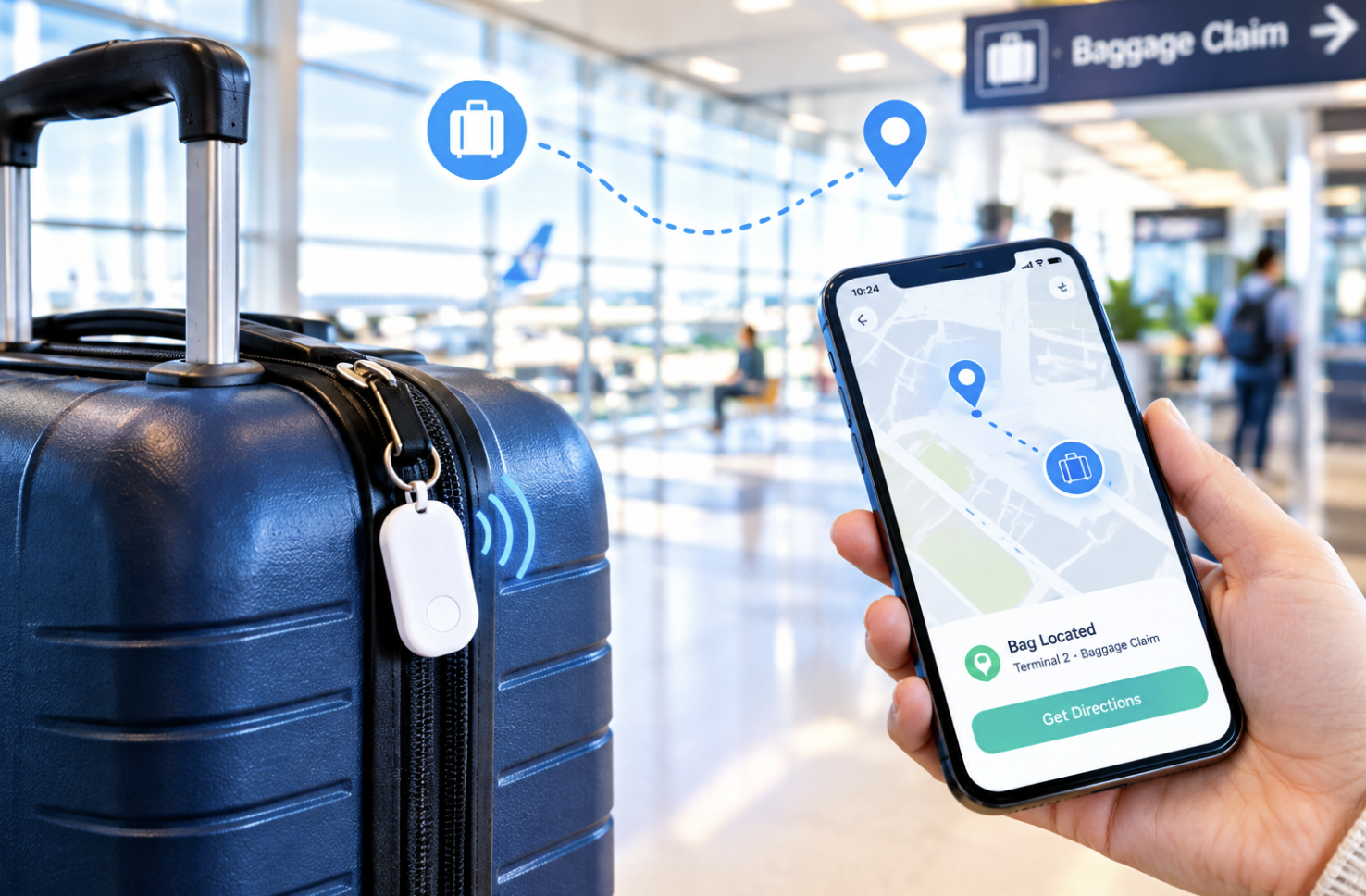
A luggage tracker is a small device placed inside or attached to your bag, using wireless technology to let you monitor its location through a smartphone app. Traditionally, once a bag was checked, travelers had zero independent insight into where it actually was, they simply had to trust the airline’s process, exactly like the traveler watching that empty carousel.
The Technology Behind Luggage Trackers
- Bluetooth-based trackers detect location when in range of compatible devices
- GPS-based trackers offer more precise, independent location tracking
- Some trackers use crowdsourced networks, leveraging other users’ phones to extend range
- Each approach comes with different trade-offs worth understanding before buying
Crowdsourced networks are the clever part here, your tracker can be detected and reported even when you’re nowhere nearby, simply by passing within range of any other participating user’s phone.
Bluetooth Versus GPS-Based Trackers
Bluetooth trackers offer longer battery life but need proximity to a compatible devices to report location. GPS tracking provides more independent, precise data but typically needs more frequent charging and sometimes a subscription. In areas with little or no networking coverage, a bag might have a difficult time communicating effectively via Bluetooth. This is why GPS is pricier and complex.
How Trackers Help During Actual Lost Luggage Situations
Concrete location data gives airlines something more useful than a generic “my bag hasn’t arrived” report. Some travelers have used tracker data to actively speed up recovery, since staff have something specific to search for rather than starting from nothing considerably better than the traveler above simply filling out a claim form and hoping.
Airline Policies Regarding Luggage Trackers
Most airlines permit trackers in checked baggage, though certain battery specifications can trigger restrictions. Checking your specific airline’s current policy before travel avoids any surprises at the gate.
Choosing and Using a Luggage Tracker Effectively
- Match Bluetooth versus GPS to your typical travel patterns and destinations
- Charge the tracker before every trip, a dead tracker is useless
- Place it somewhere secure in your bag where it won’t fall out or get crushed
- Get familiar with the companion app before you actually need it
Real Limitations Luggage Trackers Still Face
Trackers can’t prevent luggage from getting lost or delayed in the first place. Some technologies offer limited precision in certain locations, and battery limits mean a tracker may eventually stop reporting during an extended delay.
What Happens to Tracker Data Once a Bag Is Actually Found
A less-discussed but useful detail involves what a tracker’s location history actually shows once a lost bag is finally recovered. Reviewing the recorded path can sometimes reveal exactly where in the handling process the bag went astray, misrouted at a connecting airport, sent to the wrong carousel, or simply delayed at a specific facility, information that’s useful for filing a more precise complaint or claim with the airline afterward, rather than simply accepting a vague explanation.
Why Trackers Matter More on Connecting Flights Than Direct Ones
Statistically, the vast majority of mishandled luggage incidents occur during connections, where a bag has to be physically transferred between flights within a limited window, rather than on direct flights where the bag never leaves the same aircraft’s cargo hold. This is worth knowing when deciding whether a tracker is worth the investment for a specific trip, the peace of mind matters proportionally more for an itinerary with one or more connections than for a simple, direct flight where mishandling risk is considerably lower to begin with.
Frequent travelers who mix both direct and connecting itineraries sometimes make a practical compromise, reserving their tracker specifically for trips involving connections rather than using it on every single flight regardless of itinerary complexity.
Why Placement Within the Bag Affects Reliability
Where exactly a tracker sits inside a packed bag can meaningfully affect how reliably it reports its location, since metal objects and densely packed items can interfere with the wireless signal a tracker depends on to actually communicate. Burying a tracker beneath a laptop, several books, or other dense items can noticeably weaken its signal compared to placing it somewhere with a more direct, unobstructed path to the outside of the bag.
A simple habit, placing the tracker in an outer pocket or nearer the top of the bag’s contents rather than buried at the bottom beneath everything else, can measurably improve reporting reliability without costing anything extra or requiring any additional equipment.
Final Thoughts
Luggage trackers give travelers real visibility into their bag’s location using Bluetooth or GPS technology, turning a stressful, information-free wait into something more actionable. For anyone who’s ever watched an empty carousel spin one time too many, that visibility alone is worth the small investment.
Frequently Asked Questions
1. Do luggage trackers work internationally?
It depends on the technology. Crowdsourced Bluetooth networks generally work wherever there’s enough device coverage; GPS trackers may involve roaming costs or coverage gaps.
2. Can trackers be detected or removed by someone else?
They’re designed to be discreet but not undetectable, this is uncommon in practice, but not impossible.
3. How long do tracker batteries last?
Bluetooth trackers can run for months on a charge; GPS trackers needing active updates typically need recharging far more often.
4. Are trackers effective at actually preventing lost luggage?
No, they don’t prevent loss, but they make recovery considerably easier once it happens.
5. Do airlines use tracker data themselves during their search process?
Not directly. Travelers generally need to share their own tracker’s location info with airline staff manually.
6. Is a luggage tracker worth it for occasional travelers?
Many find the peace of mind worthwhile, particularly for international trips or itineraries with multiple connections where mishandling risk goes up.