
A video circulated briefly last year showing a well-known executive announcing a product recall that never happened, convincing enough that a handful of news outlets nearly reported on it before the company issued a denial. The video was fabricated entirely, generated by software trained to mimic the executive’s face and voice from publicly available footage. It took security researchers less than a day to prove it fake, but a day was long enough to move markets and spread across social platforms faster than the correction ever could.
Why Deepfakes Have Become Harder to Spot
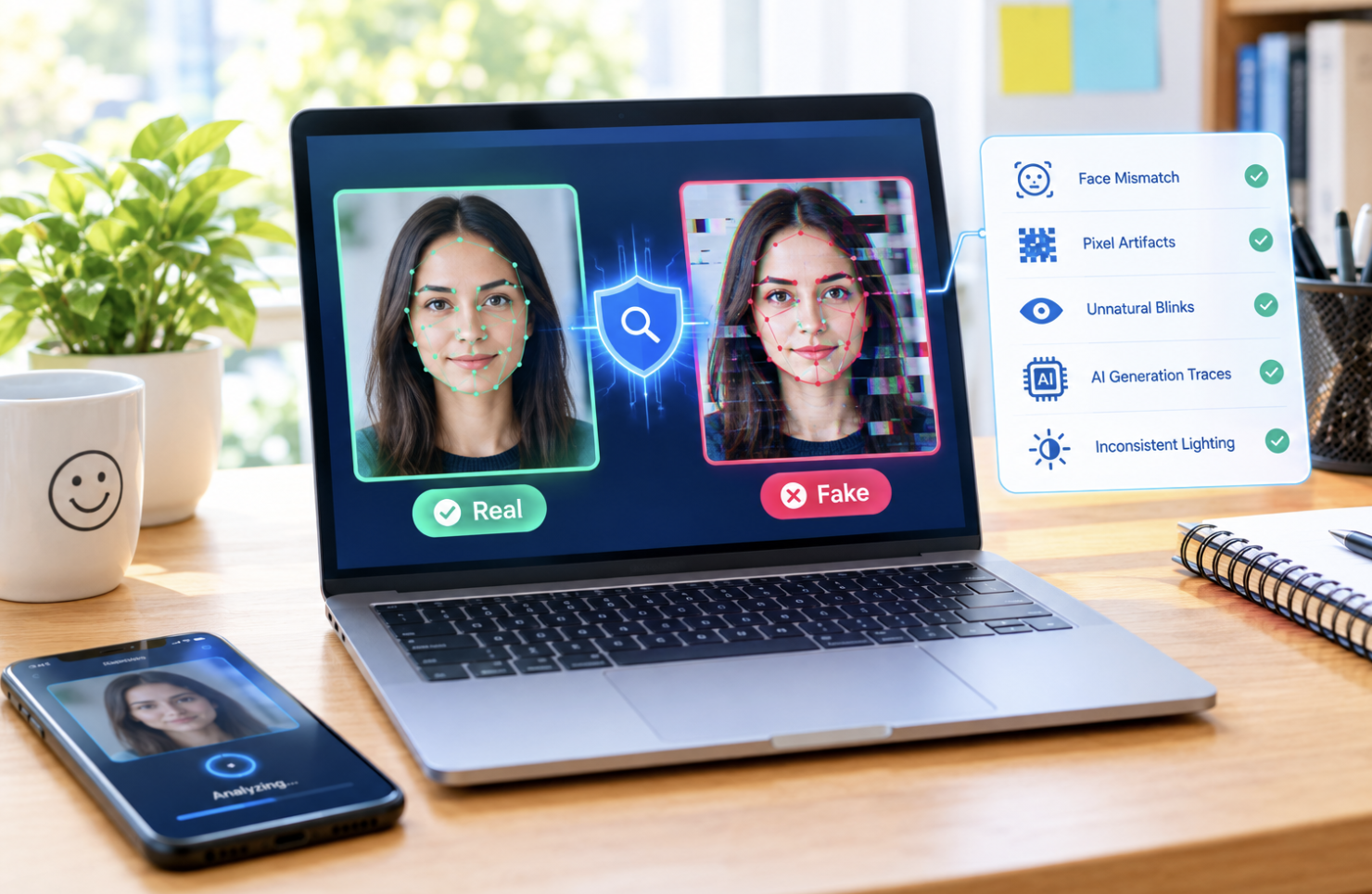
Early deepfake technology produced videos with obvious tells, flickering edges, unnatural blinking, mismatched lighting, that a careful viewer could often catch without specialized tools. Newer generation techniques have closed most of these gaps, trained on larger datasets and refined through adversarial processes where one system generates fakes while another tries to catch them, pushing both sides toward increasingly convincing results. This arms-race dynamic is central to why deepfake detection has become a continuously moving target rather than a problem solved once and left alone.
The Core Technical Approaches to Detection
Detection systems generally rely on identifying subtle artifacts or inconsistencies that generation techniques leave behind, even when those artifacts aren’t visible to an unaided human eye.
- Analyzing inconsistencies in lighting, shadows, and reflections that don’t match the physics of a real scene
- Detecting unnatural patterns in blood flow visible in skin tone that real faces exhibit but generated ones often miss
- Identifying compression artifacts and metadata inconsistencies left behind during the generation and editing process
- Examining audio-visual synchronization, since generated speech and lip movement sometimes drift subtly out of alignment
Each of these techniques catches a different category of flaw, which is why most serious detection systems combine several approaches rather than relying on a single signal that a sufficiently advanced generation technique might eventually learn to avoid.
Why No Detection Method Is Fully Reliable Yet
Every detection technique developed so far has eventually been at least partially undermined by improved generation methods specifically designed to avoid the exact artifacts that technique was built to catch.
- Detection models trained on one generation technique often perform poorly against a newer, different generation method
- Publicly available detection research inadvertently helps deepfake creators understand exactly what to avoid
- The most convincing modern fakes are increasingly difficult to distinguish from real footage even under expert frame-by-frame analysis
- Detection accuracy tends to degrade over time as generation technology improves faster than detection research can keep pace
This ongoing cycle explains why deepfake detection is better understood as a continuous defensive effort rather than a problem with a final, permanent solution, similar to how spam filtering and malware detection have remained active fields for decades rather than being solved once definitively.
How Platforms Are Building Detection Into Their Systems
Major social media and video platforms have invested in detection infrastructure operating at the scale required to screen enormous volumes of daily uploads.
- Automated screening systems flag suspicious content for human review before or shortly after publication
- Some platforms partner with academic and industry research groups specifically focused on detection technology
- Content labeling systems mark identified synthetic media, though labeling policies and consistency vary between platforms
- Rapid response teams handle high-profile or viral deepfake incidents that automated systems miss or flag too slowly
This platform-level investment matters because individual users generally lack the tools or expertise to reliably identify sophisticated fakes on their own, making platform-side detection infrastructure the primary line of defense for most people encountering manipulated media in their daily feeds.
The Role of Content Provenance and Authentication
Rather than only trying to detect fakes after the fact, an alternative approach focuses on verifying the authenticity of real content from the moment it’s created, providing a positive signal rather than relying solely on catching fabrications.
- Cryptographic signing at the point of capture can verify a photo or video hasn’t been altered since it was recorded
- Industry coalitions have developed shared technical standards for embedding this kind of verifiable authenticity information
- This approach requires adoption by camera and software manufacturers to become broadly effective across most captured media
- Provenance systems don’t prevent deepfakes from being created, but they help distinguish verified authentic content from unverified material
This authentication approach and detection technology work as complementary strategies rather than competing solutions, since even a mature provenance system would still need detection tools to handle the enormous volume of already-existing content that was never signed at the point of capture.
Real-World Consequences When Detection Fails
The stakes of deepfake detection failing extend well beyond embarrassment or confusion, touching areas with serious real-world consequences.
- Financial markets have reacted to fabricated executive statements before corrections could catch up with the initial spread
- Political deepfakes have raised concerns about election interference and public trust in footage of candidates
- Fabricated video and audio have been used in targeted scams impersonating family members or company executives
- Legal systems have begun grappling with how to handle deepfakes as potential evidence or evidence-tampering tools
These consequences explain why deepfake detection has moved from a niche academic research topic into a priority for national security agencies, financial regulators, and major technology platforms simultaneously, each facing a distinct version of the same underlying problem.
What Individuals Can Do to Reduce Their Own Risk
While platform-level detection remains the primary defense, individuals can take some practical steps to reduce their vulnerability to being fooled or targeted.
- Verifying surprising or urgent video content through a second, independent source before acting on it or sharing it further
- Being especially cautious of urgent financial requests received via video or voice call, a common deepfake scam vector
- Checking whether a platform has labeled content as synthetic or AI-generated before treating it as authentic
- Discussing deepfake risks directly with older or less tech-familiar family members, who are disproportionately targeted by voice-cloning scams
This last point deserves particular emphasis, since voice-cloning scams targeting grandparents and other vulnerable family members have grown more sophisticated, often using just a few seconds of publicly available audio to generate a convincing cloned voice for a fabricated emergency call.
How News Organizations Verify Suspicious Footage
Newsrooms have developed their own verification workflows specifically to catch manipulated video and audio before it reaches publication, treating this as a core part of modern fact-checking rather than a specialized side task.
- Cross-referencing suspicious footage against other independent camera angles or witness accounts of the same event
- Contacting the person depicted directly, when possible, to confirm or deny the authenticity of circulating footage
- Using specialized forensic tools that check for the same technical artifacts detection researchers have identified
- Waiting for corroboration from multiple independent sources before reporting on unverified viral footage
This verification process takes time that viral spread on social media does not wait for, which is part of why deliberately fabricated content can cause real damage even when it’s eventually debunked within a day or two of appearing.
Legal and Policy Responses Beyond Platform Moderation
Governments have begun exploring legal frameworks addressing deepfakes beyond simply asking platforms to moderate them, recognizing that platform-level enforcement alone has not fully addressed the underlying harm.
- Some jurisdictions have introduced specific criminal penalties for creating or distributing deepfakes intended to deceive or harm
- Election-specific laws in several regions now address synthetic media depicting candidates close to voting dates
- Civil legal remedies have expanded in some areas, giving victims of harmful deepfakes clearer paths to sue for damages
- International cooperation on this issue remains limited, complicating enforcement when creators operate across borders
These legal developments are still relatively new and untested at scale, meaning their practical effectiveness against a well-resourced or anonymous creator remains an open question that courts and legislators continue to work through.
How Insurance Companies Are Responding to Deepfake Fraud Risk
The insurance industry has started treating deepfake-enabled fraud as a distinct risk category, adjusting both policies and claims investigation processes in response.
- Some insurers now offer specific coverage addressing financial losses tied to voice-cloning or video-based impersonation scams
- Claims investigators increasingly receive training on recognizing signs of synthetic media used to support fraudulent claims
- Insurers have begun collaborating with technology companies on shared detection tools rather than each building separate systems
- Premium pricing for certain fraud-related coverage has started reflecting this emerging risk category explicitly
This industry-level response reflects how deepfake technology has moved from a purely reputational or political concern into a concrete financial risk that insurers, banks, and businesses now have to actively price and manage.
The Growing Market for Deepfake Detection as a Service
A distinct commercial market has emerged around deepfake detection, with companies offering detection tools as a paid service to businesses, media organizations, and platforms that need this capability but lack the resources to build it internally.
- Detection-as-a-service providers offer API access that other companies can integrate directly into their own content review pipelines
- Pricing models vary from per-scan fees to broader subscription access covering a set volume of content review
- Competition among these providers has driven rapid improvement in detection accuracy over a relatively short period
- Some providers specialize in specific media types, such as voice authentication, rather than offering general-purpose detection
This commercial ecosystem has made detection capability accessible to smaller organizations that could never have justified building comparable technology internally, spreading defensive capability more broadly across the industry than would otherwise have been possible.
How Financial Institutions Are Building Deepfake Defenses Into Verification
Banks and financial institutions face particular exposure to deepfake-enabled fraud, since voice and video verification have historically been treated as reliable identity checks that newer generation technology increasingly undermines.
- Some institutions have moved away from voice-only verification toward multi-factor approaches less vulnerable to voice cloning
- Live video verification calls increasingly include prompts designed specifically to catch signs of real-time deepfake manipulation
- Fraud detection teams have begun training specifically on recognizing synthetic media used in account takeover attempts
- Industry groups have started sharing threat intelligence specifically focused on deepfake-enabled financial fraud patterns
This shift reflects a broader recognition across the financial sector that verification methods considered secure for decades now require reassessment given how convincingly synthetic media can imitate a real person’s voice or appearance.
How Journalists Are Adapting Their Own Verification Standards
Newsroom verification standards have shifted noticeably as deepfake technology has matured, with many outlets now treating unverified video and audio with a level of caution once reserved mainly for anonymous written tips.
- Some major outlets have published explicit internal guidelines specifically addressing suspected synthetic media before publication
- Verification teams increasingly consult outside technical experts for high-stakes or politically sensitive footage
- A slower, more cautious publication timeline has become more accepted even at the cost of losing a competitive first-report advantage
- This shift reflects a broader recognition that a single false report involving fabricated media can cause lasting damage to institutional credibility
Detecting Fakes in Live Video Calls
Real-time video calls present a distinct detection challenge compared to pre-recorded footage, since there’s no file to analyze frame by frame in advance; some organizations now train staff to ask unscripted, unpredictable questions during sensitive calls specifically because live deepfake generation still struggles to respond convincingly to unexpected prompts.
How Political Campaigns Have Had to Adjust Their Own Practices
Political campaigns have found themselves needing to build rapid-response verification into their own operations, since a well-timed fake video or audio clip released close to an election can spread faster than any official correction. Some campaigns now maintain relationships with independent fact-checking organizations specifically to fast-track verification of suspicious content the moment it starts circulating. This has become a standard part of modern campaign infrastructure in a way that would have seemed unnecessary just a decade earlier, reflecting how directly this technology now intersects with democratic processes rather than remaining a purely theoretical risk.
Deepfakes in Customer Service Scams
Scammers have begun using cloned voices in fake customer service calls, impersonating a bank or utility company representative to extract account details from a victim who has no reason to suspect the call isn’t, a tactic that works precisely because people are trained to trust an official-sounding callback rather than an unsolicited one.
Final Thoughts
Deepfake detection remains an arms race rather than a solved problem, with generation technology and detection technology locked in a continuous cycle of improvement on both sides. Platforms, researchers, and individuals each play a distinct role in managing the resulting risk, but the most reliable long-term protection likely comes from a combination of better detection infrastructure, wider adoption of content authentication standards, and a general public habit of verifying surprising content before reacting to or spreading it.
Frequently Asked Questions
How much source material does it take to create a convincing deepfake today?
Modern generation techniques can produce reasonably convincing results from a surprisingly small amount of source material, sometimes just a short video clip or a few seconds of audio, for voice cloning. This low barrier is part of why detection and awareness efforts have become increasingly urgent across the industry.
Can deepfake detection tools be used by ordinary people, not just platforms?
Some detection tools are publicly available for individual use, though their accuracy varies and they generally lag behind the most sophisticated generation techniques. They’re useful as one signal among several rather than a definitive verdict on whether specific content is authentic.
Are all AI-generated videos considered deepfakes?
Not necessarily. The term deepfake typically refers specifically to synthetic media depicting a real person doing or saying something they didn’t do or say, usually with deceptive intent. AI-generated content that’s clearly fictional, labeled, or doesn’t depict a real identifiable person generally falls outside how the term is most commonly used.
What should I do if I find a deepfake of myself online?
Most major platforms have reporting mechanisms specifically for impersonation and manipulated media, and using these formal channels tends to be more effective than general content reports. In more serious cases, those involving harassment or financial fraud, consulting a lawyer about available legal remedies is worth considering given how quickly laws in this area have been developing.
Why can’t platforms just ban all AI-generated content outright?
AI-generated content has many legitimate uses, from creative projects to accessibility tools, making a blanket ban impractical and likely to remove enormous amounts of harmless or beneficial content alongside harmful deepfakes. Most platforms instead focus on labeling and context rather than wholesale prohibition.
Is deepfake technology only a concern for video, or does it affect audio and images too?
It affects all three, though the technology and detection challenges differ somewhat between them. Voice cloning has become concerning due to how little source audio it requires, while fabricated images spread quickly on social media precisely because they require no video generation complexity at all.