
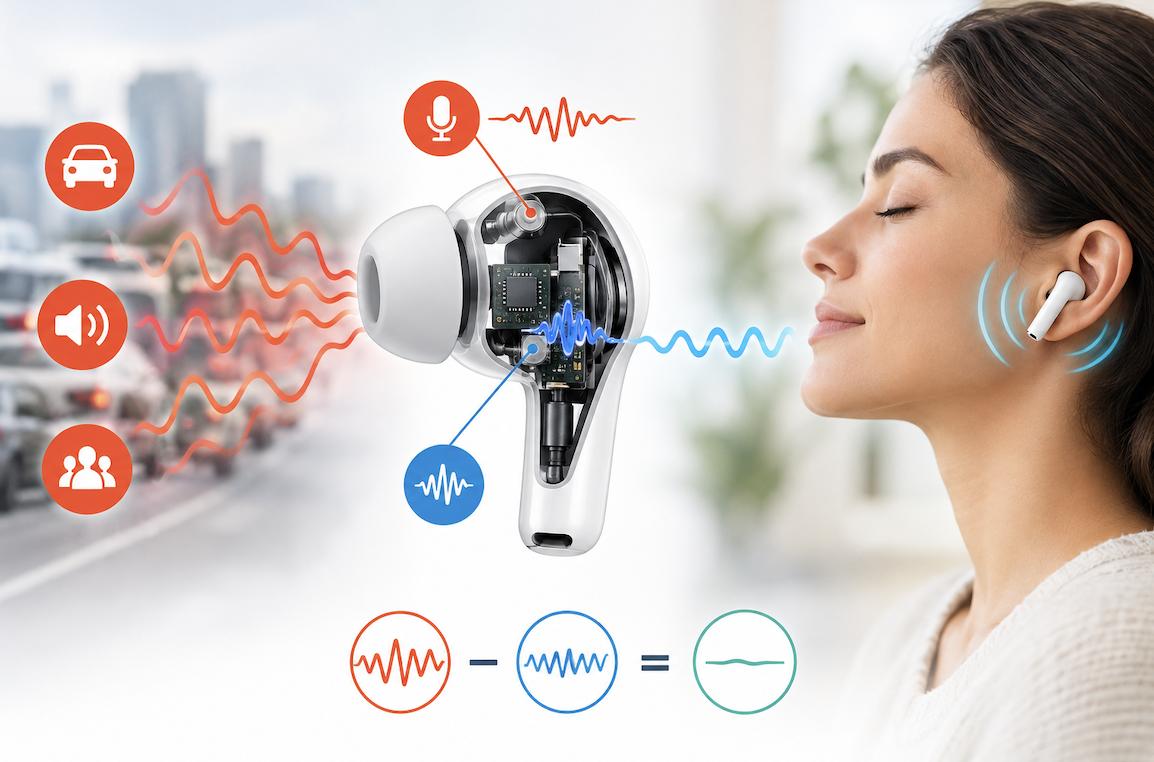
Putting on a pair of noise cancelling earbuds and experiencing the sudden, genuinely dramatic reduction in surrounding ambient noise feels almost like magic, yet this technology relies on genuinely clever engineering that actively counters unwanted sound rather than simply blocking it through physical barriers alone. Understanding how noise cancellation actually works reveals fascinating audio engineering behind an increasingly popular everyday technology.
What Noise Cancelling Technology Actually Does
Noise cancelling earbuds use active technology specifically designed to reduce unwanted ambient sound, working alongside the physical, passive sound blocking that simply comes from earbuds fitting snugly within your ear canal. This active component genuinely distinguishes true noise cancelling earbuds from earbuds that only provide passive noise reduction through physical fit and materials alone.
Understanding this active versus passive distinction genuinely matters, since passive noise reduction, simply having earbuds that physically block sound through their fit, differs fundamentally from active noise cancellation, which specifically involves the earbuds actively generating a response specifically designed to counter incoming ambient sound waves.
The Genuine Science Behind How Active Noise Cancellation Works
Understanding the core scientific principle underlying active noise cancellation technology helps clarify how this seemingly magical sound reduction actually happens through genuine physics rather than simple physical blocking.
- Sound waves have specific characteristics, including a particular pattern of high and low pressure variations
- Active noise cancelling technology generates a genuinely inverted version of the incoming ambient sound wave
- When this inverted wave combines with the original ambient sound wave, they genuinely cancel each other out
- This cancellation effect significantly reduces the perceived volume of the original ambient sound
This wave cancellation principle deserves particular emphasis, since it represents genuinely clever physics, given that combining a sound wave with its precise inverted counterpart causes the high pressure points of one wave to align with the low pressure points of the other, effectively neutralizing much of the original sound’s audible presence through this genuine acoustic cancellation process.
How Earbuds Actually Detect the Sound They Need to Cancel
Understanding the genuine technical process by which noise cancelling earbuds actually identify what specific ambient sound needs to be countered helps clarify this technology’s practical implementation.
- Small microphones built into the earbuds continuously detect surrounding ambient sound
- This detected sound gets analyzed extremely quickly by the earbuds’ internal processing system
- The system then generates the appropriate inverted sound wave specifically designed to counter this detected noise
- This entire detection and response process happens continuously and remarkably quickly, in real time
This real-time processing requirement deserves particular emphasis, since effective noise cancellation genuinely depends on extremely fast detection and response, given that any meaningful delay between detecting ambient sound and generating the appropriate cancelling response would result in imperfect, less effective cancellation, making the speed of this internal processing genuinely critical to the technology’s overall practical effectiveness.
Why Noise Cancellation Works Better for Certain Types of Sound
Understanding that active noise cancellation technology genuinely performs differently depending on the specific characteristics of ambient sound helps clarify realistic expectations for this technology’s actual practical performance.
- Consistent, lower-frequency sounds, like airplane engine noise or air conditioning hum, are generally easier to effectively cancel
- Sudden, irregular, or higher-frequency sounds, like sudden voices or sharp noises, are genuinely more difficult to cancel effectively
- This difference occurs because consistent sounds are genuinely easier to predict and counter than unpredictable ones
- Understanding this limitation helps set realistic expectations for what specific noise cancellation can actually achieve in different environments
This frequency and consistency distinction deserves particular emphasis, since it explains why noise cancelling earbuds tend to work remarkably well for consistent background noise like airplane cabin sound, while remaining considerably less effective at eliminating sudden, unpredictable sounds like a person’s voice, since the technology’s underlying prediction and counter-wave generation process works considerably better for genuinely consistent, predictable ambient sound patterns.
The Genuine Combination of Active and Passive Noise Reduction
Understanding that effective noise cancelling earbuds actually combine both active cancellation technology and passive physical blocking helps clarify the complete picture of how these devices achieve their overall noise reduction performance.
- Passive noise reduction comes from the earbuds’ physical fit and materials naturally blocking some ambient sound
- Active noise cancellation technology then further reduces additional ambient sound through the wave cancellation process
- These two approaches work together, complementing each other’s specific strengths and limitations
- This combination generally achieves considerably better overall noise reduction than either approach could accomplish independently
Practical Considerations for Getting the Most From Noise Cancelling Earbuds
- Ensure a genuinely proper, snug fit, since this affects both passive blocking and how effectively active cancellation can function
- Understand that noise cancellation performance genuinely varies by the specific type of ambient sound present
- Keep your earbuds’ software updated, since manufacturers sometimes release genuine performance improvements
- Consider that battery life may be somewhat affected by active noise cancellation’s additional power requirements
Why Transparency Mode Represents the Genuine Opposite Capability
Understanding that many noise cancelling earbuds also offer a genuinely opposite feature, often called transparency or ambient mode, helps illustrate the broader sophistication of the microphone and processing technology these devices actually contain beyond simply noise cancellation alone.
Rather than cancelling ambient sound, transparency mode uses these same external microphones to actually amplify and pass through surrounding sound, allowing you to hear your environment clearly even while wearing earbuds, which proves genuinely useful for situations like having a brief conversation or remaining aware of your surroundings without needing to physically remove your earbuds. This capability demonstrates that the same fundamental microphone and processing infrastructure enabling active noise cancellation can be genuinely repurposed to accomplish this essentially opposite goal, highlighting the underlying technology’s genuine versatility beyond noise reduction alone.
- Transparency mode uses the same microphones to amplify and pass through ambient sound instead of cancelling it
- This proves genuinely useful for brief conversations or environmental awareness without removing earbuds
- The same underlying microphone and processing infrastructure enables both noise cancellation and transparency mode
- This demonstrates the genuine versatility of the technology beyond simply noise reduction functionality alone
Final Thoughts
Active noise cancellation works through the genuine scientific principle of generating inverted sound waves that combine with and effectively neutralize incoming ambient noise, working alongside passive physical sound blocking to achieve significant overall noise reduction.
Understanding this underlying wave cancellation science, along with why this technology performs differently across various sound types, helps set realistic expectations for what noise cancelling earbuds can genuinely achieve while appreciating the sophisticated real-time audio engineering making this now-common technology actually possible.
- Read more about Ortud
Frequently Asked Questions
1. Does noise cancellation completely eliminate all surrounding sound?
No, genuinely, since noise cancellation technology significantly reduces certain types of ambient sound, particularly consistent, lower-frequency noise, but does not achieve complete silence, especially for sudden or higher-frequency sounds that prove genuinely more difficult to effectively cancel.
2. Why do noise cancelling earbuds sometimes feel slightly different in my ears compared to regular earbuds?
Some users report a subtle pressure sensation from active noise cancellation technology, which some people notice more than others, representing a genuine, though generally minor, characteristic of how this active technology functions rather than indicating any problem with the specific earbuds.
3. Do noise cancelling earbuds work well for blocking out voices and conversations?
Generally less effectively than for consistent background noise, since human voices involve the kind of irregular, unpredictable sound patterns that active noise cancellation technology genuinely struggles to counter as effectively as consistent, predictable ambient noise.
4. Does using active noise cancellation genuinely drain earbud battery life faster?
Yes, generally, since the active cancellation process requires genuine ongoing power for the microphones, processing, and sound generation involved, meaning earbuds with this feature enabled typically experience somewhat reduced battery life compared to using them without active cancellation engaged.
5. Is more expensive noise cancelling technology genuinely more effective than budget options?
Generally, more sophisticated, typically more expensive noise cancelling implementations do tend to provide more effective, refined cancellation performance, though genuine effectiveness also depends on specific implementation quality rather than price alone serving as a perfectly reliable indicator.