Foldable phones have gone from a strange novelty to a genuine category of consumer technology in just a handful of years. What started as an expensive experiment is now offered by nearly every major smartphone brand. But before spending significantly more money than a regular phone would cost, it is worth understanding exactly what a foldable phone is, how the technology holds up in real life, and whether it fits the way you actually use your device.
What Makes a Phone a Foldable
A foldable phone uses a flexible display along with a hinge mechanism that allows the screen to bend without cracking. Unlike traditional glass screens, foldables use specially engineered materials, often a type of flexible glass or plastic polymer layered with protective coatings, so the screen can fold thousands of times without breaking.
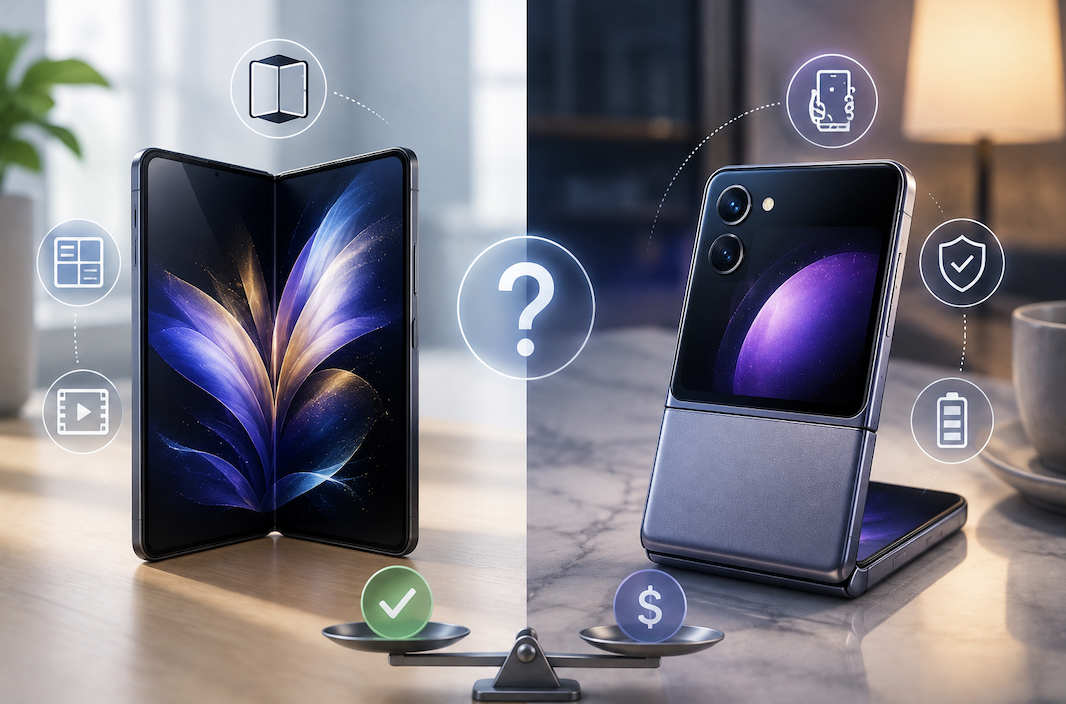
There are two common designs on the market today. Book-style foldables open like a small tablet, giving you a larger screen for productivity and media. Flip-style foldables fold vertically, shrinking down to a compact square that fits easily in a pocket while still offering a full-sized screen once opened.
How the Hinge and Display Actually Survive Constant Folding
The hinge is arguably the most impressive piece of engineering in a foldable phone. It has to open and close tens of thousands of times over the life of the device while keeping the screen perfectly aligned. Most modern hinges use multiple interlocking gears that distribute pressure evenly, reducing the crease that used to be a major complaint with early models.
The display itself sits above a thin metal support layer that helps it hold its shape when folded and unfolded. Manufacturers also add a protective film on top, which is more delicate than standard glass and requires a bit more care when cleaning or applying screen protectors.
- Most foldables are rated for well over 200,000 fold cycles in lab testing
- The visible crease has become much less noticeable in newer generations
- Dust resistance has improved significantly, though full waterproofing is still limited on many models
The Real Advantages of Owning a Foldable
Foldable phones are not just about the novelty of a bending screen. They offer genuine practical benefits depending on how you use your device.
- Book-style foldables give you a tablet-sized screen for reading, browsing, and multitasking without carrying a separate tablet
- Flip-style foldables offer a much smaller footprint when closed, which is easier to carry and pocket
- Multitasking features let you run two or three apps side by side on the larger unfolded screen
- The compact form factor of flip phones makes one-handed use noticeably easier than a large slab phone
The Honest Downsides You Should Consider
No phone is perfect, and foldables come with genuine trade-offs that are worth weighing before you buy. Prices remain considerably higher than flagship non-folding phones, often by several hundred dollars. Repair costs, if the screen or hinge ever fails, tend to be steep since the components are more specialized. Battery life can also lag slightly behind traditional phones because manufacturers have to fit the battery around the hinge mechanism.
The crease, while improved, is still visible under certain lighting angles, and some users find it distracting during video playback or gaming.
Practical Tips Before You Decide to Buy
- Try the phone in person if possible to see how the crease looks under real lighting
- Check the official fold cycle rating and warranty terms before purchasing
- Consider whether you actually need the larger book-style screen or if a flip style better matches your habits
- Budget for a case specifically designed for foldables, since standard cases will not fit properly
- Compare battery life reviews closely, as this varies more between foldable models than with regular phones
How Foldable Technology Has Evolved Across Generations
Looking back at the earliest foldable phones helps put current models into perspective. First-generation foldables often had a thick, visible crease, noticeable gaps when closed, and hinges that felt fragile compared to a standard phone. Battery life suffered noticeably, and software was not properly optimized for a screen that could change shape, leading to awkward app layouts on the larger unfolded display.
Each new generation has addressed these early complaints directly. Hinge mechanisms became more refined, using additional gears and structural support to reduce both the crease and the small gap that used to appear when the phone was closed. Manufacturers also improved dust resistance considerably, though full water resistance ratings still generally lag behind traditional flagship phones.
- Early hinges often left a visible gap when the phone was fully closed
- Newer designs close nearly flat, improving both durability and pocket comfort
- Software has matured to properly resize apps for the larger unfolded display
- Battery capacity has grown steadily despite the tighter internal space around the hinge
Perhaps the most meaningful shift has been software optimization. App developers have gradually adapted their layouts to take advantage of the larger unfolded screen, rather than simply stretching a phone-sized interface awkwardly across it. This ongoing refinement is a big reason newer foldables feel far more practical for daily use than the earliest models did just a few years ago.
Final Thoughts
Foldable phones represent one of the more exciting shifts in mobile technology in recent memory, blending genuine engineering innovation with real practical benefits. Whether they are worth buying ultimately comes down to your budget and how much you value flexibility in screen size and portability. For many users, trying one in person is the best way to decide if the format truly fits their daily life.
It is also worth remembering that this category of device is still evolving quickly, with each new generation addressing the previous one’s weaknesses in meaningful ways. If the current price feels like a stretch but the concept genuinely appeals to you, waiting for the next generation, or considering a slightly older model at a discount, can be a perfectly reasonable middle ground. Technology like this tends to reward a little patience, as today’s premium feature quickly becomes tomorrow’s standard offering across the wider smartphone market.
Frequently Asked Questions
1. Do foldable phones break easily?
Not typically, if used normally. Modern foldables go through extensive fold cycle testing, though the screens are more delicate than standard glass and can be damaged by sharp objects or excessive pressure.
2. Is the crease on the screen a big problem?
It has become far less noticeable in recent generations. Most users report barely noticing it after a short adjustment period, though it can still be visible at certain angles.
3. Are foldable phones worth the extra cost?
It depends on your habits. If you value a larger screen for productivity or a compact form factor for portability, the extra cost can be justified. If you simply want a reliable everyday phone, a standard flagship may offer better value.
4. How long do foldable phones typically last?
With normal use, most foldables are designed to last as long as a typical smartphone, generally two to four years, though the hinge is engineered to handle years of daily folding.