For decades, getting a new phone meant physically inserting a small plastic SIM card to connect to your mobile carrier’s network. That process is quietly being replaced by eSIM technology, which many newer phones now support, and some have adopted exclusively. This article explains exactly what eSIM is, how it actually works, and what genuinely changes compared to a traditional physical SIM card.
What eSIM Actually Means
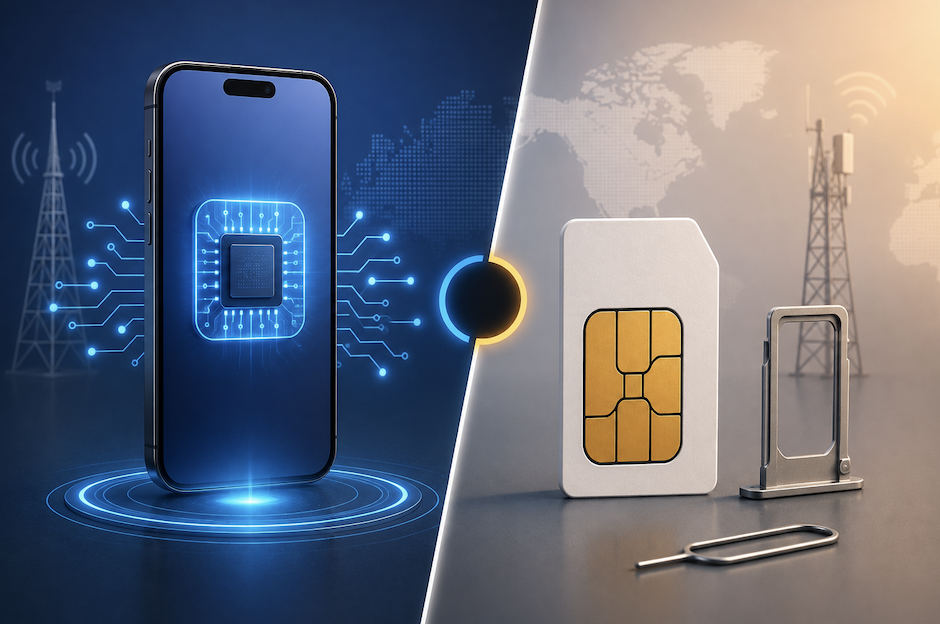
eSIM stands for embedded SIM, referring to a small chip built directly into your phone’s hardware rather than a removable physical card you insert manually. Instead of swapping a physical card when changing carriers or plans, an eSIM is programmed remotely through software, allowing your carrier information to be installed, changed, or removed digitally without ever touching your phone’s hardware.
This shift represents a meaningful change in how phones connect to mobile networks, moving away from a decades old physical standard toward a fully digital, software based approach to managing your cellular connection.
How eSIM Actually Works Technically
An eSIM chip is permanently soldered onto your phone’s circuit board during manufacturing, unlike a traditional SIM card that can be physically removed and swapped between devices. To activate service, your carrier sends a digital profile, essentially a small package of data containing your account and network information, which gets installed directly onto that embedded chip.
This activation process typically happens by scanning a QR code provided by your carrier or through an app, rather than requiring you to physically handle a small piece of plastic. Once installed, the eSIM functions exactly like a traditional SIM card from the network’s perspective, just without any physical, removable component.
- The eSIM chip is permanently built into the phone during manufacturing
- Carrier profiles are installed digitally, often through a QR code or dedicated app
- Multiple carrier profiles can often be stored on a single eSIM simultaneously
- Switching between stored profiles typically requires just a few taps in your phone’s settings
The Genuine Advantages of Using eSIM
- No physical card to lose, damage, or forget when traveling internationally
- Switching carriers or adding a travel plan can happen instantly without visiting a store
- Many phones support multiple eSIM profiles, making it easy to maintain separate personal and work numbers
- Slightly more internal phone space is freed up since no physical SIM tray is needed
The Real Limitations Still Worth Considering
Not every carrier worldwide fully supports eSIM yet, particularly smaller regional providers, which can complicate switching carriers in certain areas. Transferring an eSIM profile between phones also requires going through your carrier’s official process, which can occasionally feel less immediate than simply moving a physical card between two devices.
Some travelers also find that purchasing a local eSIM data plan when visiting another country requires slightly more technical comfort than buying a traditional prepaid SIM card from a local shop, though this gap continues to narrow as eSIM adoption grows worldwide.
Practical Tips for Using eSIM Effectively
- Confirm your specific phone model and carrier both fully support eSIM before switching
- Keep your QR code activation details saved securely in case you need to reinstall your profile
- Consider a travel specific eSIM plan for international trips instead of a physical local SIM card
- Check whether your phone supports multiple simultaneous eSIM profiles if you need separate numbers
Why eSIM Has Become Especially Useful for Travelers
International travel used to mean either paying steep roaming fees through your home carrier or hunting down a local shop to purchase a physical prepaid SIM card upon arrival, often navigating a language barrier along the way. eSIM has genuinely simplified this process, allowing travelers to purchase and activate a local or regional data plan digitally, often before they even leave home, without ever needing to handle a physical card.
Many eSIM providers now specialize specifically in travel focused data plans, covering dozens of countries through a single app, letting travelers switch on affordable local data the moment they land, all while keeping their home number active on a separate profile for calls and messages. This dual profile capability has made eSIM particularly popular among frequent international travelers who previously juggled multiple physical SIM cards or paid excessive roaming charges.
- Travel focused eSIM plans can often be purchased and activated before departure
- Keeping a home number profile active alongside a local travel profile avoids missing important calls
- No need to locate a local shop or navigate a language barrier to get connected upon arrival
- Switching between multiple stored profiles takes just a few taps once you land
This travel convenience is one of the clearest, most immediately noticeable benefits of eSIM technology for many everyday users, even those who otherwise rarely think about how their phone connects to a cellular network.
Final Thoughts
eSIM represents a genuine shift away from decades old physical SIM card technology toward a fully digital, more flexible way of managing your cellular connection. Understanding how it actually works makes the transition feel far less mysterious, and for most users, the convenience of switching carriers or plans without physical hardware quickly becomes one of those upgrades that is hard to imagine going back from once you have actually tried it for yourself.
Frequently Asked Questions
1. Can I still use a physical SIM card if my phone supports eSIM?
Many phones support both simultaneously, allowing you to use a traditional physical SIM alongside an eSIM profile, though some newer phone models have moved to eSIM exclusively.
2. What happens to my eSIM if I get a new phone?
You will need to work with your carrier to transfer or reinstall your eSIM profile onto the new device, typically through their app or by requesting a new activation QR code.
3. Is eSIM more secure than a physical SIM card?
In some ways, yes, since eSIM profiles cannot be physically removed and inserted into another device by someone else, reducing certain types of SIM related theft or tampering.
4. Do all countries support eSIM technology?
Most major carriers in developed markets now support eSIM, though availability varies more with smaller regional providers, so it is worth checking specific carrier support before relying on it while traveling.