
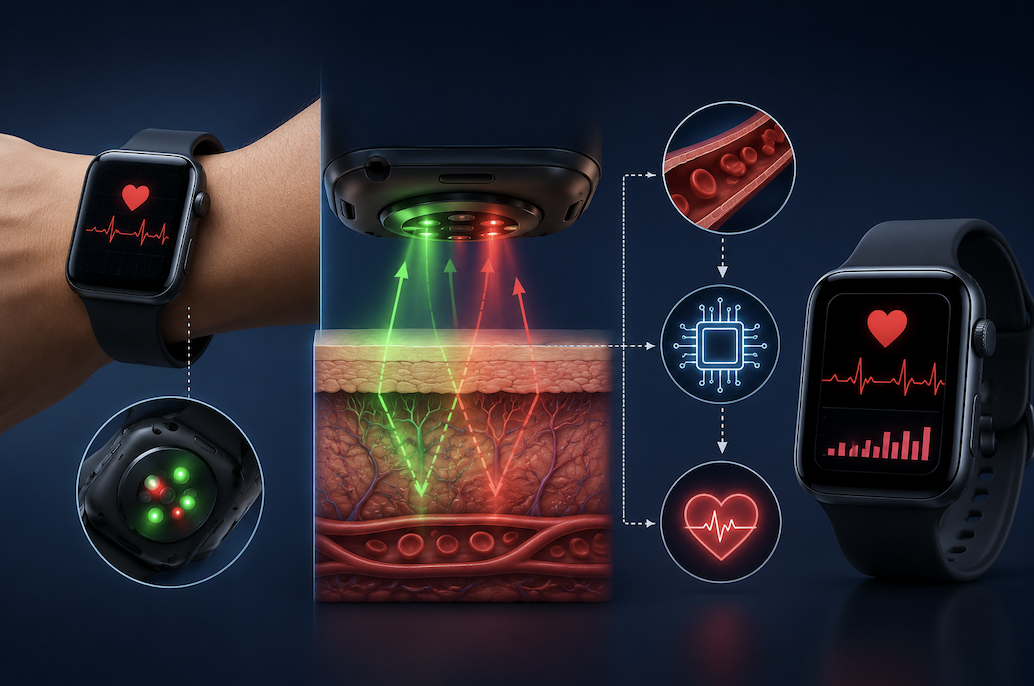
Glancing at your wrist and instantly seeing your current heart rate has become such a normal part of using a smartwatch that most people never stop to wonder how such a small device actually measures something happening deep inside your body. The technology behind this feature is genuinely clever, relying on light rather than any direct physical connection to your bloodstream. This article explains exactly how smartwatches track heart rate and why accuracy can vary depending on how you wear the device.
The Core Technology Behind Heart Rate Tracking
Most smartwatches use a technique called photoplethysmography, which sounds complicated but relies on a fairly straightforward principle. The watch shines light, typically green LED light, onto your skin and measures how much of that light gets reflected back using a sensor positioned right next to the light source.
Blood absorbs more light than the surrounding tissue, so as your heart beats and blood flow through the vessels beneath your skin increases and decreases with each pulse, the amount of light reflected back changes in a measurable, rhythmic pattern. By tracking these tiny fluctuations in reflected light many times per second, the watch can calculate your heart rate with reasonable accuracy.
Why Green Light Specifically Gets Used
Green light is specifically chosen because blood absorbs it particularly well compared to other wavelengths, creating a stronger, more measurable contrast between pulses of increased and decreased blood flow. This makes the resulting signal cleaner and easier for the watch’s sensor to detect accurately compared to using a different color of light.
Some more advanced watches supplement this green light sensor with additional wavelengths, like infrared light, which can penetrate skin slightly differently and provide additional data that helps improve accuracy, particularly for users with darker skin tones or during more intense physical activity.
- Green LED light provides strong contrast between blood flow changes for reliable measurement
- Infrared light is sometimes added to improve accuracy across different skin tones
- Sensors capture reflected light many times per second to detect the pulse pattern
- Internal software processes this raw light data into a calculated heart rate reading
Why Fit and Positioning Genuinely Affect Accuracy
The accuracy of this entire measurement process depends heavily on how snugly and consistently the watch sits against your skin. A loose fitting watch allows light to leak in from outside or lets the sensor shift position slightly, both of which can introduce noise into the reading and reduce accuracy.
- A watch worn too loosely allows ambient light and movement to interfere with readings
- Positioning the watch slightly above your wrist bone typically improves sensor contact
- Excessive arm movement during intense exercise can introduce temporary measurement noise
- Tattoos or certain skin conditions can occasionally interfere with light based sensor accuracy
How Smartwatches Handle Exercise and Movement
During intense physical activity, tracking heart rate accurately becomes considerably more challenging, since arm movement can shift the watch’s position and introduce vibration that disrupts the light based measurement. Modern smartwatches address this using motion sensors that help the software distinguish between genuine heart rate signals and movement related noise, filtering out much of that interference algorithmically.
This is why heart rate readings during activities like running or cycling can sometimes show brief inaccuracies or delays compared to a chest strap monitor, which measures your heart’s electrical activity directly rather than relying on light based blood flow detection.
Practical Tips for More Accurate Readings
- Wear your smartwatch snugly, positioned slightly above your wrist bone, rather than loosely
- Clean the sensor area regularly, since sweat, dirt, or lotion can interfere with light detection
- Allow a moment for the reading to stabilize rather than expecting instant, perfectly accurate results
- Consider a chest strap monitor for the most accurate readings during high intensity training sessions
How Smartwatches Use Heart Rate Data Beyond a Simple Number
The raw heart rate readings captured throughout the day feed into a much broader set of health and fitness features that many people rely on without necessarily realizing how they connect back to this same underlying sensor. Sleep tracking, for example, often analyzes subtle changes in heart rate patterns throughout the night to estimate different sleep stages, while stress tracking features look at heart rate variability, meaning the tiny variations in time between individual heartbeats, to estimate how relaxed or stressed your body currently is.
Calorie burn estimates during exercise also lean heavily on continuous heart rate data, using it alongside your personal profile information to estimate how hard your body is working during a given activity. This is why a more accurate heart rate sensor genuinely improves the reliability of numerous other features throughout the watch, not just the simple number displayed on your wrist.
- Sleep tracking analyzes heart rate patterns to estimate different stages of sleep
- Stress tracking features rely on heart rate variability to estimate relaxation levels
- Calorie burn estimates during exercise are calculated partly using continuous heart rate data
- Accurate heart rate sensing improves the reliability of many other connected health features
Understanding this connection helps explain why manufacturers invest so heavily in improving heart rate sensor accuracy with each new generation, since it genuinely underpins a wide range of the health insights these devices claim to offer.
Final Thoughts
Smartwatch heart rate tracking relies on a genuinely clever use of light and reflection to measure something happening beneath your skin, turning a small wrist worn device into a surprisingly capable health tracking tool. Understanding how fit, positioning, and movement affect accuracy helps you get more reliable readings and set realistic expectations for what this convenient technology can and cannot measure precisely, especially during more demanding physical activity.
Frequently Asked Questions
1. Are smartwatch heart rate readings medically accurate?
They provide a reasonably reliable general estimate for everyday fitness tracking, but they are not considered medical grade devices and should not replace clinical heart monitoring equipment for diagnosing health conditions.
2. Why does my smartwatch sometimes show an inaccurate heart rate during exercise?
Intense movement can shift the watch’s position and introduce vibration noise that interferes with the light based sensor, which is why readings can occasionally lag or fluctuate during vigorous activity.
3. Does skin tone affect smartwatch heart rate accuracy?
It can, since different skin tones absorb and reflect light differently, which is why many modern watches incorporate additional sensor technology specifically to improve accuracy across a wider range of skin tones.
4. Can a smartwatch heart rate sensor detect a real medical problem?
Some advanced smartwatches include features that flag unusually high or low heart rates, or irregular rhythms, but any concerning results should always be confirmed with a qualified medical professional rather than relying solely on the watch.